
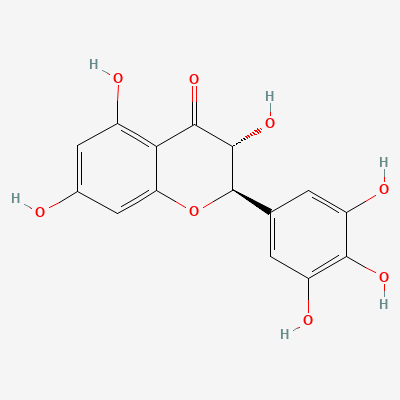
Dihydromyricetin
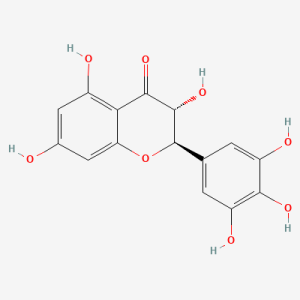
| Parameter | Specification |
|---|---|
| Product Name | Dihydromyricetin |
| CAS Number | 27200-12-0 |
| Molecular Formula | C15H12O8 |
| Molecular Weight | 320.25 g/mol |
| Appearance | Off-white to light yellow crystalline powder |
| Assay (HPLC) | ≥98.0% |
| Solubility | Sparingly soluble in water, soluble in ethanol and DMSO |
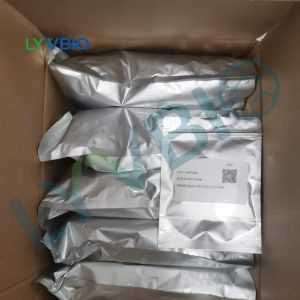
| Package | 25 kg fiber drum with double PE liner |
Need help? Contact our team
Synonyms: Ampelopsin, DHM, 3,5,7,3′,4′,5′-Hexahydroxyflavanone, (2R,3R)-Dihydromyricetin, Ampelopsis grossedentata extract
Dihydromyricetin (DHM) has moved from a niche flavonoid to a mainstream ingredient in the supplement and functional beverage space, largely on the back of its well-publicized support for alcohol metabolism and liver health. Formulators like it because it is a single, well-characterized molecule with a clean analytical profile, not a complex botanical blend. In the past few years, demand has grown steadily across the US, Europe, and Asia, with buyers looking for reliable high-purity material at commercial scale.
Chemically, DHM is a flavanonol—a dihydroflavonol—found most abundantly in the young leaves and stems of Ampelopsis grossedentata, a vine known locally as vine tea or rattan tea. The plant has a long history in southern China, where the leaves are brewed as a daily beverage. Commercial DHM is typically obtained by hot-water extraction of the dried leaves, followed by purification steps that yield a crystalline powder with a characteristic off-white to pale yellow color.
Standard grades are offered at ≥98% purity by HPLC, which is the benchmark most quality-conscious buyers now expect. At this level, DHM is suitable for capsules, tablets, stick packs, and ready-to-drink formats. It also serves as a reference standard and research material for laboratories studying its antioxidant, anti-inflammatory, and metabolic effects.
Dihydromyricetin is a single chemical entity, not a mixture of related flavonoids. Its structure carries six hydroxyl groups, which accounts for its strong radical-scavenging behavior and its limited solubility in cold water. In the solid state it is a crystalline powder that is stable under normal storage conditions, though it should be protected from prolonged exposure to light and moisture.
Because DHM is a pure compound, buyers can rely on a consistent assay and a simple impurity profile. The main quality markers are residual solvents from extraction, heavy metals, and microbial limits—all routinely tested on every batch. There is no need to worry about variable ratios of co-occurring flavonoids, which is a common headache with botanical extracts.
| Test Item | Specification |
|---|---|
| Identification | IR and HPLC retention time match reference standard |
| Loss on Drying | ≤ 2.0% |
| Residue on Ignition | ≤ 0.5% |
| Heavy Metals | ≤ 10 ppm |
| Organic Impurities | ≤ 1.0% total |
| Microbial Limits | Total aerobic count ≤ 1000 CFU/g; yeast and mold ≤ 100 CFU/g; E. coli and Salmonella absent |
We can supply from 1 kg for trial and development work, with 25 kg being the standard commercial pack size. Larger volumes are available and can be quoted on request.
For stock items, we ship within 3-5 business days from order confirmation. We keep regular inventory of DHM, so most orders go out without delay.
Yes. A current COA and MSDS are available for every batch, and we can send a small sample for your own testing. Sample dispatch usually takes 1-2 days.
send us your specification for a quotation.
Room,5-0203, Unit 5, Beiyuanmen Street,Xi'an,Shaanxi,China
 English English
 Russian
 French
 Korean
 German
 Polish
 Japanese
 Spanish
 Italian
 Vietnamese