
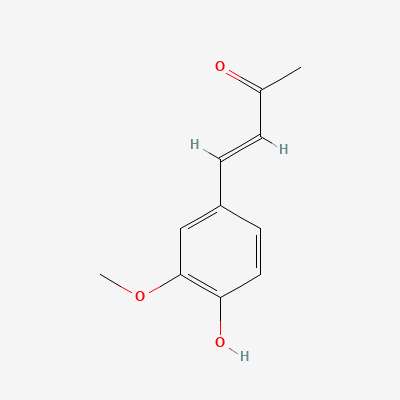
Dehydrozingerone
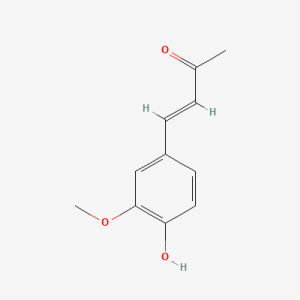
| Product Name | Dehydrozingerone |
|---|---|
| CAS Number | 1080-12-2 |
| Other Names | 4-(4-Hydroxy-3-methoxyphenyl)-3-buten-2-one; DHZ; Dehydrozingerone; (E)-4-(4-Hydroxy-3-methoxyphenyl)-3-buten-2-one |
| Molecular Formula | C11H12O3 |
| Molecular Weight | 192.21 g/mol |
| Appearance | Off-white to pale yellow crystalline powder |
| Assay (HPLC) | ≥98.0% |
| Melting Point | 110-113 °C |
| Loss on Drying | ≤0.5% |
| Residue on Ignition | ≤0.1% |
| Heavy Metals | ≤10 ppm |
| Solubility | Soluble in ethanol, DMSO, ethyl acetate; slightly soluble in water |
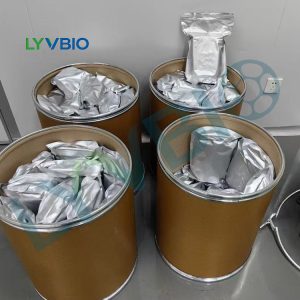
| Package | 25 kg fiber drum with double PE liner |
Need help? Contact our team
Synonyms: 4-(4-Hydroxy-3-methoxyphenyl)-3-buten-2-one, Dehydrozingerone, DHZ, (E)-4-(4-Hydroxy-3-methoxyphenyl)-3-buten-2-one, Vanillylideneacetone, 4-Hydroxy-3-methoxybenzylideneacetone
Dehydrozingerone is a phenolic ketone that occurs naturally in ginger (Zingiber officinale) and serves as the immediate biosynthetic precursor to zingerone, the compound responsible for much of ginger’s characteristic pungency and biological activity. While zingerone itself is formed through the hydrogenation of dehydrozingerone during ginger processing, the unsaturated parent compound has attracted independent interest for its distinct chemical reactivity and enhanced biological effects. It typically appears as an off-white to pale yellow crystalline solid with a mild, sweet-spicy aroma reminiscent of ginger.
Chemically, dehydrozingerone belongs to the curcuminoid family and shares the feruloyl moiety with curcumin, but its smaller molecular size and lack of a second aromatic ring give it superior solubility and membrane permeability. This structural simplicity makes it an attractive scaffold for synthetic modifications and a valuable reference compound in studies of Michael acceptors, antioxidant mechanisms, and anti-inflammatory pathways. Its α,β-unsaturated carbonyl system is a key feature that enables both its bioactivity and its utility as a chemical intermediate.
In the pharmaceutical and nutraceutical industries, dehydrozingerone is used as a reference standard, a synthetic intermediate for more complex molecules, and an active ingredient in formulations targeting oxidative stress, inflammation, and metabolic health. It is also employed in flavor and fragrance applications where a stable, crystalline ginger-like note is desired. The compound is generally regarded as safe for use in food and cosmetic applications when produced under appropriate quality systems.
| Parameter | Specification |
|---|---|
| Assay (HPLC) | ≥98.0% |
| Identification | IR, NMR, or HPLC retention time conforms to standard |
| Loss on Drying | ≤0.5% |
| Residue on Ignition | ≤0.1% |
| Heavy Metals | ≤10 ppm |
| Microbial Limits | Total aerobic count ≤1000 CFU/g; Yeast & Mold ≤100 CFU/g; E. coli absent |
Room,5-0203, Unit 5, Beiyuanmen Street,Xi'an,Shaanxi,China
 English English
 Russian
 French
 Korean
 German
 Polish
 Japanese
 Spanish
 Italian
 Vietnamese