
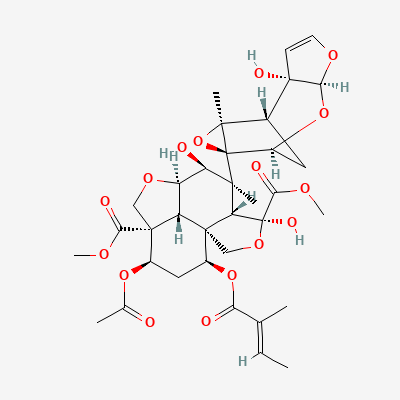
Azadirachtin
| Parameter | Specification |
|---|---|
| Product Name | Azadirachtin |
| CAS Number | 11141-17-6 |
| Molecular Formula | C35H44O16 |
| Molecular Weight | 720.71 g/mol |
| Appearance | Off-white to light yellow powder |
| Assay (HPLC) | ≥95% |
| Solubility | Soluble in ethanol, methanol, acetone; slightly soluble in water |
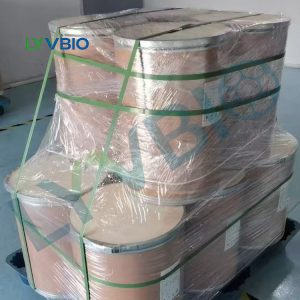
| Package | 25 kg fiber drum with double polyethylene liner |
Need help? Contact our team
Synonyms: Azadirachtin A, Neem extract, Nimbolin, Azadirachtin A (mixture of A and B), Margosan-O, NeemAzal.
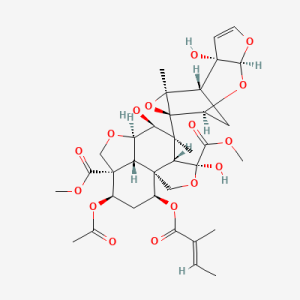
Azadirachtin is a complex tetranortriterpenoid (limonoid) derived from the seeds of the neem tree (Azadirachta indica). Its structure features a highly oxygenated framework with multiple hydroxyl, epoxy, and ester groups, which contribute to its unique biological activity. As a botanical insecticide, it disrupts the endocrine system of insects, particularly by interfering with the synthesis and release of ecdysteroids and juvenile hormone, leading to molting defects and sterility. This mode of action is highly specific to target pests, with minimal impact on non-target organisms and the environment.
Commercially, azadirachtin is available as a technical grade concentrate, typically standardized to 95% purity (HPLC). It is produced through solvent extraction of neem kernels followed by purification steps such as chromatography. The compound is sensitive to light and heat, and formulations often include stabilizers to maintain efficacy. Its primary applications are in integrated pest management (IPM) programs, organic farming, and as a botanical insecticide in public health and stored product protection.
For B2B buyers in the biopesticide and pharmaceutical sectors, azadirachtin offers a sustainable alternative to synthetic pesticides. Its compatibility with beneficial insects and low mammalian toxicity make it a preferred choice for environmentally conscious agricultural practices. Additionally, ongoing research explores its potential in cancer therapy and anti-inflammatory treatments, further expanding its market appeal.
Azadirachtin belongs to the limonoid class, characterized by a furan ring and a decalin core. It exists as a mixture of closely related isomers, with azadirachtin A being the most abundant and active. The compound is a white to off-white crystalline solid with a melting point around 150-160°C (decomposition). It is soluble in polar organic solvents like ethanol and acetone but has limited water solubility. Its UV absorption maximum is at 217 nm. The molecule is prone to isomerization and degradation under acidic or basic conditions, and exposure to UV light accelerates breakdown, necessitating careful storage.
| Test Item | Specification |
|---|---|
| Identification | IR spectrum consistent with reference |
| Loss on Drying | ≤3.0% |
| Residue on Ignition | ≤0.5% |
| Heavy Metals | ≤10 ppm |
| Microbial Limits | Total aerobic count ≤1000 CFU/g; Yeast & Mold ≤100 CFU/g |
| Related Substances | Total impurities ≤2.0% |
Our standard MOQ is 1 kg. For larger quantities, we offer competitive pricing and flexible shipping options.
For stock items, delivery is within 3-5 business days after order confirmation.
Yes, we provide a COA for each batch and can send samples for evaluation. Sample delivery typically takes 1-2 days.
send us your specification for a quotation.
Room,5-0203, Unit 5, Beiyuanmen Street,Xi'an,Shaanxi,China
 English English
 Russian
 French
 Korean
 German
 Polish
 Japanese
 Spanish
 Italian
 Vietnamese