
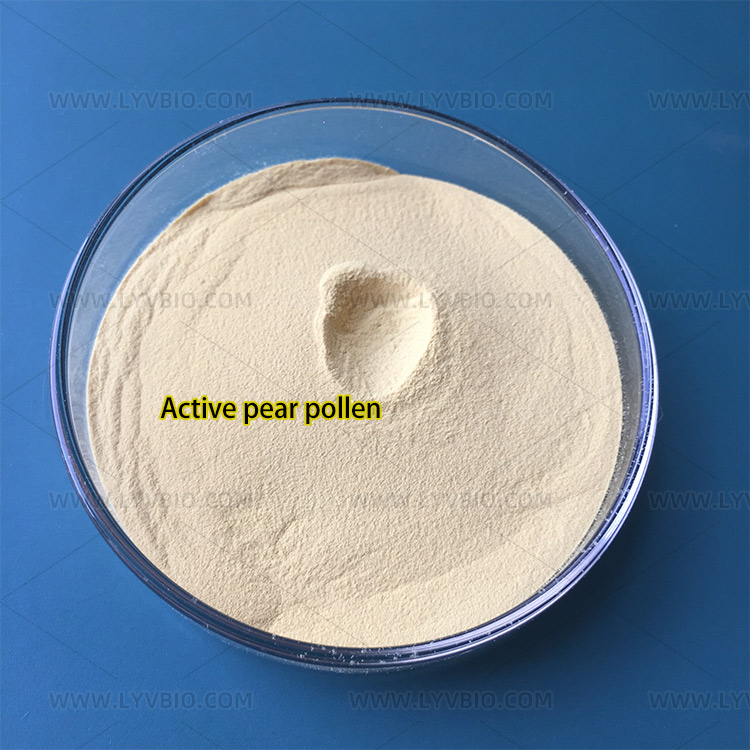
| Product Name | Pear Pollen |
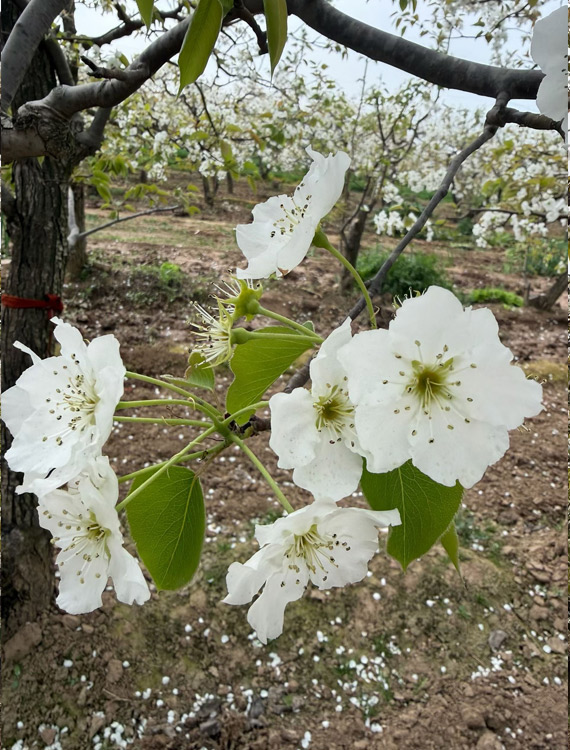
| Variety Source | Snow pear (Pyrus nivalis) |
| Suitable Pear Varieties | European pears, American pears, Beer pears, Asian pears, Gaoxin, 21st Century, Xingshui |
| Germination Percentage | ≥ 80% |
| Inventory Quantity | 1,800 KG per 365 days |
| Appearance | Fine yellow powder |
| Purity | ≥ 95% (minimal plant debris) |
| Moisture Content | ≤ 8% |
| Storage | -18°C to -20°C (frozen, sealed) |
| Shelf Life | 12 months (proper frozen storage) |
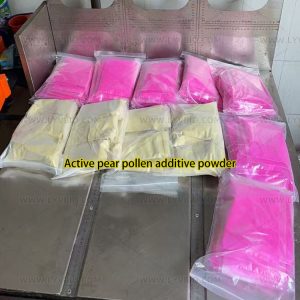
| Package | 100g, 500g, 1kg (vacuum sealed); 5kg, 25kg (bulk) |
| Shipment | Dry ice + insulated container (cold chain) |
Need help? Contact our team
Most commercial pear varieties are self-incompatible, meaning they cannot produce fruit from their own pollen. This biological reality leaves growers with two options: rely on natural pollination (wind, insects) or implement targeted artificial pollination using high-viability pollen from compatible varieties.
While artificial pollination requires an upfront investment, the return on that investment becomes strikingly clear at harvest time.
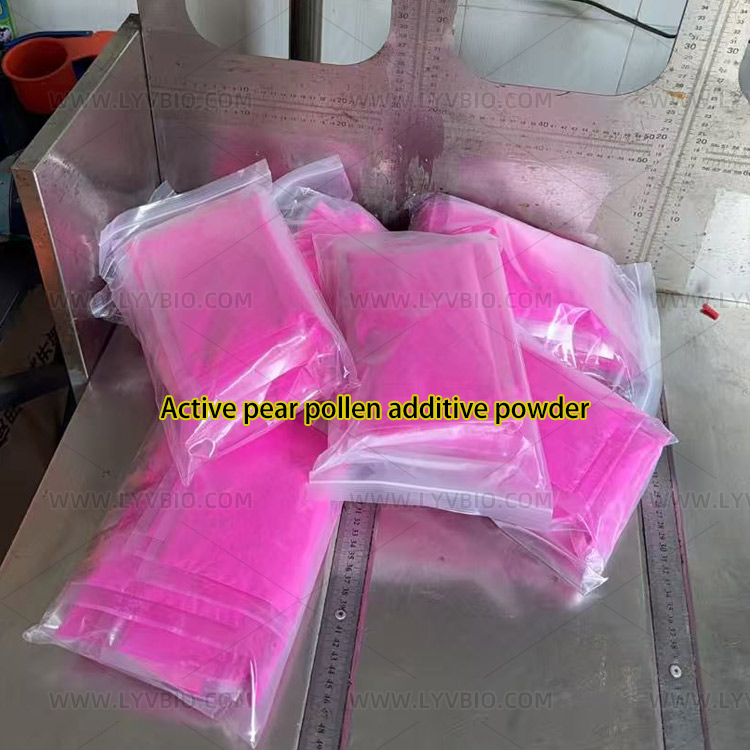
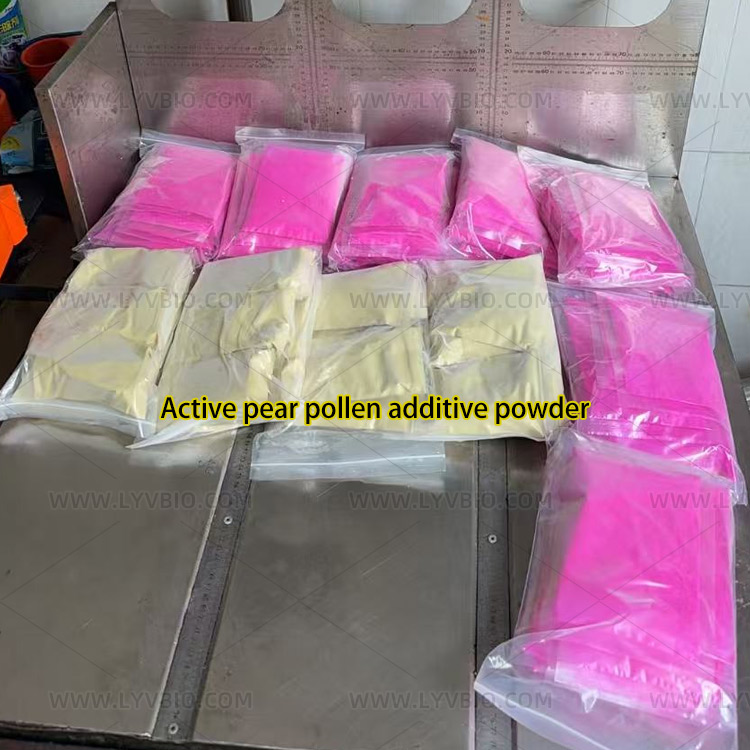
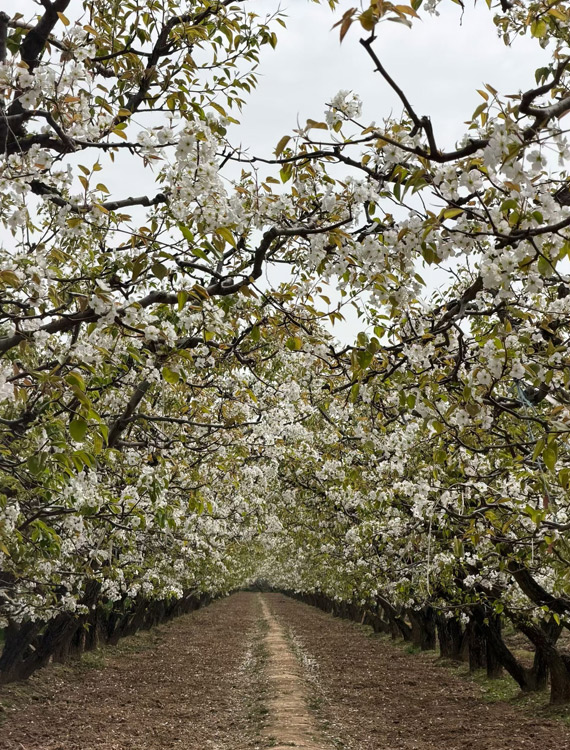
To quantify the real-world impact, we conducted a controlled trial comparing two pear orchards under identical growing conditions:
| Parameter | Orchard A (Natural Pollination) | Orchard B (Artificial Cross-Pollination) |
|---|---|---|
| Pollination method | Wind and insect activity only | Targeted application of compatible variety pollen |
| High-quality commercial fruit rate | 60% | 75% |
| Total yield (relative) | Baseline (100%) | 130% (30% increase) |
| Fruit set uniformity | Inconsistent (clusters, gaps) | Uniform (well-distributed) |
| Fruit size consistency | Variable | Standardized |
15 percentage point increase in premium fruit – from 60% to 75% – means significantly more fruit meeting export or supermarket grade standards. Lower cull rates translate directly to higher revenue per hectare.
30% higher total yield means that artificial pollination doesn’t just improve quality; it increases the total volume of marketable fruit from the same land, same trees, same inputs.
Growers who invest in artificial pollination often describe the moment of harvest as validation of a smart decision. The visual difference is unmistakable: uniformly sized fruit, consistent color development, and fewer gaps in the canopy where blossoms failed to set.
Conversely, orchards relying solely on natural pollination frequently exhibit:
Erratic fruit set patterns (clusters in some areas, bare branches in others)
Higher percentage of misshapen or undersized fruit
Reduced pack-out rates for premium markets
Our dissimilatory (cross-compatible) pear pollen is specifically formulated for:
High germination viability – rigorously tested before shipment
Variety-specific compatibility – matched to your cultivar mix
Consistent application performance – uniform particle size for mechanical or hand application
Artificial pollination using compatible, high-viability pollen is not an expense – it is a yield improvement investment with measurable returns. The 30% yield increase and 15% quality improvement documented in our trials consistently translate to:
Higher revenue per hectare
Better pack-out rates for premium markets
Reduced risk of poor fruit set due to unfavorable weather during bloom
Make the smart choice before next bloom season.
📧 Email: info@lyvbio.com
🌐 Website: https://www.lyvbio.com
Room,5-0203, Courtyard 205, Lianhu District,Xi'an,Shaanxi,China
 English English
  Russian
 French
 Korean
 German
 Polish
 Japanese
 Spanish
 Italian
 Vietnamese