
Acamprosate Calcium
| Product Name | Acamprosate Calcium |
|---|---|
| CAS Number | 77337-73-6 |
| Molecular Formula | C10H20CaN2O8S2 |
| Molecular Weight | 400.48 g/mol |
| Appearance | White to off-white crystalline powder |
| Assay (HPLC) | 98.0% – 102.0% (on dried basis) |
| Loss on Drying | ≤ 0.5% |
| Heavy Metals | ≤ 10 ppm |
| Solubility | Soluble in water, practically insoluble in ethanol |
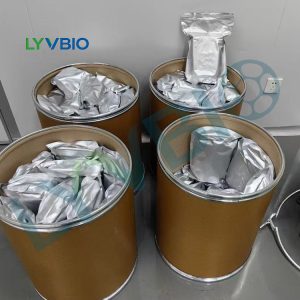
| Package | 25 kg net in fiber drum with double PE liner |
Need help? Contact our team
Synonyms: Calcium acetylhomotaurinate, N-Acetylhomotaurine calcium salt, Acamprosate calcium, Calcium 3-(acetylamino)propane-1-sulfonate, Campral
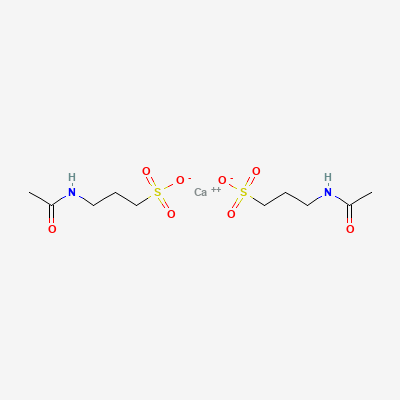
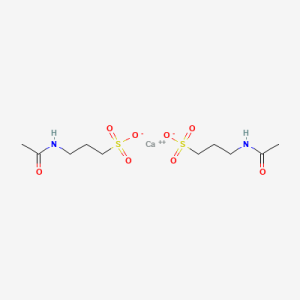
Acamprosate calcium is a synthetic molecule that belongs to the class of acetylated amino sulfonic acids. Its structure features a taurine backbone (2-aminoethanesulfonic acid) modified with an acetyl group on the nitrogen, and a calcium ion that balances the sulfonate charge. This unique combination yields a compound with high polarity and water solubility, enabling rapid dissolution in physiological fluids. The presence of both sulfonate and amide functionalities allows for specific interactions with neuronal membranes, particularly modulating glutamatergic and GABAergic systems.
First approved in Europe in the late 1980s for the management of alcohol dependence, acamprosate calcium has since become a standard pharmacotherapy, supported by extensive clinical evidence. It is commercially available as enteric-coated tablets under brand names such as Campral, and is also supplied as an active pharmaceutical ingredient (API) for generic formulations. The compound is synthesized through a multi-step process involving acetylation of homotaurine followed by calcium salt formation, yielding a highly pure, crystalline product that meets stringent pharmacopeial standards (USP/EP).
In the pharmaceutical industry, acamprosate calcium is valued not only for its established efficacy but also for its favorable safety profile and tolerability. Ongoing research explores its potential in other neurological conditions, such as tinnitus and neuroprotection, further driving demand for high-quality API. Our product is manufactured under cGMP conditions, ensuring consistent quality and regulatory compliance for formulation into solid oral dosage forms.
Acamprosate calcium is the calcium salt of N-acetylhomotaurine, with the molecular formula C10H20CaN2O8S2 and a molecular weight of 400.48 g/mol. The molecule consists of two molecules of N-acetylhomotaurine (each comprising a three-carbon chain with a sulfonate group at one end and an acetylamino group at the other) coordinated to a central calcium ion. This structure confers high aqueous solubility (greater than 100 mg/mL) and low lipophilicity, limiting passive diffusion across biological membranes. The compound is stable under normal storage conditions but should be protected from moisture and excessive heat. Its crystalline form is typically a white to off-white powder, and it exhibits polymorphism, with the most stable form being the monohydrate. The calcium salt is essential for its pharmacological activity, as the free acid form is less stable and less soluble.
| Parameter | Specification |
|---|---|
| Appearance | White to off-white crystalline powder |
| Assay (HPLC, on dried basis) | 98.0% – 102.0% |
| Loss on Drying | ≤ 0.5% |
| Heavy Metals | ≤ 10 ppm |
| Related Substances | Total impurities ≤ 0.5% |
| Residual Solvents | Meets USP/EP requirements |
| Microbial Limits | Total aerobic count ≤ 1000 CFU/g |
Room,5-0203, Unit 5, Beiyuanmen Street,Xi'an,Shaanxi,China
 English English
 Russian
 French
 Korean
 German
 Polish
 Japanese
 Spanish
 Italian
 Vietnamese