
4-Hexylresorcinol
| Product Name | 4-Hexylresorcinol |
|---|---|
| CAS Number | 136-77-6 |
| Appearance | White to off-white crystalline powder |
| Specifications | ≥99.0% (HPLC) |
| Molecular Formula | C12H18O2 |
| Molecular Weight | 194.27 g/mol |
| Melting Point | 65-67 °C |
| Solubility | Soluble in ethanol, propylene glycol; slightly soluble in water |
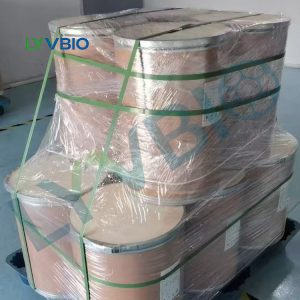
| Package | 25 kg fiber drum with inner polyethylene bag |
Need help? Contact our team
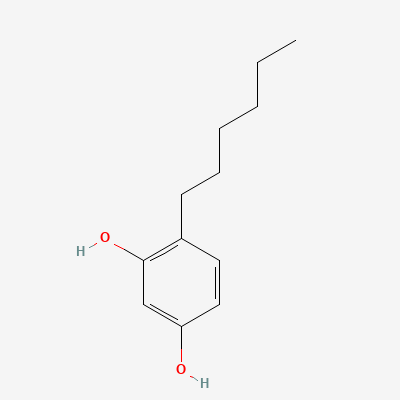
Synonyms: 4-Hexylresorcinol, 4-Hexyl-1,3-benzenediol, 1,3-Benzenediol, 4-hexyl-, 136-77-6, HX-4, Resorcinol 4-hexyl
4-Hexylresorcinol is an alkylresorcinol featuring a hexyl chain at the 4-position of a resorcinol core. This amphiphilic structure—a polar dihydroxybenzene head and a nonpolar alkyl tail—underpins its interfacial activity, enabling interactions with lipid bilayers and proteins. The molecule is a potent inhibitor of polyphenol oxidase (tyrosinase) and exhibits broad-spectrum antimicrobial and anthelmintic properties, making it valuable in pharmaceutical, cosmetic, and food preservation applications.
Industrially, 4-Hexylresorcinol is produced via Friedel-Crafts alkylation of resorcinol with hexanol or hexene, followed by purification. It is supplied as a white to off-white crystalline powder with a purity of ≥99.0% (HPLC). The compound is stable under normal storage conditions but should be protected from light and moisture.
Key applications include its use as an anti-browning agent in fresh-cut produce, an active ingredient in anti-dandruff and oral care formulations, and a model compound in enzymatic browning studies. Its efficacy at low concentrations and favorable safety profile (GRAS status for certain uses) drive demand in the food and personal care industries.
The resorcinol moiety provides two phenolic hydroxyl groups that can participate in hydrogen bonding and redox reactions, while the hexyl chain enhances lipophilicity (logP ~3.5). This balance dictates its solubility profile and membrane affinity. The compound exists as a crystalline solid with a melting point around 66 °C and is typically assayed by HPLC or titration.
| Parameter | Specification |
|---|---|
| Assay (HPLC) | ≥99.0% |
| Appearance | White to off-white crystalline powder |
| Melting Point | 65-67 °C |
| Loss on Drying | ≤0.5% |
| Residue on Ignition | ≤0.1% |
| Heavy Metals | ≤10 ppm |
| Solubility | Soluble in ethanol, propylene glycol; slightly soluble in water |
Room,5-0203, Unit 5, Beiyuanmen Street,Xi'an,Shaanxi,China
 English English
 Russian
 French
 Korean
 German
 Polish
 Japanese
 Spanish
 Italian
 Vietnamese