
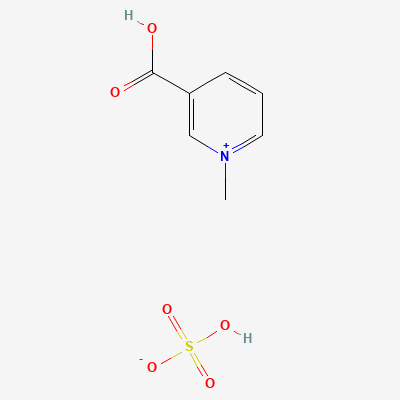
Siarczan trigonelliny
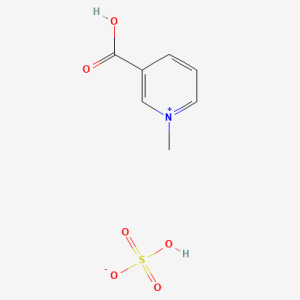
| Nazwa produktu | Siarczan trigonelliny |
|---|---|
| Numer CAS | 856959-29-0 |
| Wzór cząsteczkowy | C14H14N2O6S |
| Masa cząsteczkowa | 338.34 g/mol |
| Wygląd | Biały lub prawie biały krystaliczny proszek |
| Oznaczenie (HPLC) | ≥98,01 TP3T |
| Rozpuszczalność | Soluble in water, slightly soluble in ethanol |
| Strata przy suszeniu | ≤2.0% |
| Metale ciężkie | ≤10 ppm |
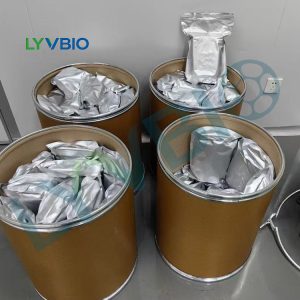
| Opakowanie | 25 kg fiber drum with double polyethylene bags |
Potrzebujesz pomocy? Skontaktuj się z naszym zespołem
Synonimy: 3-Carboxy-1-methylpyridinium sulfate, 1-Methylpyridinium-3-carboxylate sulfate, Trigonelline sulfate salt, Coffearin sulfate, N-Methylnicotinic acid sulfate
Trigonelline sulfate is the sulfate salt of trigonelline (N-methylnicotinic acid), a zwitterionic alkaloid derived from nicotinic acid. The sulfate counterion enhances water solubility and crystalline stability, making it a preferred form for pharmaceutical and nutraceutical applications. Its structure combines a pyridinium ring with a carboxylate group, facilitating interactions with biological targets such as sirtuins and NAD+-dependent enzymes.
Trigonelline occurs naturally in fenugreek (Trigonella foenum-graecum), coffee beans, and various legumes. The sulfate form is typically produced via methylation of nicotinic acid followed by sulfate salt formation, yielding a high-purity compound. It is available in research and bulk quantities, with standardization to ≥98% by HPLC.
Research indicates that trigonelline sulfate exhibits neuroprotective, anti-diabetic, and anti-inflammatory activities. It is used as a reference standard, in dietary supplements, and as an active ingredient in cosmetic formulations. Its ability to modulate cellular stress responses and metabolic pathways underscores its potential in age-related disease studies.
Trigonelline sulfate consists of two trigonelline cations (C7H7NO2+) and one sulfate anion (SO42-), forming a stable crystalline salt. The pyridinium nitrogen is methylated, imparting a permanent positive charge, while the carboxylate group remains deprotonated at physiological pH. This zwitterionic nature contributes to its high polarity and water solubility (>50 mg/mL). The sulfate salt form improves solid-state stability and reduces hygroscopicity compared to the free base.
| Parametr | Specyfikacja |
|---|---|
| Wygląd | Biały lub prawie biały krystaliczny proszek |
| Oznaczenie (HPLC) | ≥98,01 TP3T |
| Identyfikacja | IR, NMR conforms to structure |
| Strata przy suszeniu | ≤2.0% |
| Metale ciężkie | ≤10 ppm |
| Rozpuszczalność | Rozpuszczalny w wodzie |
Room,5-0203, Unit 5, Beiyuanmen Street,Xi'an,Shaanxi,China
 English English
 Russian
 French
 Korean
 German
 Polish
 Japanese
 Spanish
 Italian
 Vietnamese