
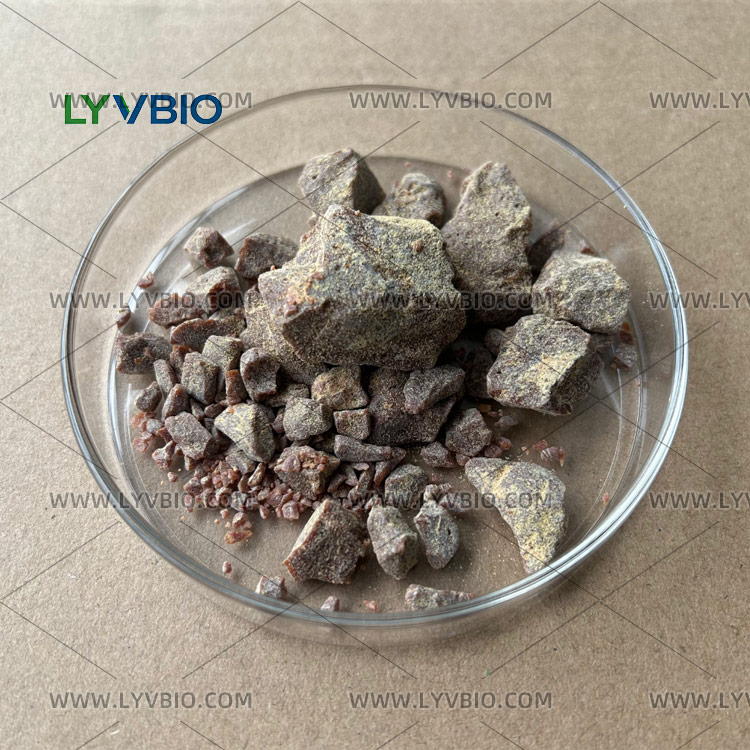

| Nazwa produktu | Rotenone |
|---|---|
| Numer CAS | 83-79-4 |
| Wzór cząsteczkowy | C₂₃H₂₂O₆ |
| Masa cząsteczkowa | 394.42 g/mol |
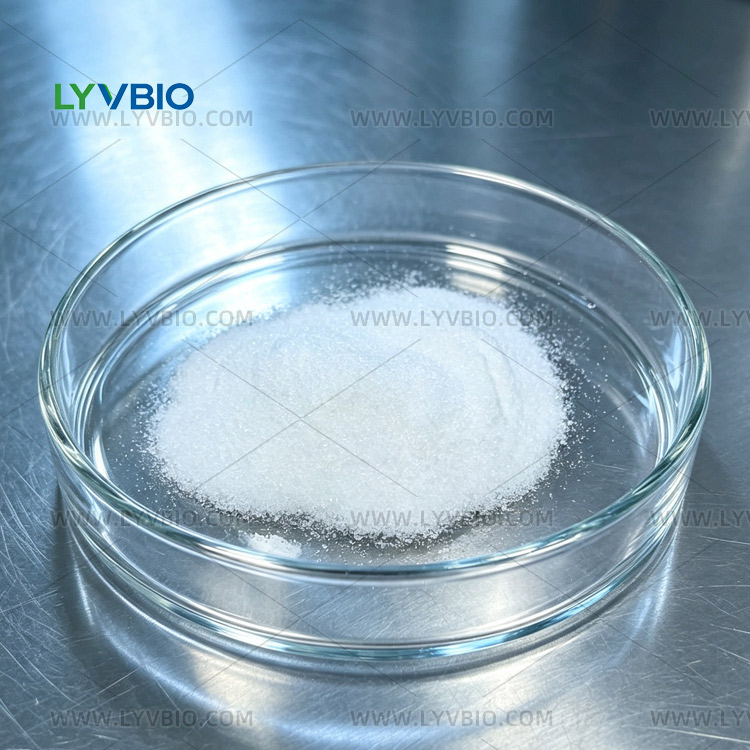
| Wygląd | 40%: Solid block; 98%: White crystalline powder |
| Oznaczenie (HPLC) | 40.0% or 98.0% (per grade) |
| Strata przy suszeniu | ≤ 1,01 TP3T |
| Popiół po spaleniu | ≤ 0,5% |
| Metale ciężkie | ≤ 10 ppm |
| Melting Point (98%) | 159 – 164°C |
| Przechowywanie | Przechowywać w chłodnym, suchym miejscu, z dala od światła |
| Rozpuszczalność | Soluble in DMSO, ethanol, chloroform; insoluble in water |
Potrzebujesz pomocy? Skontaktuj się z naszym zespołem
Rotenone is a naturally occurring isoflavonoid compound extracted from the roots and stems of several tropical plants, particularly Derris species, Lonchocarpus species (also known as cube root), and Tephrosia species. It has been used traditionally as an insecticide, piscicide (fish poison), and pesticide. Rotenone is recognized for its high toxicity to insects and fish, with relatively low mammalian toxicity, making it a widely used botanical insecticide.
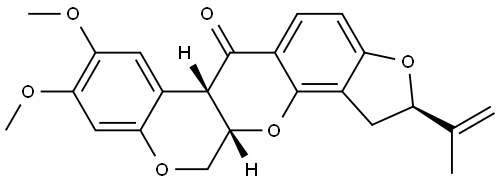
Rotenone MF:C23H22O6
Rotenone functions as a potent inhibitor of mitochondrial complex I (NADH dehydrogenase), disrupting the electron transport chain and inhibiting ATP synthesis. This mechanism is the basis for both its pesticidal activity and its use in research to model Parkinson’s disease, as the selective inhibition of complex I by rotenone is associated with dopaminergic neuron degeneration.
Rotenone is available in two grades:
40% Rotenone: A solid block formulation, commonly used as a technical-grade insecticide.
98% Rotenone: A high-purity white crystalline powder, used primarily in research applications for mechanistic studies of mitochondrial dysfunction and neurodegenerative disease models, as well as in analytical standards.
Mitochondrial complex I inhibitor: Blocks electron transport, reduces ATP production.
Parkinson’s disease research: Used to model dopaminergic neurodegeneration.
Insecticide / Pesticide: Inhibits cellular respiration in pests.
Piscicide: Controls invasive fish populations in aquatic management.
Research tool: Used for mitochondrial biology, neuroprotection studies, and oxidative stress research.
Źródło: Derris oraz Lonchocarpus plant species (natural extraction)
Normalizacja: 40.0% or 98.0% rotenone (HPLC)
| Ocena | Rotenone Content (HPLC) | Wygląd | Typowe zastosowanie |
|---|---|---|---|
| 40% | ≥40.0% | Solid block | Insecticide formulations, agricultural use |
| 98% | ≥98,01 TP3T | Biały krystaliczny proszek | Research applications, analytical standards |
Miesięczna wydajność: 40%: 1,000+ kg; 98%: 10+ kg
Czas realizacji: 3–5 dni (próbki), 10–15 dni (towar luzem)
Dokumentacja: COA
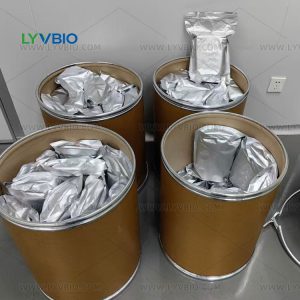
Opakowanie: 40%: 25 kg (block); 98%: 1 kg, 5 kg, 10 kg, 25 kg
280 Main Street, Xi’an, Shaanxi, Chiny
LyvBio Sp. z o.o.
E-mail: info@lyvbio.com
Room,5-0203, Courtyard 205, Lianhu District,Xi'an,Shaanxi,China
 English English
  Russian
 French
 Korean
 German
 Polish
 Japanese
 Spanish
 Italian
 Vietnamese