
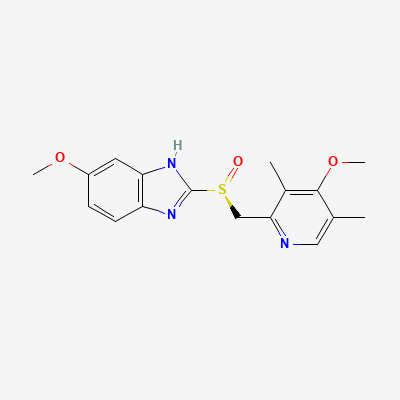


| Nazwa produktu | Esomeprazol |
|---|---|
| Numer CAS | 119141-88-7 |
| Wzór cząsteczkowy | C17H19N3O3S |
| Masa cząsteczkowa | 345.42 |
| Wygląd | Biały lub prawie biały krystaliczny proszek |
| Oznaczenie (HPLC) | ≥ 99,01 TP3T |
| Strata przy suszeniu | ≤ 0,5% |
| Popiół po spaleniu | ≤ 0,11 TP3T |
| Metale ciężkie | ≤ 10 ppm |
| Temperatura topnienia | 155°C - 160°C |
| Współczynnik obrotowy | −150° to −160° (c=1, methanol) |
Potrzebujesz pomocy? Skontaktuj się z naszym zespołem
Synonimy
Esomeprazole, Nexium, Esomeprazole base, (S)-Omeprazole, Esomeprazole anhydrous, Esomeprazole EP, Esomeprazole USP, (S)-5-Methoxy-2-[[(4-methoxy-3,5-dimethyl-2-pyridinyl)methyl]sulfinyl]-1H-benzimidazole
Esomeprazole is the S-isomer of omeprazole, and it’s the one that actually does the heavy lifting when it comes to acid suppression. It’s the active ingredient in Nexium, one of the best-selling proton pump inhibitors in the world. By selectively inhibiting the H+/K+-ATPase enzyme system in gastric parietal cells, it blocks acid secretion at the final step — which means it works faster and lasts longer than many other PPIs. For manufacturers, that translates into a reliable, well-documented API for treating GERD, peptic ulcers, and H. pylori eradication regimens. We supply esomeprazole as a high-purity crystalline powder, every batch shipped with a full COA, flexible from 1 kg trial runs to bulk container orders, and ready for worldwide delivery.
 English English
  Russian
 French
 Korean
 German
 Polish
 Japanese
 Spanish
 Italian
 Vietnamese