
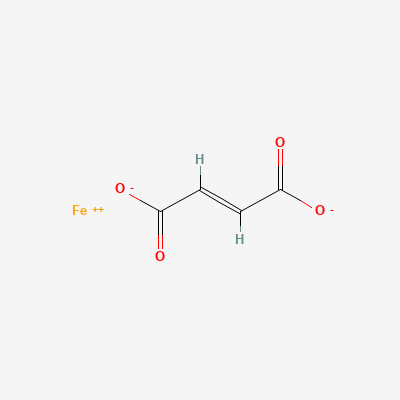
Ferrous fumarate
| Nazwa produktu | Ferrous Fumarate |
|---|---|
| Numer CAS | 141-01-5 |
| Wzór cząsteczkowy | C4H2FeO4 |
| Masa cząsteczkowa | 169.90 g/mol |
| Wygląd | Reddish-orange to reddish-brown fine powder |
| Assay (Iron Content) | 31.0% – 36.0% (dried basis) |
| Strata przy suszeniu | ≤ 1.5% |
| Metale ciężkie | ≤ 10 ppm |
| Rozpuszczalność | Practically insoluble in water, soluble in mineral acids |
| Wielkość cząstek | ≥ 99% through 100 mesh (typical) |
| Opakowanie | Beczka na włókna o pojemności 25 kg z podwójną wkładką z polietylenu |
Potrzebujesz pomocy? Skontaktuj się z naszym zespołem
Synonyms: Iron(II) fumarate, Ferrous fumarate, Iron fumarate, Ferrous iron fumarate, Fumaric acid iron(II) salt, (E)-2-Butenedioic acid iron(II) salt
Ferrous fumarate has become a go-to iron source for formulators seeking a well-tolerated, high-elemental-iron alternative to ferrous sulfate. As the global demand for iron supplementation continues to rise—driven by widespread iron-deficiency anemia and growing awareness of maternal and pediatric nutrition—ferrous fumarate stands out for its favorable gastrointestinal profile and excellent stability in solid dosage forms.
Chemically, ferrous fumarate is the iron(II) salt of fumaric acid, with the formula C4H2FeO4. It is produced by reacting ferrous sulfate with sodium fumarate, yielding a reddish-orange, finely divided powder that is practically insoluble in water but readily soluble in dilute mineral acids. This low solubility contributes to its gentle effect on the stomach compared to more soluble iron salts.
Our ferrous fumarate is standardized to contain 31.0%–36.0% elemental iron, meeting the stringent requirements of the USP/EP/BP monographs. It is available in a free-flowing powder form suitable for direct compression, capsule filling, and suspension formulations. Each batch is tested for iron content, loss on drying, and heavy metals to ensure consistent performance in your finished product.
Ferrous fumarate is a coordination compound in which iron is in the +2 oxidation state, chelated by fumarate ions. The fumarate ligand not only stabilizes the ferrous ion but also contributes to the molecule’s overall stability, making it less prone to oxidation than ferrous sulfate. The compound is essentially odorless and has a slightly astringent taste.
In the body, ferrous fumarate dissociates in the acidic environment of the stomach, releasing ferrous iron for absorption in the duodenum. The fumarate moiety is metabolized via the Krebs cycle, leaving no harmful residues. This efficient delivery system allows for a high bioavailability of iron, often comparable to that of ferrous sulfate, but with a lower incidence of gastric irritation.
| Parametr | Specyfikacja |
|---|---|
| Assay (Iron content) | 31.0% – 36.0% |
| Strata przy suszeniu | ≤ 1.5% |
| Metale ciężkie | ≤ 10 ppm |
| Arsenic | ≤ 3 ppm |
| Wartości graniczne dla mikroorganizmów | Total aerobic count ≤ 1000 cfu/g; Yeast & Mold ≤ 100 cfu/g; E. coli absent |
| Wielkość cząstek | ≥ 99% through 100 mesh |
Room,5-0203, Unit 5, Beiyuanmen Street,Xi'an,Shaanxi,China
 English English
 Russian
 French
 Korean
 German
 Polish
 Japanese
 Spanish
 Italian
 Vietnamese