
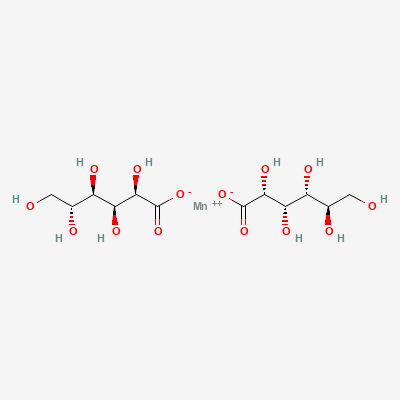
글루코네이트 망간
| 제품명 | Manganese Gluconate |
|---|---|
| CAS 번호 | 6485-39-8 |
| 다른 이름 | Manganese(II) gluconate; Gluconic acid manganese salt; Manganese D-gluconate |
| 분자식 | C12H22MnO14 |
| 분자량 | 445.24 g/mol |
| 외관 | Light pink to off-white fine powder |
| Assay (as Mn) | 11.5% – 12.5% (dry basis) |
| 용해도 | Freely soluble in water; practically insoluble in ethanol |
| 건조 손실 | ≤ 6.0% |
| 중금속 | 10 ppm 이하 |
| 패키지 | 25 kg fiber drum, inner polyethylene bags |
도움이 필요하신가요? 저희 팀에 문의해 주세요
Synonyms: Manganese Gluconate, Manganese(II) gluconate, Gluconic acid manganese salt, Manganese D-gluconate, C12H22MnO14, CAS 6485-39-8
Manganese gluconate is the manganese salt of gluconic acid, a mild chelate that pairs the essential trace mineral with a sugar acid naturally found in fruits and honey. The compound appears as a light pink to off-white powder and is prized for its high water solubility, which allows formulators to achieve clear, stable solutions without the precipitation issues common to many inorganic manganese sources.
Chemically, the molecule consists of one manganese(II) ion coordinated with two gluconate moieties, giving a molecular weight of 445.24 g/mol and a manganese content of roughly 11.5–12.5%. This structure places it alongside other mineral gluconates—such as zinc gluconate and ferrous gluconate—that are widely used in clinical nutrition and dietary supplements. Unlike manganese sulfate, which can be irritative and less bioavailable, manganese gluconate is gentle on the gastrointestinal tract and is well tolerated in both oral and topical applications.
In the pharmaceutical and nutraceutical industries, manganese gluconate is standardized to a defined manganese assay and is typically produced under GMP conditions to ensure consistent particle size, low heavy metal content, and microbiological safety. It serves as a key ingredient in multivitamin/mineral tablets, bone health formulas, and parenteral nutrition solutions, where precise dosing and compatibility with other nutrients are critical.
| 매개변수 | 사양 |
|---|---|
| Assay (as Mn, dry basis) | 11.5% – 12.5% |
| 식별 | Passes test for manganese and gluconate |
| 건조 손실 | ≤ 6.0% |
| Heavy Metals (as Pb) | 10 ppm 이하 |
| Microbial Limits | Total aerobic count ≤ 1000 CFU/g; Yeast & mold ≤ 100 CFU/g; E. coli absent |
| 입자 크기 | 98% through 80 mesh (adjustable) |
 English English
 Russian
 French
 Korean
 German
 Polish
 Japanese
 Spanish
 Italian
 Vietnamese