
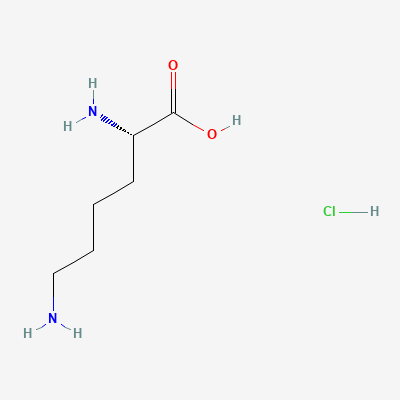
L-Lysine hydrochloride
| 제품명 | L-Lysine hydrochloride |
|---|---|
| CAS 번호 | 657-27-2 |
| 동의어 | L-Lysine HCl, (S)-2,6-Diaminohexanoic acid hydrochloride, Lysine hydrochloride |
| 분자식 | C6H15ClN2O2 |
| 분자량 | 182.65 g/mol |
| 외관 | White crystalline powder |
| 분석법 (HPLC) | 98.5% - 101.5% (dry basis) |
| Specific Rotation | +20.0° to +23.0° (c=2, 5N HCl) |
| 건조 손실 | ≤ 0.5% |
| 소각 잔류물 | ≤ 0.1% |
| 중금속 | 10 ppm 이하 |
| 용해도 | Freely soluble in water; slightly soluble in ethanol |
| 패키지 | 25 kg fiber drum with inner polyethylene bag |
도움이 필요하신가요? 저희 팀에 문의해 주세요
Synonyms: L-Lysine HCl, (S)-2,6-Diaminohexanoic acid hydrochloride, Lysine hydrochloride, L-Lysine monohydrochloride
L-Lysine hydrochloride is the hydrochloride salt of L-lysine, an essential amino acid that serves as a building block for proteins and plays a critical role in various metabolic pathways. It is produced through microbial fermentation, primarily using Corynebacterium glutamicum, followed by purification and crystallization. The hydrochloride form is preferred for its high solubility and stability, making it ideal for pharmaceutical, nutraceutical, and food applications.
As an essential amino acid, L-lysine cannot be synthesized by the human body and must be obtained through diet or supplementation. It is crucial for collagen synthesis, calcium absorption, and the production of carnitine, which helps convert fatty acids into energy. In the pharmaceutical industry, L-Lysine hydrochloride is used in parenteral nutrition, oral supplements, and as an active ingredient in medications for herpes simplex virus. In animal feed, it is a key additive to ensure optimal growth and development.
| 매개변수 | 사양 |
|---|---|
| 분석법 (HPLC) | 98.5% – 101.5% (dry basis) |
| 외관 | White crystalline powder |
| Specific Rotation | +20.0° to +23.0° (c=2, 5N HCl) |
| 건조 손실 | ≤ 0.5% |
| 소각 잔류물 | ≤ 0.1% |
| 중금속 | 10 ppm 이하 |
| 용해도 | Freely soluble in water; slightly soluble in ethanol |
 English English
 Russian
 French
 Korean
 German
 Polish
 Japanese
 Spanish
 Italian
 Vietnamese