
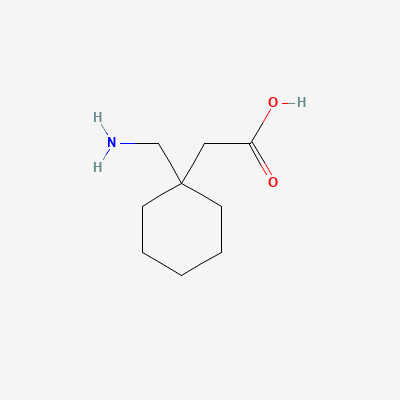
Gabapentin
| 제품명 | Gabapentin |
|---|---|
| CAS 번호 | 60142-96-3 |
| 분자식 | C9H17NO2 |
| 분자량 | 171.24 g/mol |
| 외관 | 흰색에서 미백색의 결정성 분말 |
| 분석법 (HPLC) | 98.0% – 102.0% |
| 건조 손실 | ≤ 0.5% |
| 소각 잔류물 | ≤ 0.1% |
| 중금속 | 10 ppm 이하 |
| 용해도 | Soluble in water, slightly soluble in ethanol |
| 패키지 | 25 kg fiber drum with double PE liner |
도움이 필요하신가요? 저희 팀에 문의해 주세요
동의어: 1-(Aminomethyl)cyclohexaneacetic acid, Neurontin, Gabapentin, 2-[1-(Aminomethyl)cyclohexyl]acetic acid, CI-945, GOE-3450
Gabapentin has firmly established itself as a key API in the pharmaceutical industry, particularly for neurological and pain management therapies. Its unique mechanism of action and favorable safety profile have driven steady demand across both prescription and research sectors. As generic formulations expand and new therapeutic applications emerge, procurement teams are increasingly focused on securing reliable, high-purity gabapentin from qualified suppliers.
Gabapentin is a synthetic gamma-aminobutyric acid (GABA) analog, structurally distinct from endogenous GABA but capable of modulating neuronal excitability. It is synthesized through a multi-step chemical process, yielding a white to off-white crystalline powder that is freely soluble in water. The compound’s stability and bioavailability make it suitable for oral solid dosage forms, including tablets and capsules.
Commercial gabapentin is typically standardized to 98.0%–102.0% assay (HPLC), meeting pharmacopeial requirements such as USP and EP. Manufacturers and formulators value its consistent particle size distribution and low impurity profile, which facilitate robust tablet compression and uniform content uniformity. With patent expirations and growing generic competition, the focus has shifted to supply chain reliability, documentation transparency, and cost efficiency.
Gabapentin is a white to off-white crystalline powder with a molecular weight of 171.24 g/mol. It is chemically designated as 1-(aminomethyl)cyclohexaneacetic acid and is freely soluble in water, with slight solubility in ethanol. The compound is stable under normal storage conditions and is compatible with common excipients used in solid dosage forms.
Its structure incorporates a cyclohexane ring and an amino acid moiety, which contributes to its lipophilic character and ability to cross the blood-brain barrier. The active pharmaceutical ingredient (API) is typically produced via chemical synthesis, followed by purification steps to achieve high purity and consistent quality.
| 매개변수 | 사양 |
|---|---|
| 분석법 (HPLC) | 98.0% – 102.0% |
| 건조 손실 | ≤ 0.5% |
| 중금속 | 10 ppm 이하 |
| 소각 잔류물 | ≤ 0.1% |
| Microbial Limits | Total aerobic count ≤ 1000 CFU/g |
| Impurities | Meets USP/EP requirements |
 English English
 Russian
 French
 Korean
 German
 Polish
 Japanese
 Spanish
 Italian
 Vietnamese