

Red Clover Extract, derived from Trifolium pratense L., is a botanical ingredient that has attracted long-standing interest in the European and North American nutraceutical markets.
Also known as Red Clover, Trifolium pratense is a flowering legume native to Europe, Central Asia and parts of North Africa. The plant is naturally rich in a group of compounds known as isoflavones, which are the main reason red clover extracts are widely used in botanical supplement formulations.
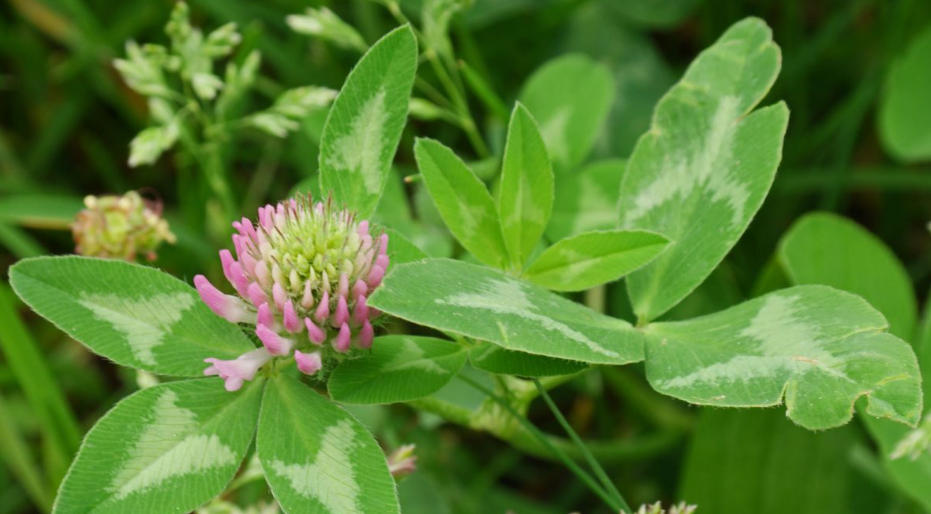
For ingredient manufacturers and supplement brands, the most important point is not simply the plant itself, but the standardization, isoflavone profile, extraction method and batch-to-batch consistency of the final extract.
What Is Red Clover Extract?
Red Clover Extract is obtained from the aerial parts of Trifolium pratense L., including the leaves, stems and flowers, depending on the extraction specification.
The botanical name is:
Trifolium pratense L.
Common name:
Red Clover
Family:
Fabaceae
The key compounds associated with red clover are isoflavones, particularly:
- Formononetin
- Biochanin A
- ゲニステイン
- Daidzein
These four compounds are commonly used as the primary markers when characterizing and standardizing red clover extracts. Scientific analysis of red clover extracts has also identified other minor constituents, including flavonoids and pterocarpans.
For example, the United States Pharmacopeia defines a standardized Red Clover Aerial Parts Isoflavone Aglycones Dry Extract as containing 36–44% total isoflavones, calculated as the sum of daidzein, genistein, formononetin and biochanin A.
This illustrates an important point for buyers: “Red Clover Extract” is not one single specification.
Different products can have significantly different extraction ratios, plant parts, carriers and isoflavone concentrations.

Trifolium pratense Extract
Why Are Isoflavones Important?
Isoflavones are a class of naturally occurring polyphenolic compounds found mainly in legumes.
Red clover is particularly interesting because its isoflavone profile includes formononetin and biochanin A, in addition to daidzein and genistein.
These compounds have attracted scientific interest because some red clover isoflavones have structural similarities to estrogen and can interact with estrogen receptors under certain experimental conditions.
This is one of the reasons red clover extracts have become popular ingredients in products positioned around:
- Women’s wellness
- 健やかな老い
- Menopause-focused nutrition
- Bone health formulations
- Botanical antioxidant formulations
- General nutraceutical products
However, the scientific evidence for specific health outcomes remains mixed. For example, clinical studies investigating red clover for menopausal hot flashes have produced inconsistent results.
For this reason, finished-product manufacturers should distinguish between ingredient functionality, scientific research and legally permitted health claims in their target market.
The Four Major Isoflavones in Red Clover Extract
1. Formononetin
Formononetin is one of the characteristic isoflavones found in red clover.
It is commonly monitored as part of the total isoflavone profile and is an important marker for the characterization of standardized red clover extracts.
2. Biochanin A
Biochanin A is another major red clover isoflavone.
Together with formononetin, biochanin A contributes to the distinctive phytochemical profile that differentiates red clover from many other botanical sources.
3. Genistein
Genistein is a well-known soy and red clover isoflavone that has been extensively studied in nutritional and biochemical research.
In red clover extracts, genistein is normally quantified together with the other major isoflavones.
4. Daidzein
Daidzein is another naturally occurring isoflavone found in red clover.
Depending on the extraction process and specification, the relative proportions of these four compounds can vary considerably.
Therefore, when purchasing bulk red clover extract, it is useful to ask for a detailed HPLC specification rather than relying only on the total extract ratio.
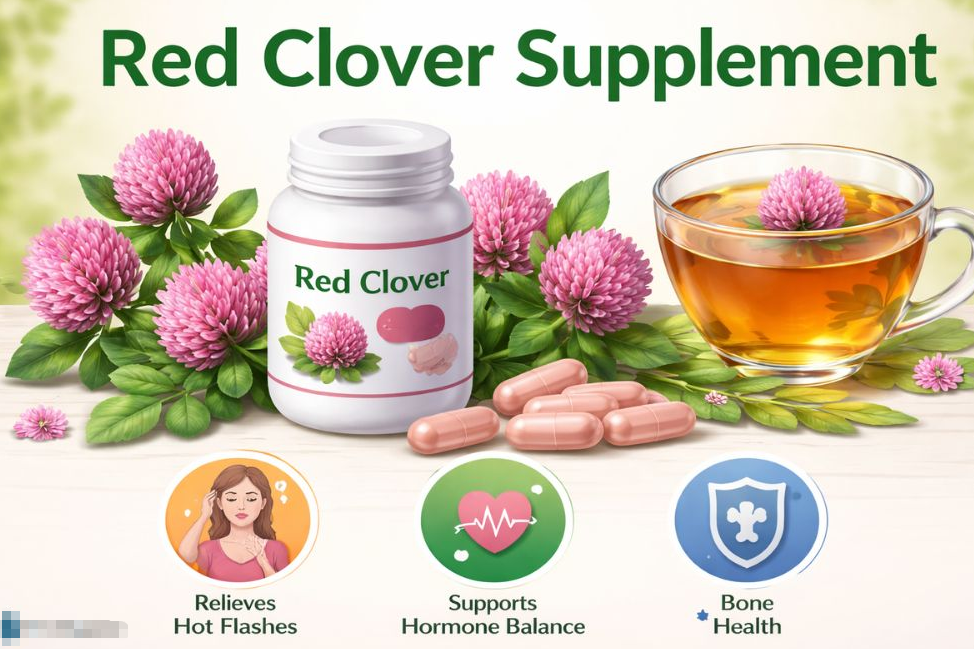
Red Clover Extract Supplier
Red Clover Extract for Dietary Supplements
Red Clover Extract has a long history of use in dietary supplement formulations, particularly products designed for women’s wellness.
Commercial products available in Europe commonly use extracts standardized to different levels of total isoflavones. For example, products on the European market can be found with specifications around 20% isoflavones, while highly standardized botanical ingredients can reach considerably higher levels.
This gives supplement manufacturers considerable flexibility when designing formulations.
Depending on the target product, manufacturers may choose:
Low-to-medium standardized extract
for broader botanical formulations, or
High-isoflavone standardized extract
for products where isoflavone content is the primary specification.
The right specification depends on the intended dosage, formulation format, regulatory requirements and target market.
What Should Buyers Check When Purchasing Red Clover Extract?
For B2B buyers, the botanical name alone is not enough.
A reliable purchasing specification should normally include several key parameters.
1. Botanical Identification
The raw material should clearly identify the botanical source as:
Trifolium pratense L.
The plant part should also be specified.
For example:
- Aerial parts
- Flowers
- Leaves
- Leaves and flowers
Different plant parts can result in different phytochemical profiles.
2. Isoflavone Content
This is one of the most important specifications.
Typical specifications may include:
- Total isoflavones 8%
- Total isoflavones 20%
- Total isoflavones 40%
- Total isoflavones 80%+
The exact specification depends on the extraction and standardization process.
Some standardized red clover ingredients use the four major isoflavones—formononetin, biochanin A, genistein and daidzein—as the basis of HPLC analysis.
3. HPLC Testing
For standardized red clover extract, HPLC is an important analytical method for determining the isoflavone profile.
Buyers should ideally request the actual analytical specification rather than relying only on a statement such as:
Red Clover Extract 20:1
An extraction ratio does not automatically tell you how much active isoflavone is present.
4. Extraction Solvent
Water, ethanol and hydroalcoholic extraction systems are commonly used for botanical extracts.
The extraction method can influence the final phytochemical composition and should therefore be included in the technical specification.
5. Heavy Metals and Microbiological Testing
For food supplement applications, buyers will generally also want documentation covering:
- Heavy metals
- Microbial limits
- Pesticide residues
- Residual solvents
- Aflatoxins, where applicable
- GMO status
- Allergen information
The exact testing requirements depend on the destination market and final application.

Red Clover Isoflavones capsules
Red Clover Extract in the European Market
Europe has a long history of using botanical ingredients in food supplements and herbal products.
Red clover is particularly interesting for European supplement manufacturers because of its established presence in women’s wellness products and its naturally occurring isoflavones.
However, food supplement regulation and medicinal-product regulation are not the same thing.
The European Medicines Agency explains that EU herbal monographs relate specifically to herbal medicinal products and their medicinal use; individual Member States may have their own requirements.
Therefore, when developing a red clover supplement for the EU market, manufacturers should evaluate:
- Ingredient status in the destination country
- Intended use
- Daily intake
- Food supplement legislation
- Novel Food considerations where relevant
- Permitted health claims
- Labeling requirements
- National requirements in the specific EU Member State
In other words, an ingredient being commercially available in Europe does not automatically mean that every dosage, claim or formulation is compliant in every European market.
Red Clover Extract for Women’s Wellness
Women’s health remains one of the most important application areas for red clover extract.
The natural presence of isoflavones makes red clover particularly relevant to formulations targeting adult women’s wellness and healthy aging.
Commercial red clover products are commonly positioned around areas such as:
Women’s Wellness
Menopause Nutrition
Healthy Aging
Bone Health
Botanical Wellness
However, manufacturers should be careful with wording on finished-product labels and marketing materials.
Scientific research has investigated red clover preparations for menopausal symptoms, but the results have not been consistently positive.
For B2B ingredient suppliers, it is therefore better to provide technical information and scientific background while allowing finished-product brands to determine their final market claims according to local regulations.
Why Standardization Matters
Two products can both be called:
Red Clover Extract
but their actual composition may be completely different.
For example:
| 仕様 | Product A | Product B |
|---|---|---|
| Botanical Source | Trifolium pratense L. | Trifolium pratense L. |
| 抽出率 | 10:1 | 20:1 |
| Total Isoflavones | 8% | 40% |
| 抽出 | Water/Ethanol | Hydroalcoholic |
| 標準化 | Total Isoflavones | 4 Major Isoflavones |
| 用途 | General Botanical | High-potency Supplement |
This is why professional buyers should compare analytical specifications, not simply compare the price per kilogram.
A cheaper extract with a lower active concentration may not actually be cheaper on an active-ingredient basis.
Red Clover Extract as a Bulk Botanical Ingredient
For supplement manufacturers, contract manufacturers and ingredient distributors, Red Clover Extract can be supplied in different standardization levels according to formulation requirements.
で LyvBio, we focus on supplying botanical extracts and functional ingredients for international B2B customers.
Our Red Clover Extract is derived from:
Trifolium pratense L.
and can be supplied according to customer requirements for applications including:
- Dietary supplements
- Capsules
- Tablets
- Functional powders
- Botanical blends
- Nutraceutical formulations
- Women’s wellness formulations
- Private-label supplement development
For commercial projects, customers can request technical documentation including:
- COA
- HPLC analytical data
- Microbiological specifications
- Heavy metal testing
- GMO statement
- Allergen statement
- Origin information
Specific documentation and specifications should be confirmed according to the required grade and destination market.
Red Clover Extract: What Makes a Good Supplier?
When sourcing botanical extracts internationally, price is only one part of the equation.
A good red clover extract supplier should be able to provide:
Consistent botanical raw materials
Stable isoflavone standardization
Reliable HPLC testing
Complete technical documentation
Batch-to-batch consistency
Flexible packaging and bulk quantities
Export experience
For European and North American buyers, traceability and documentation are becoming just as important as the price per kilogram.
A supplier who can provide a complete technical package can save the buyer considerable time during formulation, quality assessment and regulatory review.
まとめ
Trifolium pratense L., better known as Red Clover, is more than just a traditional botanical.
Its naturally occurring isoflavones—including formononetin, biochanin A, genistein and daidzein—make red clover extract an interesting ingredient for modern nutraceutical and botanical formulations.
For manufacturers, however, the most important question is not simply:
“Is this Red Clover Extract?”
A better question is:
“What is the botanical source, what is the isoflavone profile, how is it standardized, and can the supplier consistently deliver the same specification?”
That is where the difference between a basic botanical powder and a professional standardized botanical ingredient becomes clear.
Red Clover Extract Supplier – LyvBio
LyvBio supplies botanical extracts and functional ingredients for international B2B customers.
If you are looking for Red Clover Extract (Trifolium pratense L.) for dietary supplements, nutraceutical formulations or botanical product development, please contact us for specifications, COA, TDS, samples and bulk pricing.
Product: Red Clover Extract
Botanical Name: Trifolium pratense L.
Main Marker Compounds: Formononetin, Biochanin A, Genistein, Daidzein
用途: Dietary Supplements / Nutraceuticals / Botanical Formulations
Supply: Bulk / OEM / B2B
 English
  Russian
  French
  Korean
  German
  Polish
  Japanese
  Spanish
  Italian
  Vietnamese
コメントを残す