
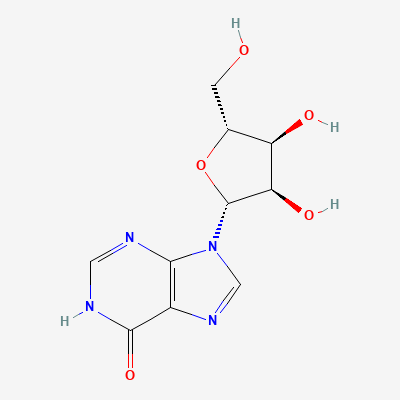
Inosine
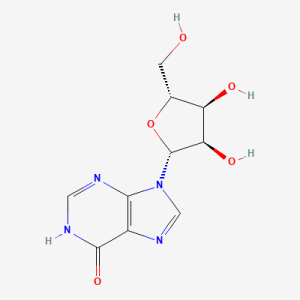
| 製品名 | Inosine |
|---|---|
| CAS番号 | 58-63-9 |
| 別名 | Hypoxanthine riboside; 9-β-D-Ribofuranosylhypoxanthine; Inosine-9-β-D-ribofuranoside |
| 分子式 | C10H12N4O5 |
| 分子量 | 268.23 g/mol |
| 外観 | 白色からオフホワイトの結晶性粉末 |
| 分析(HPLC) | ≥99.0% |
| 乾燥減量 | ≤0.5% |
| 焼失残渣 | ≤0.11 TP3T |
| 重金属 | 10 ppm以下 |
| 溶解度 | Slightly soluble in water, practically insoluble in ethanol |
| 粒子径 | 98% pass 80 mesh |
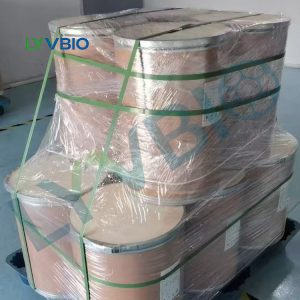
| パッケージ | 25 kg fiber drum with double polyethylene liner |
お困りですか? 弊社チームまでお問い合わせください
同義語: Hypoxanthine riboside, 9-β-D-Ribofuranosylhypoxanthine, Inosine-9-β-D-ribofuranoside, Inosine
Inosine is a naturally occurring purine nucleoside formed by the deamination of adenosine, consisting of a hypoxanthine base attached to a ribose sugar via a β-N9-glycosidic bond. While it appears in small quantities in animal tissues and certain plant sources, commercial material is produced through fermentation or chemical synthesis, yielding a high-purity white crystalline powder that meets stringent pharmaceutical standards.
As an intermediate in purine metabolism, inosine serves as a precursor to adenosine and guanosine nucleotides, influencing cellular energy balance and signaling pathways. This central role has made it a valuable molecule for pharmaceutical research, nutraceutical formulations, and biochemical assays. Its ability to modulate adenosine receptors and support ATP regeneration has attracted interest in areas ranging from cardiovascular health to neuroprotection.
| パラメータ | 仕様 |
|---|---|
| 分析(HPLC) | ≥99.0% |
| 外観 | 白色からオフホワイトの結晶性粉末 |
| 識別 | IR and HPLC conform to reference standard |
| 乾燥減量 | ≤0.5% |
| 焼失残渣 | ≤0.11 TP3T |
| 重金属 | 10 ppm以下 |
| 溶解度 | Slightly soluble in water, practically insoluble in ethanol |
 English English
 Russian
 French
 Korean
 German
 Polish
 Japanese
 Spanish
 Italian
 Vietnamese