
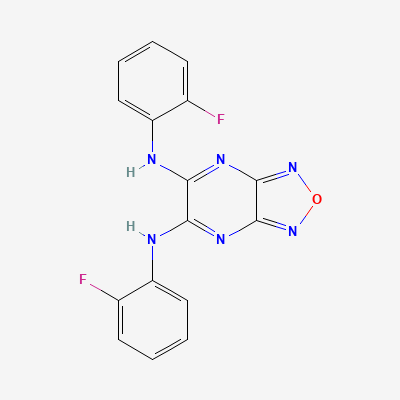
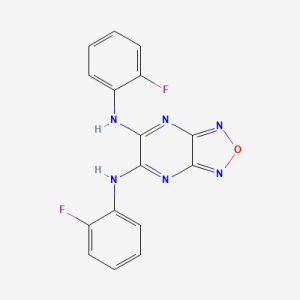
BAM 15
| 製品名 | BAM 15 |
|---|---|
| CAS番号 | 210302-17-3 |
| 分子式 | C19H22N2O2S |
| 分子量 | 342.46 g/mol |
| 外観 | 白色からオフホワイトの結晶性粉末 |
| 分析(HPLC) | ≥98.0% |
| 溶解度 | Soluble in DMSO (up to 20 mM), ethanol (up to 10 mM); practically insoluble in water |
| ストレージ | Store at -20°C, protect from light and moisture |
| パッケージ | 10 mg, 50 mg, 100 mg, 500 mg, 1 g (custom packaging available) |
お困りですか? 弊社チームまでお問い合わせください
同義語: BAM 15, 2-[(4-Methoxyphenyl)sulfonyl]-N-(4-methylphenyl)acetamide, N-(4-Methylphenyl)-2-[(4-methoxyphenyl)sulfonyl]acetamide, BAM-15, Mitochondrial Uncoupler BAM 15
In the ongoing search for effective mitochondrial uncouplers with drug-like properties, BAM 15 has emerged as a molecule of considerable interest. Unlike classical protonophores such as 2,4-dinitrophenol (DNP), which carry significant toxicity risks, BAM 15 offers a milder, more controlled approach to modulating cellular energy metabolism. This has positioned it as a popular tool compound in metabolic research, particularly in studies related to obesity, insulin resistance, and non-alcoholic steatohepatitis (NASH). Its popularity has grown alongside the broader interest in mitochondrial dysfunction as a therapeutic target, making it a staple in both academic and industrial laboratories.
BAM 15 is a synthetic small molecule that acts as a mitochondrial protonophore. It is chemically distinct from DNP, featuring a sulfonamide-based structure that contributes to its improved safety profile. The compound is typically synthesized through a multi-step organic process, resulting in a high-purity white to off-white crystalline powder. Its mechanism of action involves the transport of protons across the inner mitochondrial membrane, thereby dissipating the proton gradient and uncoupling oxidative phosphorylation from ATP synthesis. This leads to increased energy expenditure and enhanced substrate oxidation, which are the basis for its metabolic effects.
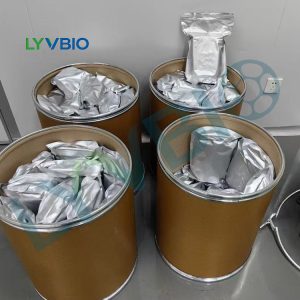
At LyvBio, we supply BAM 15 with a purity of ≥98% (HPLC), ensuring consistency and reliability for your research needs. Our product is manufactured under strict quality control measures and is accompanied by comprehensive documentation, including a Certificate of Analysis (COA), MSDS, and TDS. Whether you are investigating mitochondrial function, screening for anti-obesity agents, or exploring the compound’s potential in other therapeutic areas, our BAM 15 provides a dependable foundation for your experiments.
BAM 15 (CAS 210302-17-3) is a synthetic organic compound with the molecular formula C19H22N2O2S and a molecular weight of 342.46 g/mol. It is characterized by a 4-methoxyphenylsulfonyl group attached to an acetamide moiety, which is further substituted with a p-tolyl group. This unique structure confers its protonophoric activity and influences its physicochemical properties, such as solubility and membrane permeability.
The compound is lipophilic, with a calculated logP of approximately 3.2, allowing it to readily partition into biological membranes. It is soluble in common organic solvents like DMSO and ethanol but has limited aqueous solubility. This solubility profile is typical for mitochondrial uncouplers and necessitates the use of appropriate vehicles (e.g., DMSO or corn oil) in in vivo studies. BAM 15 is stable under recommended storage conditions and should be protected from light and moisture to maintain its integrity.
| パラメータ | 仕様 |
|---|---|
| 分析(HPLC) | ≥98.0% |
| 外観 | 白色からオフホワイトの粉末 |
| 識別 | NMR, MS conform to structure |
| 乾燥減量 | ≤0.5% |
| 重金属 | 10 ppm以下 |
| 残留溶剤 | Meets ICH guidelines |
| Microbial Limits | Total aerobic count ≤1000 CFU/g; Yeast & Mold ≤100 CFU/g |
 English English
 Russian
 French
 Korean
 German
 Polish
 Japanese
 Spanish
 Italian
 Vietnamese