
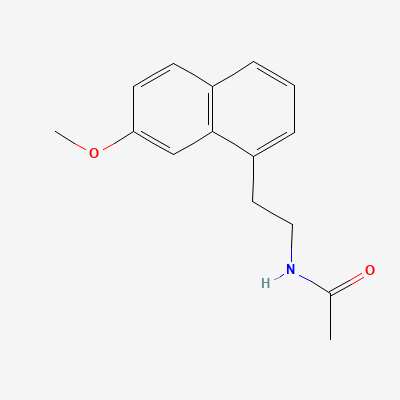
Agomelatine
| Nome del prodotto | Agomelatine |
|---|---|
| Numero CAS | 138112-76-2 |
| Formula molecolare | C15H17NO2 |
| Peso molecolare | 243.30 g/mol |
| Aspetto | Polvere cristallina di colore da bianco a bianco sporco |
| Analisi (HPLC) | ≥99.0% |
| Punto di fusione | 108-110°C |
| Solubilità | Soluble in DMSO, methanol, ethanol; practically insoluble in water |
| Perdita per essiccazione | ≤0.5% |
| Residuo di combustione | ≤0.1% |
| Metalli pesanti | ≤10 ppm |
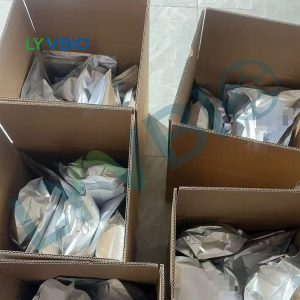
| Confezione | 25 kg fiber drum with double polyethylene bags |
Hai bisogno di aiuto? Contatta il nostro team
Sinonimi: N-[2-(7-Methoxynaphthalen-1-yl)ethyl]acetamide; Melatonin agonist; MT1/MT2 agonist; 5-HT2C antagonist; Agomelatine; S-20098; Valdoxan; Melitor
Agomelatine is a synthetic naphthalene derivative that stands out in the CNS space for its dual mechanism: it acts as a potent agonist at melatonin MT1 and MT2 receptors while simultaneously blocking serotonin 5-HT2C receptors. This combination is unusual—most antidepressants target monoamine transporters or single receptors—and it gives agomelatine a distinct pharmacological profile that resynchronizes circadian rhythms and enhances dopaminergic and noradrenergic transmission in the frontal cortex.
First approved in Europe in 2009 for major depressive episodes, agomelatine has since been studied for generalized anxiety disorder, seasonal affective disorder, and sleep regulation. The active pharmaceutical ingredient (API) is manufactured under cGMP conditions and is available in various polymorphic forms, with Form I being the most thermodynamically stable and commonly used in solid oral dosage forms. Our agomelatine is produced via a multi-step synthesis starting from 7-methoxy-1-tetralone, yielding high-purity material suitable for tablet formulation.
In the B2B segment, agomelatine is primarily supplied to generic drug manufacturers, research institutions, and specialty pharma companies developing reformulations or fixed-dose combinations. Its patent landscape has matured, opening opportunities for generic entry in multiple markets. The compound’s unique mechanism also attracts interest in chronobiology and neuropsychopharmacology research, where reliable, well-characterized API is essential.
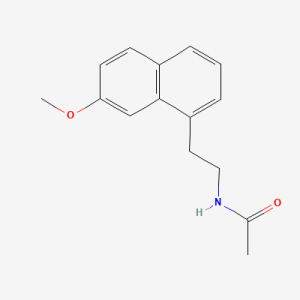
Agomelatine features a 7-methoxynaphthalene core linked via an ethyl chain to an acetamide group. The methoxy substituent at the 7-position is critical for melatonin receptor affinity, while the acetamide side chain contributes to metabolic stability and oral bioavailability. The molecule is lipophilic (logP ≈ 2.5) and exhibits low aqueous solubility, which can be addressed through micronization or salt formation during formulation. It is optically inactive and exists as a single crystalline form under standard storage conditions.
| Parametro | Specifiche |
|---|---|
| Analisi (HPLC) | ≥99.0% |
| Identificazione | IR, HPLC retention time conforms to reference standard |
| Punto di fusione | 108-110°C |
| Perdita per essiccazione | ≤0.5% |
| Residuo di combustione | ≤0.1% |
| Metalli pesanti | ≤10 ppm |
| Sostanze correlate | Total impurities ≤0.5%, single impurity ≤0.1% |
Room,5-0203, Unit 5, Beiyuanmen Street,Xi'an,Shaanxi,China
 English English
 Russian
 French
 Korean
 German
 Polish
 Japanese
 Spanish
 Italian
 Vietnamese