
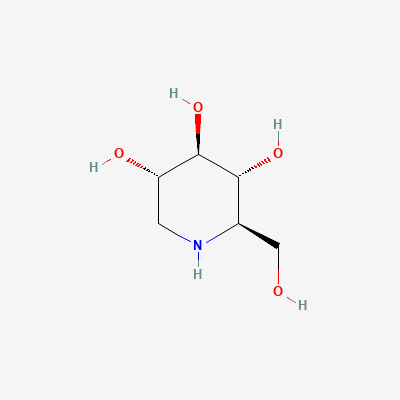
1-Deossinojirimicina (DNJ)
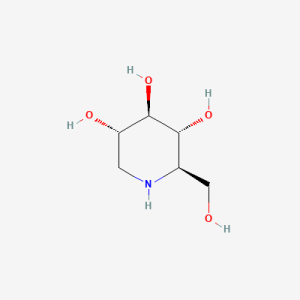
| Nome del prodotto | 1-Deossinojirimicina (DNJ) |
|---|---|
| Numero CAS | 19130-96-2 |
| Altri nomi | DNJ, 1-Deoxynojirimycin, 1,5-Dideoxy-1,5-imino-D-glucitol, Moranoline |
| Formula molecolare | C6H13NO4 |
| Peso molecolare | 163.17 g/mol |
| Aspetto | Polvere cristallina di colore da bianco a bianco sporco |
| Analisi (HPLC) | ≥98.0% |
| Punto di fusione | 203-205 °C (dec.) |
| Solubilità | Soluble in water, slightly soluble in methanol, practically insoluble in ethanol |
| Perdita per essiccazione | ≤0.5% |
| Residuo di combustione | ≤0.1% |
| Metalli pesanti | ≤10 ppm |
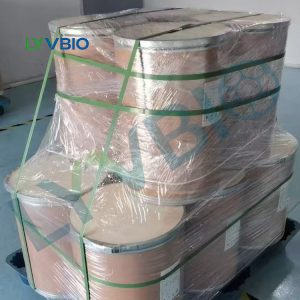
| Confezione | 25 kg net weight in fiber drums with double polyethylene liners |
Hai bisogno di aiuto? Contatta il nostro team
Sinonimi: 1-Deoxynojirimycin, DNJ, 1,5-Dideoxy-1,5-imino-D-glucitol, Moranoline, 19130-96-2
1-Deoxynojirimycin (DNJ) is a polyhydroxylated piperidine alkaloid that occurs naturally in certain plants, most notably in mulberry leaves (Morus alba) and in the fermentation products of Bacillus species. Structurally, it resembles D-glucose with the ring oxygen replaced by nitrogen, which allows it to act as a potent competitive inhibitor of various glucosidases. This sugar-mimic property has positioned DNJ as a valuable building block for pharmaceutical research and as an active ingredient in dietary supplements targeting glycemic control.
While DNJ can be obtained through chemical synthesis, commercial quantities are typically produced via microbial fermentation using non-pathogenic Bacillus strains, followed by purification steps including ion exchange and crystallization. This biotechnological route yields high-purity DNJ with consistent stereochemistry, avoiding the complex protecting-group manipulations required in synthetic approaches. The fermentation-derived material is preferred by formulators seeking a natural-sourced ingredient with a clean regulatory profile.
In the supplement and functional food space, DNJ is best known for its role in mulberry leaf extracts standardized for this alkaloid. It is also employed as a reference standard in analytical laboratories and as a research tool to study carbohydrate metabolism and glycoprotein processing. For B2B buyers, DNJ represents a high-value bioactive with applications spanning nutraceuticals, pharmaceuticals, and biochemical research.
DNJ is a six-membered piperidine ring bearing four hydroxyl groups and a hydroxymethyl substituent, giving it a close structural resemblance to glucose. The nitrogen atom in the ring is protonated under physiological conditions, which mimics the oxocarbenium ion transition state of glycosidase substrates. This feature underlies its strong binding affinity for glucosidases. DNJ is a white crystalline solid with a melting point around 203-205°C (with decomposition). It is highly soluble in water (up to ~50 mg/mL) and has limited solubility in most organic solvents. The compound is stable under normal storage conditions but should be protected from moisture and excessive heat.
| Parametro | Specifiche |
|---|---|
| Aspetto | Polvere cristallina di colore da bianco a bianco sporco |
| Analisi (HPLC) | ≥98.0% |
| Identificazione | IR spectrum conforms to reference |
| Punto di fusione | 203-205°C (dec.) |
| Perdita per essiccazione | ≤0.5% |
| Residuo di combustione | ≤0.1% |
| Metalli pesanti | ≤10 ppm |
Room,5-0203, Unit 5, Beiyuanmen Street,Xi'an,Shaanxi,China
 English English
 Russian
 French
 Korean
 German
 Polish
 Japanese
 Spanish
 Italian
 Vietnamese