
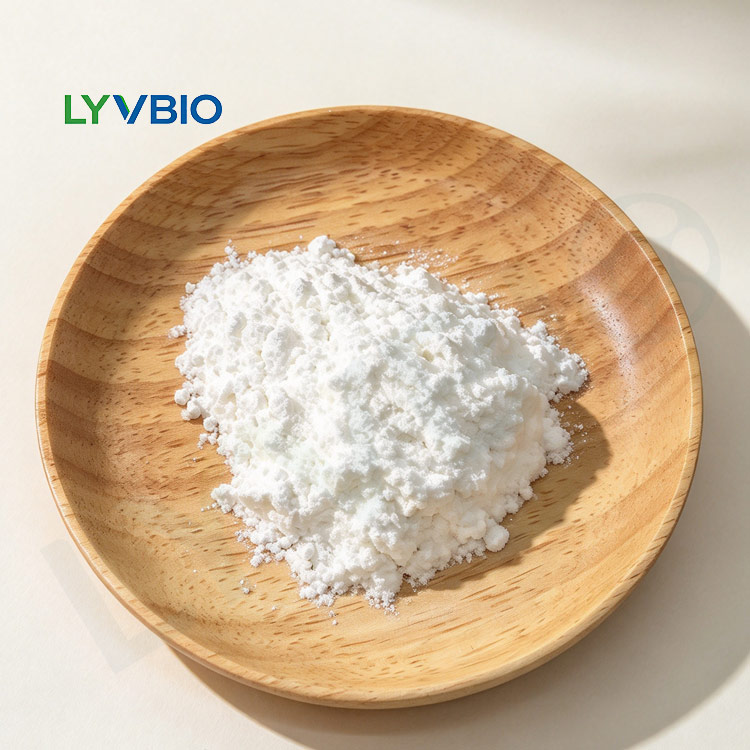
Hydrolyzed Sponge
| Nom du produit | Hydrolyzed Sponge |
|---|---|
| Numéro CAS | N/A (natural marine-derived material) |
| Source | Freshwater sponge (Spongilla lacustris) or marine sponge species |
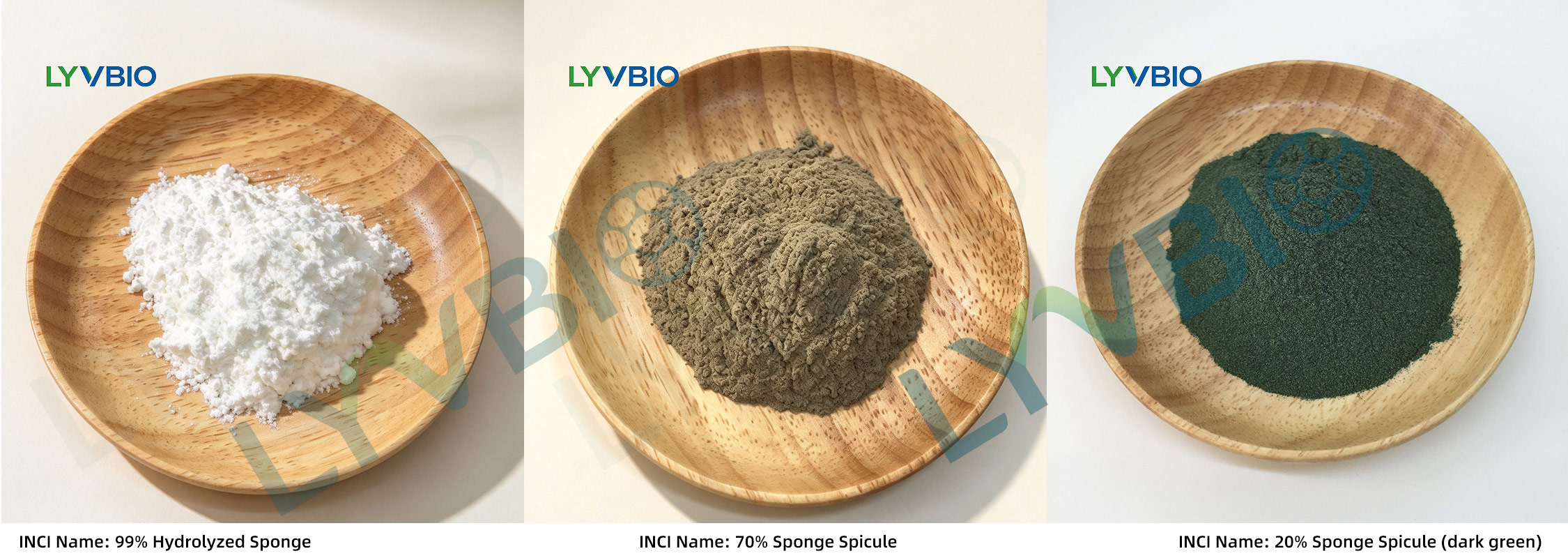
| Apparence | Off-white to light beige fine powder |
| Active Component | Silica spicules (siliceous skeletal fragments) |
| Spicule Content | ≥ 99.0% (as silica spicules) 95%,90% |
| Granulométrie | Customizable: 50 – 300 µm (typical: 100 – 200 µm) |
| Moisture | ≤ 5.0% |
| Métaux lourds | ≤ 10 ppm |
| Stockage | Store in a cool, dry place, sealed, protected from moisture |
Besoin d'aide ? Contacter notre équipe
Synonymes : Hydrolyzed Sponge, Sponge Spicules, Silica Spicules, Spongilla Spicules, Hydrolyzed Spongilla, Freshwater Sponge Powder, Sponge Needles, Siliceous Spicules
Hydrolyzed Sponge is a natural exfoliating and skin-resurfacing ingredient derived from the siliceous skeletal structures (spicules) of freshwater sponges, primarily Spongilla lacustris. These microscopic needle-like structures are composed of amorphous silica (SiO₂) and are harvested, purified, and processed into a fine powder through a controlled hydrolysis and milling process.
Sponge spicules are widely used in cosmetic and dermatological applications as a physical exfoliant et skin-resurfacing agent. Unlike synthetic microbeads or abrasive scrubs, sponge spicules provide a natural, biodegradable alternative that offers gentle yet effective exfoliation. They are also used in professional skincare treatments, including microneedling-like “spicule therapy” for improving skin texture, reducing fine lines, and enhancing the penetration of topical actives.
The spicules are available in various particle sizes, allowing formulators to tailor the exfoliation intensity and sensory experience. The material is chemically inert, non-toxic, and compatible with a wide range of cosmetic formulations.
Physical exfoliation: Removes dead skin cells and promotes cell turnover.
Skin resurfacing: Improves skin texture, reduces fine lines and uneven tone.
Enhanced penetration: Creates micro-channels that improve absorption of topical actives.
Stimulation du collagène: Mechanical stimulation may promote collagen synthesis.
Natural and biodegradable: Sustainable alternative to synthetic exfoliants.
Source: Freshwater sponge (Spongilla lacustris) or marine sponge species
Processing: Harvesting → cleaning → hydrolysis (to remove organic matter) → milling → sieving into specific particle sizes
Q: Are sponge spicules safe for sensitive skin?
A: Sponge spicules are generally well-tolerated, but their mechanical action should be adjusted according to skin sensitivity. For sensitive skin, fine-grade spicules at low concentrations are recommended.
Q: How do sponge spicules differ from synthetic microbeads?
A: Sponge spicules are 100% natural, biodegradable, and derived from renewable marine/freshwater sources. Synthetic microbeads are plastic-based and have been banned in many countries due to environmental concerns.
Q: Can sponge spicules be used in leave-on products?
A: Yes, they are used in leave-on serums and creams for “spicule therapy,” where their micro-channeling effect enhances the penetration of active ingredients.
Q: Are sponge spicules painful?
A: When used at recommended concentrations and particle sizes, spicules provide a tolerable tingling or prickling sensation, not pain. Professional treatments may use higher concentrations.
Q: Is this product suitable for vegan and Halal applications?
A: Sponge spicules are animal-derived (from sponges). They are not vegan. For vegan alternatives, please inquire about other natural exfoliants.
© 2026 LyvBio Co., Ltd. | | Email: info@lyvbio.com | Website: https://www.lyvbio.com
Room,5-0203, Unit 5, Beiyuanmen Street,Xi'an,Shaanxi,China
 English English
 Russian
 French
 Korean
 German
 Polish
 Japanese
 Spanish
 Italian
 Vietnamese