
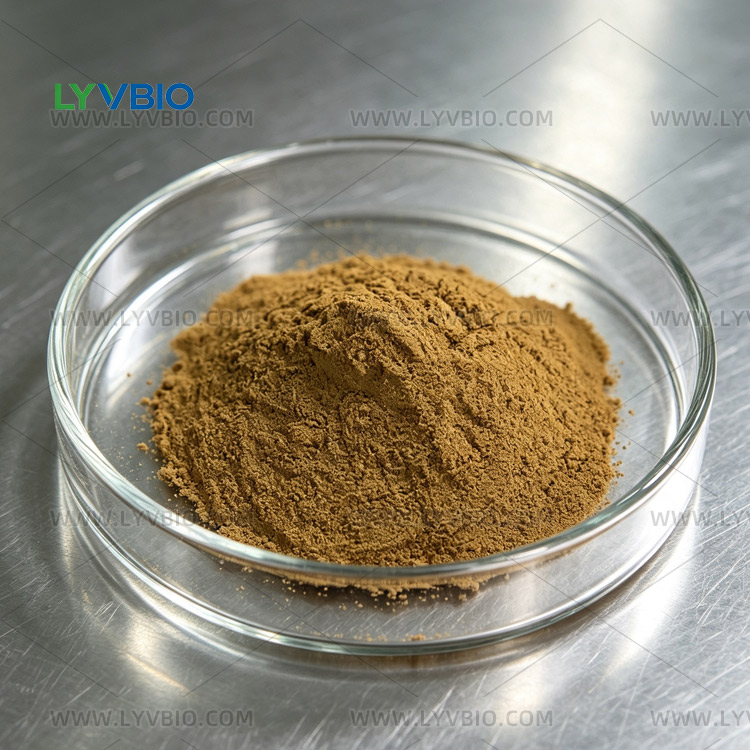


| Nom du produit | Toosendanin |
|---|---|
| Numéro CAS | 58812-37-6 |
| Formule moléculaire | C₃₀H₃₈O₁₁ |
| Poids moléculaire | 574.62 g/mol |
| Apparence | 1%–5%: Brown to dark brown fine powder; 98%: White to off-white crystalline powder |
| Essai (HPLC) | 1%, 5%, or 98% (per grade) |
| Perte au séchage | 1%–5%: ≤ 5.0%; 98%: ≤ 0.5% |
| Résidu au feu | 1%–5%: ≤ 8.0%; 98%: ≤ 0.1% |
| Métaux lourds | ≤ 10 ppm |
| Melting Point (98%) | 238 – 240°C |
| Solubility (98%) | Soluble in DMSO, ethanol, methanol; slightly soluble in water |
| Granulométrie | 100% à 80 mesh |
Besoin d'aide ? Contacter notre équipe
Synonymes : Toosendanin, Melia toosendan Extract, Chuanlianzi Extract, Fructus Meliae Toosendan Extract, Limonoid Triterpenoid, Toosendanin 1%, Toosendanin 5%, Toosendanin 98%, Toosendanin A
Toosendanin is a naturally occurring limonoid triterpenoid compound isolated from the dried fruits (and bark) of Melia toosendan, a deciduous tree native to East Asia. In Traditional Chinese Medicine, the fruit is known as Chuanlianzi (川楝子) and has been used for centuries to expel intestinal parasites, relieve pain, and treat digestive disorders.
Toosendanin has attracted considerable scientific interest for its broad spectrum of biological activities, particularly its insecticidal, antifungal, antiviral, and antitumor properties. Its mechanism of action involves disruption of the insect midgut epithelium, inhibition of fungal growth, and modulation of apoptotic pathways in cancer cells.
Toosendanin is available in three grades:
1% Toosendanin: Standardized whole-fruit extract for cost‑effective applications.
5% Toosendanin: Higher‑potency extract for enhanced activity.
98% Toosendanin: High‑purity crystalline compound for research and analytical reference.
It is widely used in agricultural research, botanical pesticide development, and pharmaceutical research.
Insecticidal activity: Disrupts insect midgut epithelium and feeding behavior.
Antifungal activity: Inhibits growth of plant pathogenic fungi.
Antiviral activity: Inhibits viral replication in research studies.
Antitumor activity: Induces apoptosis in cancer cell lines (research).
Activité antimicrobienne: Broad‑spectrum antimicrobial properties.
Research tool: Used in entomological, pharmacological, and agricultural studies.
Source: Dried fruits of Melia toosendan (Chuanlianzi)
Extraction: Hydroalcoholic or solvent extraction, followed by concentration and drying
Purification: Chromatographic purification for 98% grade
| Niveau | Toosendanin Content (HPLC) | Apparence | Utilisation type |
|---|---|---|---|
| 1% | ≥1.0% | Brown to dark brown powder | Standard botanical insecticide, cost‑effective |
| 5% | ≥5.0% | Brown to dark brown powder | High‑potency insecticide, research |
| 98% | ≥98,01 TP3T | White to off‑white crystalline powder | Research, analytical standard, pharmaceutical studies |
Q: What is the difference between toosendanin and azadirachtin?
A: Toosendanin is derived from Melia toosendan (Chuanlianzi), while azadirachtin is derived from Azadirachta indica (Neem). Both are limonoid triterpenoids with insecticidal activity, but they differ in molecular structure and insecticidal potency.
Q: What insects are susceptible to toosendanin?
A: Research has shown activity against a range of pests, including lepidopteran larvae, beetles, and aphids.
Q: Is toosendanin toxic to mammals?
R : Melia toosendan extracts have low mammalian toxicity when used at recommended dosages. However, high‑purity toosendanin should be handled with appropriate laboratory safety precautions.
Q: What is the purity grade recommended for research?
A: For mechanistic and pharmacological studies, the 98% grade is recommended. For formulation development and field trials, the 1% or 5% grades are typically sufficient.
Q: Does toosendanin have antifungal activity?
A: Yes, toosendanin has been shown to inhibit the growth of various plant pathogenic fungi, including Botrytis cinerea et Fusarium species.
© 2026 LyvBio Co., Ltd. | 280 Main Street, Xian, Shaanxi, China | Email: info@lyvbio.com
 English English
  Russian
 French
 Korean
 German
 Polish
 Japanese
 Spanish
 Italian
 Vietnamese