
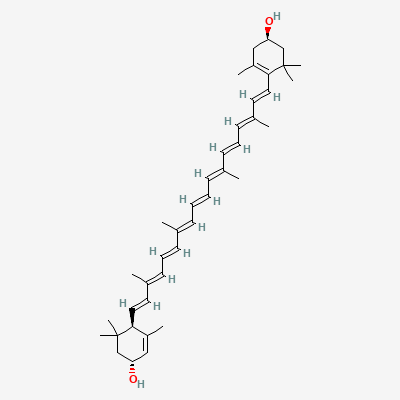
Lutein
| Parámetro | Especificaciones |
|---|---|
| Nombre del producto | Lutein |
| Número CAS | 127-40-2 |
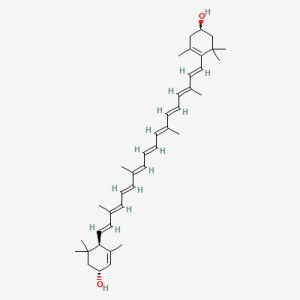
| Fórmula molecular | C40H56O2 |
| Peso molecular | 568.87 g/mol |
| Apariencia | Orange to red-orange fine powder |
| Ensayo (HPLC) | ≥ 90.0% (area normalization) |
| Solubilidad | Fat-soluble; soluble in hexane, acetone, ethanol; insoluble in water |
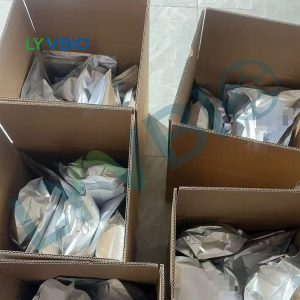
| Paquete | 1 kg, 5 kg, 25 kg |
¿Necesitas ayuda? Póngase en contacto con nuestro equipo
Sinónimos: Xanthophyll, (3R,3’R,6’R)-β,ε-Carotene-3,3′-diol, Lutein, Vegetable Lutein, Marigold Extract, Tagetes erecta Extract, Lutein Esters
Lutein is a xanthophyll carotenoid extracted from the petals of Tagetes erecta (marigold) and supplied as a free-flowing, fat-soluble powder. It is standardized to a minimum of 90% by HPLC area normalization, with lower potencies available for beverage and gummy formats. The material is non-GMO and kosher/halal certified upon request.
Formulators select lutein for eye-health and antioxidant positioning in dietary supplements and functional foods. It disperses readily in oil-based systems and is compatible with softgel, beadlet, and emulsion technologies. Typical inclusion rates range from 5–20 mg per serving, depending on the application.
We ship from inventory in the Netherlands and China, with full traceability from farm to batch. Every lot is accompanied by a certificate of analysis and safety data sheet; technical data sheets are available on request.
Lutein is most often formulated into softgel capsules, where its oil solubility allows for high load without sedimentation. It also appears in dry blends for tablets and stick packs, where beadlet or microencapsulated forms improve flow and stability. In functional beverages, emulsified lutein is used to deliver a clear, taste-neutral dosage in RTD formats. Cosmetic formulators add it to anti-aging and sun-care products for its antioxidant profile and color stability.
Typical end products include eye-health supplements, multivitamin blends, sports nutrition powders, and topical creams. The ingredient works well with zeaxanthin, omega-3 oils, and vitamins C and E, and it does not interfere with common excipients such as magnesium stearate or silicon dioxide.
Marigold flowers are harvested in China and India, then extracted with hexane or ethyl acetate to yield oleoresin. The oleoresin undergoes saponification, purification, and crystallization to produce free lutein. We offer both oil suspension and powder forms; the powder is typically spray-dried onto a starch or silica carrier for improved handling.
Our supply chain is vertically integrated from flower procurement to final packaging, ensuring consistent carotenoid profiles and low batch-to-batch variation. We do not use synthetic antioxidants in the final product, and all processing aids are food-grade.
send us your specification for a quotation.
Room,5-0203, Unit 5, Beiyuanmen Street,Xi'an,Shaanxi,China
 English English
 Russian
 French
 Korean
 German
 Polish
 Japanese
 Spanish
 Italian
 Vietnamese