
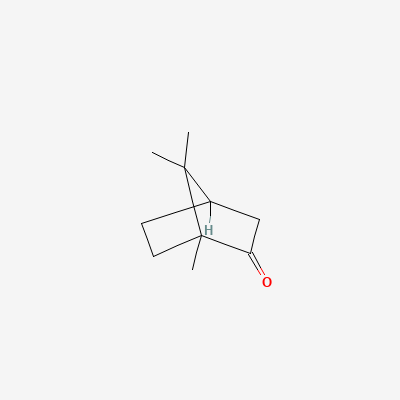
Camphor
| Nombre del producto | Camphor |
|---|---|
| Número CAS | 76-22-2 |
| Otros nombres | 1,7,7-Trimethylbicyclo[2.2.1]heptan-2-one; Gum camphor; Laurel camphor; Formosa camphor |
| Fórmula molecular | C10H16O |
| Peso molecular | 152.23 g/mol |
| Apariencia | White to off-white crystalline powder or colorless crystals |
| Assay (GC) | ≥96.0% (typically 98.0%–99.5%) |
| Punto de fusión | 175–177 °C |
| Boiling Point | 204 °C |
| Solubilidad | Slightly soluble in water; freely soluble in ethanol, ether, chloroform, and other organic solvents |
| Pérdida por secado | ≤0,51 TP3T |
| Residuo tras la combustión | ≤0,11 TP3T |
| Metales pesados | ≤10 ppm |
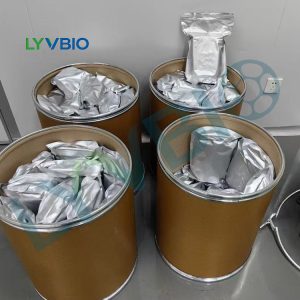
| Paquete | 25 kg fiber drum with double polyethylene liner, or as per customer request |
¿Necesitas ayuda? Póngase en contacto con nuestro equipo
Sinónimos: 1,7,7-Trimethylbicyclo[2.2.1]heptan-2-one, Gum camphor, Laurel camphor, Formosa camphor, 2-Bornanone, 2-Camphanone
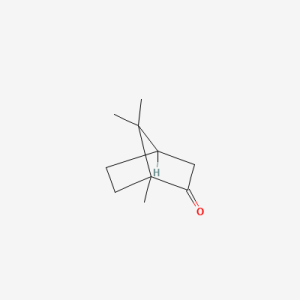
Camphor is a bicyclic monoterpene ketone with a rigid, cage-like carbon skeleton. Its molecular structure consists of a cyclohexane ring fused to a cyclopentane ring, with a ketone group at the C-2 position and two methyl groups at C-7. This compact, highly substituted framework gives camphor its characteristic spherical shape and lipophilic character, allowing it to readily penetrate biological membranes and interact with a wide range of molecular targets. The ketone moiety is key to its reactivity, forming the basis for many derivatives, while the hydrocarbon backbone contributes to its volatility and distinctive aromatic odor.
Camphor occurs naturally in the wood of the camphor laurel (Cinnamomum camphora) and in certain other plants such as rosemary and lavender. It can be obtained by steam distillation of camphorwood followed by purification, or produced synthetically from turpentine oil via camphene. Commercial camphor is typically supplied as white crystalline powder, flakes, or blocks, with purity grades ranging from technical to pharmacopeial (USP/EP/BP). It is a versatile intermediate and active ingredient used in pharmaceuticals, personal care, flavors, fragrances, and industrial applications.
In the pharmaceutical and personal care industries, camphor is valued for its counterirritant, analgesic, and antimicrobial properties. It is a common component of topical ointments, balms, and liniments intended for muscle aches, minor cuts, and insect bites. In flavors and fragrances, it imparts a fresh, minty, and woody note. As a plasticizer, camphor is used in the production of celluloid and other cellulose esters. Its unique combination of volatility, solubility, and biological activity makes it a staple in many formulation laboratories.
Camphor is a terpenoid ketone with the molecular formula C10H16O. It exists as a white, crystalline solid with a melting point around 175–177 °C and a boiling point of 204 °C. The molecule is chiral, with two enantiomeric forms: (1R,4R)-camphor (the natural isomer) and (1S,4S)-camphor. It is practically insoluble in water but freely soluble in organic solvents such as ethanol, ether, and chloroform. Camphor exhibits a characteristic pungent, aromatic odor and is volatile at room temperature. Its lipophilic nature and small molecular size facilitate rapid absorption through the skin and mucous membranes.
| Parámetro | Especificaciones |
|---|---|
| Apariencia | Polvo cristalino de color blanco a blanquecino |
| Assay (GC) | ≥96.0% (typically 98.0%–99.5%) |
| Punto de fusión | 175–177 °C |
| Pérdida por secado | ≤0,51 TP3T |
| Residuo tras la combustión | ≤0,11 TP3T |
| Metales pesados | ≤10 ppm |
| Solubilidad | Soluble in ethanol, ether, chloroform; slightly soluble in water |
Room,5-0203, Unit 5, Beiyuanmen Street,Xi'an,Shaanxi,China
 English English
 Russian
 French
 Korean
 German
 Polish
 Japanese
 Spanish
 Italian
 Vietnamese