

| Produktname | Taxifolin |
|---|---|
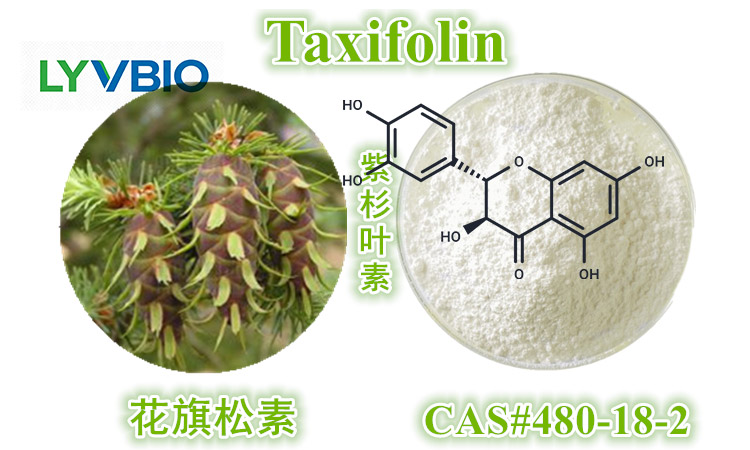
| CAS-Nummer | 480-18-2 |
| Molekülformel | C₁₅H₁₂O₇ |
| Molekulargewicht | 304.25 g/mol |
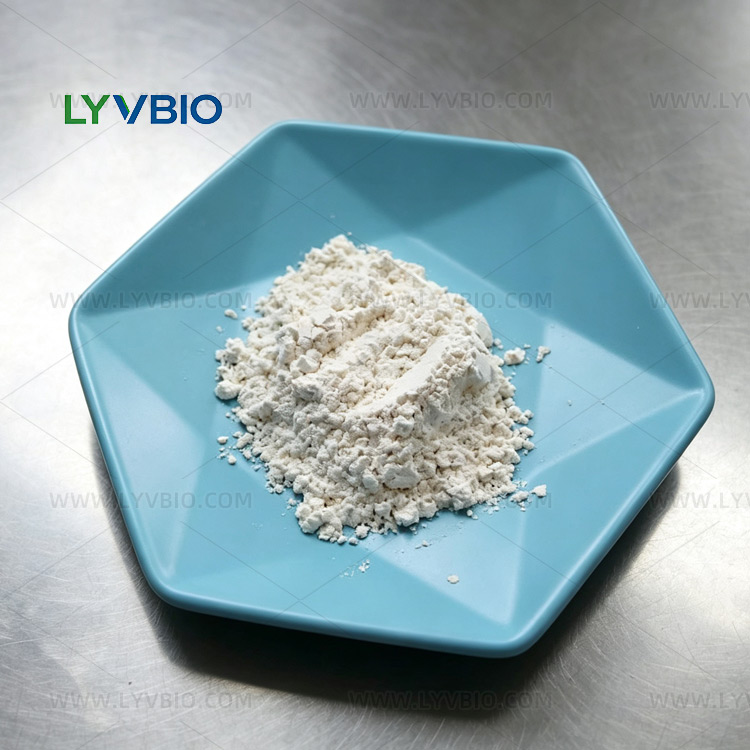
| Aussehen | Off-white to light yellow crystalline powder |
| Analyse (HPLC) | 90%, 95%, or 98% (per grade) |
| Trocknungsverlust | ≤ 5,01 TP3T |
| Verbrennungsrückstand | ≤ 0,5% |
| Schwermetalle | ≤ 10 ppm |
| Löslichkeit | Soluble in DMSO (slightly), methanol (slightly) |
| Partikelgröße | 100% bis 80 Mesh |
Brauchst du Hilfe? Kontaktieren Sie unser Team
Synonyme: Taxifolin, Dihydroquercetin, (2R,3R)-3,3′,4′,5,7-Pentahydroxyflavanone, Dihydroquercitrin, Distylin, Catechin hydrate (related), (+)-Taxifolin
Taxifolin, also known as Dihydroquercetin, is a naturally occurring flavonoid belonging to the flavanonol class.
It is found in various plants, including Siberian larch (Larix sibirica), Douglas fir, milk thistle, and onions.
Taxifolin is structurally similar to quercetin but lacks the C2=C3 double bond, which significantly enhances its stability and antioxidant capacity.
As a potent antioxidant, taxifolin has demonstrated strong free radical scavenging activity, metal chelation, and inhibition of lipid peroxidation.
Its stability and bioavailability make it a valuable ingredient in dietary supplements, functional foods, and cosmetic formulations.
Taxifolin also exhibits anti-inflammatory, cardioprotective, and hepatoprotective properties.
Taxifolin is available in three purity grades (90%, 95%, and 98%) to meet different formulation and cost requirements.
Taxifolin
Antioxidative Wirkung: Scavenges free radicals and chelates metal ions.
Entzündungshemmende Wirkung: Modulates inflammatory pathways (NF-κB, COX-2).
Herz-Kreislauf-Gesundheit: Supports vascular function and reduces oxidative stress.
Hepatoprotective effects: Protects liver cells from oxidative damage.
Hautgesundheit: Used in anti-aging and photoprotective cosmetic formulations.
Stabilität: More stable than quercetin, with better formulation compatibility.
Quelle: Siberian larch (Larix sibirica) wood extract
Standardisierung: 90%, 95%, or 98% taxifolin (HPLC)
| Note | Taxifolin Content (HPLC) | Aussehen | Typische Anwendung |
|---|---|---|---|
| 90% | ≥ 90,01 TP3T | Off-white powder | Supplements, functional foods |
| 95% | ≥ 95.0% | Light yellow powder | High-potency supplements |
| 98% | ≥ 98,01 TP3T | Weißes bis cremefarbenes Pulver | Research, premium formulations |
Monatliche Kapazität: 1,000+ kg (all grades)
Lieferzeit: 3–5 Tage (Proben), 10–15 Tage (Großmengen)
Dokumentation: COA, MSDS, TDS, HPLC chromatogram, stability data (upon request)
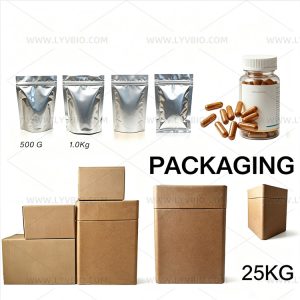
Verpackung: 1 kg, 5 kg, 10 kg, 25 kg
280 Main Street, Xi’an, Shaanxi, China
LyvBio GmbH.
E-Mail: info@lyvbio.com
 English English
  Russian
 French
 Korean
 German
 Polish
 Japanese
 Spanish
 Italian
 Vietnamese