

Sodium Glycodeoxycholate
| Produktname | Sodium Glycodeoxycholate |
|---|---|
| CAS-Nummer | 16409-34-0 |
| Molekülformel | C26H42NNaO5 |
| Molekulargewicht | 471.6 g/mol |
| Aussehen | Weißes bis cremefarbenes kristallines Pulver |
| Analyse (HPLC) | ≥97.0% |
| Trocknungsverlust | ≤5.0% |
| Löslichkeit | Soluble in water and ethanol; practically insoluble in acetone |
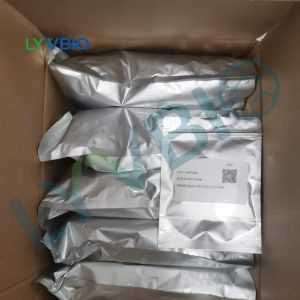
| Verpackung | 25 kg fiber drum with double polyethylene liner |
Brauchst du Hilfe? Kontaktieren Sie unser Team
Synonyme: Glycodeoxycholic acid sodium salt, Sodium deoxycholylglycinate, 3α,12α-Dihydroxy-5β-cholan-24-oylglycine sodium salt, N-[(3α,5β,12α)-3,12-Dihydroxy-24-oxocholan-24-yl]glycine sodium salt, Deoxycholylglycine sodium, Sodium glycodeoxycholate
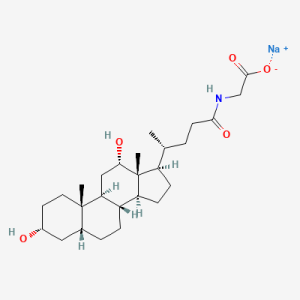
Sodium glycodeoxycholate is a bile acid salt that originates from the conjugation of deoxycholic acid with glycine, followed by neutralization to the sodium salt. Its molecular architecture features a rigid steroid nucleus with hydroxyl groups at the 3α and 12α positions, a carboxylate group linked through an amide bond to glycine, and a 5β-hydrogen configuration that dictates its planar polarity. This amphipathic character—hydrophobic convex face and hydrophilic concave face—drives its self-assembly into micelles above a critical micelle concentration, a property that underpins its utility in membrane protein extraction and lipid digestion studies.
In nature, sodium glycodeoxycholate is a secondary bile acid salt formed in the gut by microbial 7α-dehydroxylation of cholic acid derivatives, subsequently conjugated in the liver and secreted into bile. For research and industrial applications, it is produced through chemical synthesis or semi-synthesis from deoxycholic acid, ensuring consistent purity and supply. Commercial grades typically range from 97% to 99% purity, with low moisture and heavy metal content to meet stringent pharmacopeial and research requirements.
The compound’s biological role extends beyond emulsification. It serves as a signaling molecule via the farnesoid X receptor (FXR) and G protein-coupled bile acid receptor 1 (GPBAR1/TGR5), influencing lipid metabolism, glucose homeostasis, and inflammatory pathways. This makes sodium glycodeoxycholate a valuable tool in metabolic research, hepatology, and drug delivery, particularly in formulations requiring bile salt–mediated permeation enhancement.
Sodium glycodeoxycholate belongs to the glycine-conjugated bile acid family, with a molecular formula of C26H42NNaO5 and a molecular weight of 471.6 g/mol. The steroid core is composed of four fused rings (A, B, C, D) in a 5β configuration, which creates a bent, non-planar shape. The 3α- and 12α-hydroxyl groups are oriented on the α-face, while the methyl groups at C18 and C19 project from the β-face, resulting in a molecule with distinct hydrophobic and hydrophilic regions. The glycine moiety contributes a negative charge at physiological pH, enhancing water solubility. The sodium salt form is freely soluble in water and ethanol, forming clear solutions that are stable under recommended storage conditions. Its critical micelle concentration in water at 25°C is approximately 2–3 mM, varying with ionic strength and temperature.
| Parameter | Technische Daten |
|---|---|
| Aussehen | Weißes bis cremefarbenes Pulver |
| Analyse (HPLC) | ≥97.0% |
| Trocknungsverlust | ≤5.0% |
| Schwermetalle | ≤ 10 ppm |
| Verbrennungsrückstand | ≤0,5% |
| Löslichkeit | Soluble in water and ethanol |
Room,5-0203, Unit 5, Beiyuanmen Street,Xi'an,Shaanxi,China
 English English
 Russian
 French
 Korean
 German
 Polish
 Japanese
 Spanish
 Italian
 Vietnamese