
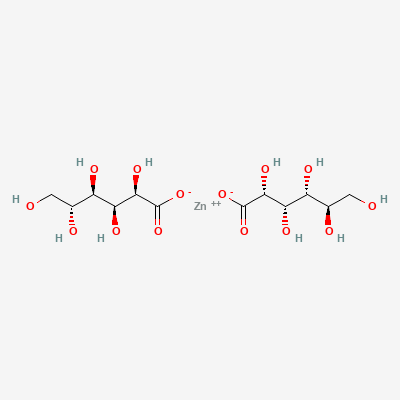
Zinc gluconate
| Produktname | Zinc Gluconate |
|---|---|
| CAS-Nummer | 4468-02-4 |
| Molekülformel | C12H22O14Zn |
| Molekulargewicht | 455.67 g/mol |
| Aussehen | Weißes bis cremefarbenes kristallines Pulver |
| Assay (Zinc) | 12.0% – 14.0% (dry basis) |
| Löslichkeit | Freely soluble in water; practically insoluble in ethanol |
| Trocknungsverlust | ≤ 0,5% |
| Schwermetalle | ≤ 0.002% |
| Verpackung | 25 kg fiber drum with PE liner, or as requested |
Brauchst du Hilfe? Kontaktieren Sie unser Team
Synonyms: Zinc gluconate, Zinc(II) gluconate, Gluconic acid zinc salt, Zinc D-gluconate, Bis(D-gluconato)zinc, Zinc gluconate hydrate
Zinc gluconate is the zinc salt of D-gluconic acid, a polyhydroxy carboxylic acid derived from glucose via fermentation. It appears as a white to off-white crystalline powder that is freely soluble in water, making it a convenient and well-tolerated source of elemental zinc for a wide range of applications. Unlike inorganic zinc salts such as zinc sulfate or zinc oxide, zinc gluconate offers superior gastrointestinal tolerance and higher bioavailability, which has cemented its position as a preferred ingredient in oral zinc supplements and pharmaceutical preparations.
From a chemical standpoint, zinc gluconate consists of a central zinc ion coordinated with two gluconate moieties, forming a stable chelate that readily dissociates in the acidic environment of the stomach to release free zinc ions. This chelation protects the zinc from premature precipitation and enhances its absorption across the intestinal mucosa. The compound delivers approximately 13% elemental zinc by weight, which allows formulators to achieve precise dosing with relatively small amounts of material. Its neutral taste and high water solubility also make it ideal for liquid formulations, effervescent tablets, and syrups where zinc sulfate would be unpalatable or poorly soluble.
Zinc gluconate is widely standardized to a zinc content of 12.0–14.0% on a dried basis, with strict limits on heavy metals, arsenic, and microbial contamination to meet pharmaceutical and nutraceutical grade requirements. It is used extensively in dietary supplements for immune support, cold remedies, skin health, and pediatric nutrition, as well as in cosmetic and personal care products for its soothing and oil-regulating properties. In the pharmaceutical industry, it serves as an active pharmaceutical ingredient (API) in lozenges and topical ointments, while food manufacturers rely on it for fortification of cereals, beverages, and infant formulas.
| Parameter | Technische Daten |
|---|---|
| Assay (Zinc) | 12.0% – 14.0% |
| Identification | Conforms to USP/EP |
| Trocknungsverlust | ≤ 0,5% |
| Schwermetalle | ≤ 20 ppm |
| Arsenic | ≤ 3 ppm |
| Microbial Limits | Total aerobic count ≤ 1000 cfu/g; Yeast & Mold ≤ 100 cfu/g; E. coli absent |
Room,5-0203, Unit 5, Beiyuanmen Street,Xi'an,Shaanxi,China
 English English
 Russian
 French
 Korean
 German
 Polish
 Japanese
 Spanish
 Italian
 Vietnamese