
Palmitoyl Tetrapeptide-7
| Produktname | Palmitoyl Tetrapeptide-7 |
|---|---|
| Andere Bezeichnungen | Pal-GQPR, Palmitoyl-Gly-Gln-Pro-Arg, Matrixyl 3000 Component, Tetrapeptide-7 |
| CAS-Nummer | 221227-05-0 |
| Molekülformel | C34H62N10O7 |
| Molekulargewicht | 722.9 g/mol |
| Aussehen | Weißes bis cremefarbenes Pulver |
| Purity (HPLC) | ≥98,01 TP3T |
| Löslichkeit | Soluble in water, ethanol; slightly soluble in oils |
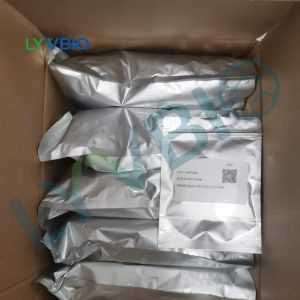
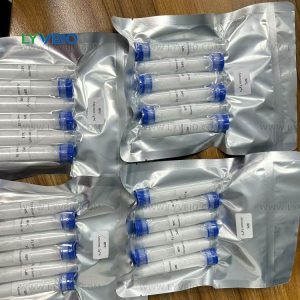
| Verpackung | 1 kg, 5 kg, 10 kg in aluminum foil bags or fiber drums |
Brauchst du Hilfe? Kontaktieren Sie unser Team
Synonyme: Pal-GQPR, Palmitoyl-Gly-Gln-Pro-Arg, Matrixyl 3000 Component, Tetrapeptide-7, N-Palmitoyl-Glycyl-L-Glutaminyl-L-Prolyl-L-Arginine, Palmitoyl Tetrapeptide-7
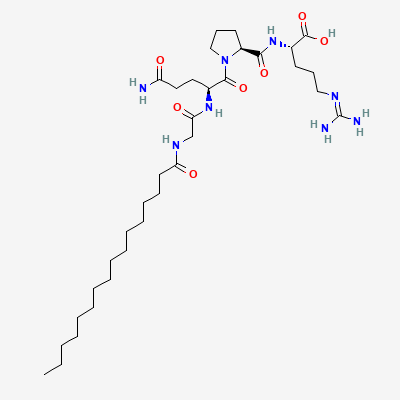
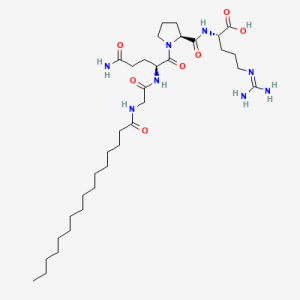
Palmitoyl Tetrapeptide-7 is a synthetic lipopeptide built on a tetrapeptide backbone—glycine, glutamine, proline, and arginine—with a palmitic acid chain (C16) attached to the N-terminus. This fatty acid tail is what makes the molecule lipophilic enough to penetrate the stratum corneum, while the peptide sequence carries the biological message. The GQPR motif is not random; it mimics a fragment of immunoglobulin G and was identified through screening for sequences that could quiet inflammatory signaling in skin cells.
In the B2B supply chain, Palmitoyl Tetrapeptide-7 is usually offered as a high-purity powder (≥98% by HPLC) that formulators dissolve in water or hydroglycolic systems before adding to emulsions. It is a key ingredient in the widely used Matrixyl 3000 blend, where it works alongside Palmitoyl Tripeptide-1. Manufacturers typically source it as a lyophilized powder or as a pre-dissolved liquid concentrate, depending on their production scale and cold-process capabilities.
Most purchasing decisions for this peptide come down to three things: purity profile, residual solvents, and documentation. Cosmetic and dermocosmetic companies use it in anti-aging serums, eye creams, and products targeting sensitive or reactive skin. Research groups also buy it for in vitro studies on cytokine modulation and extracellular matrix regulation. The commercial appeal is straightforward—it delivers a visible anti-wrinkle claim without the irritation profile of retinoids, and it fits clean-beauty formulations that avoid harsh actives.
The molecule combines a hydrophilic tetrapeptide head with a hydrophobic C16 palmitoyl tail, giving it amphiphilic character. The arginine residue carries a positive charge at physiological pH, which influences how the peptide interacts with cell membranes and glycosaminoglycans. In its solid state, Palmitoyl Tetrapeptide-7 is a white to off-white powder with a typical peptide-like odor. It is freely soluble in water and ethanol, and its stability in formulation depends heavily on pH—keep it between 5.0 and 7.0 to avoid hydrolysis or aggregation. The palmitoyl group also makes it compatible with lipid phases, which is why it can be incorporated into both o/w and w/o emulsions.
| Parameter | Technische Daten |
|---|---|
| Aussehen | Weißes bis cremefarbenes Pulver |
| Purity (HPLC) | ≥98,01 TP3T |
| Water Content (Karl Fischer) | ≤5.0% |
| Schwermetalle | ≤ 10 ppm |
| Residual Solvents | Conforms to ICH Q3C |
| Microbial Limits | Total aerobic count ≤100 CFU/g |
Room,5-0203, Unit 5, Beiyuanmen Street,Xi'an,Shaanxi,China
 English English
 Russian
 French
 Korean
 German
 Polish
 Japanese
 Spanish
 Italian
 Vietnamese