
| Product Name | Phosphatidylserine |
|---|---|
| CAS Number | 51446-62-9 |
| Molecular Formula | C₄₂H₈₂NO₁₀P (average, dependent on fatty acid composition) |
| Molecular Weight | ~790 g/mol (average) |
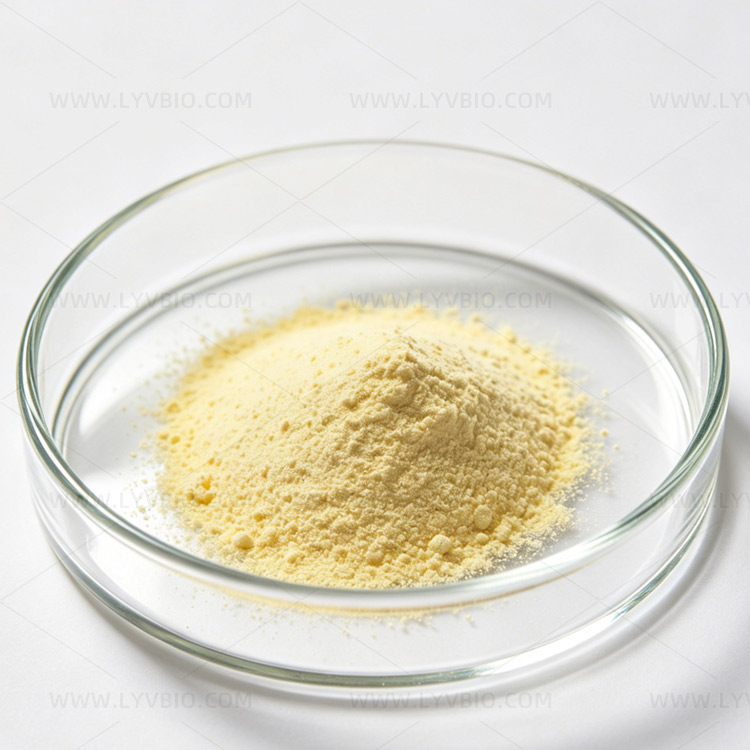
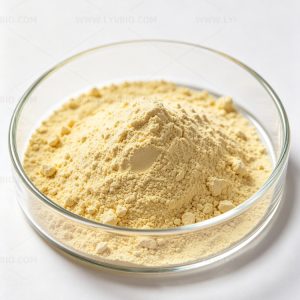
| Appearance | Light yellow to off-white powder |
| Assay (HPLC) | ≥ 50.0% (PS content) |
| Loss on Drying | ≤ 3.0% |
Need help? Contact our team
Phosphatidylserine (PS) is a naturally occurring phospholipid that serves as a critical structural component of cell membranes, particularly concentrated in neural tissues.
It is a glycerophospholipid consisting of a glycerol backbone esterified to two fatty acids and a phosphoserine head group.
In mammals, PS is synthesized from phosphatidylethanolamine or phosphatidylcholine via base-exchange reactions.
PS plays an essential role in membrane fluidity, signal transduction, and cellular communication. It is particularly abundant in the cerebral cortex and hippocampus, where it supports neurotransmitter release, synaptic plasticity, and neuronal membrane integrity. Its role in cellular signaling includes activation of protein kinase C (PKC) and regulation of ion channels.
Phosphatidylserine supplementation has been extensively studied for its effects on cognitive function, stress response, and age-related cognitive decline. It is considered a well-established nootropic ingredient, supported by a substantial body of clinical research.
Synonym:
Extract Powder phosphatidylserine (PE) 20% 50% 70%.
L-ALPHA-PHOSPHATIDYLSERINES, BRAIN;1,2-Distearoyl phosphatidyl serine;PHOSPHATIDYLCHOLINE(SOY)(RG)
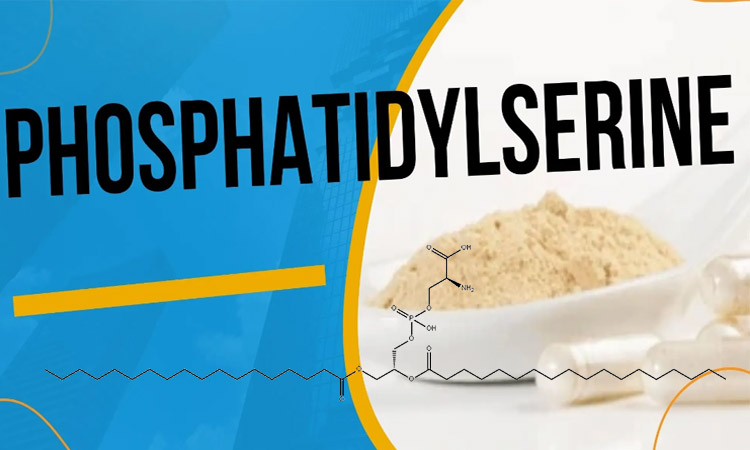
Phosphatidylserine CAS:51446-62-9
Membrane structure: Essential component of neuronal cell membranes, maintaining fluidity and integrity.
Neurotransmitter support: Facilitates release of acetylcholine, dopamine, and norepinephrine.
Signal transduction: Acts as a cofactor for PKC and other membrane-associated enzymes.
Stress modulation: Regulates the hypothalamic-pituitary-adrenal (HPA) axis, reducing cortisol response.
Synaptic plasticity: Supports synaptic remodeling and memory consolidation.
| Compound | CAS No. | Relationship |
|---|---|---|
| Phosphatidylserine | 51446-62-9 | Active phospholipid |
| Phosphatidylcholine | 8002-43-5 | Structural analogue, precursor |
| Phosphatidylethanolamine | 90989-93-8 | Structural analogue, precursor |
| Phosphatidic Acid | 26566-60-9 | Biosynthetic precursor |
| Parameter | Specification |
|---|---|
| PS Content (HPLC) | ≥ 50.0% (standard grade); ≥ 70.0% (high-grade) |
| Acetone Insolubles | ≥ 95.0% |
| Loss on Drying | ≤ 3.0% |
| Residue on Ignition | ≤ 5.0% |
| Heavy Metals (as Pb) | ≤ 10 ppm |
| Arsenic (As) | ≤ 1 ppm |
| Microbial Limits | Conforms to USP/EP standards |
| Solvent Residues | Meets USP requirements |
Monthly capacity: 1,000+ kg
Lead time: 3–5 days (samples), 10–15 days (bulk)
Documentation: COA, MSDS, TDS, HPLC chromatogram, stability data (upon request)
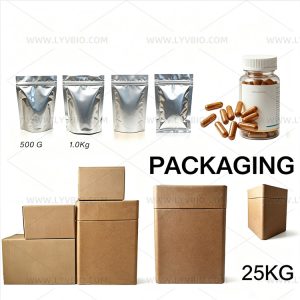
Packaging: 1 kg, 5 kg, 10 kg, 25 kg (powder); custom packaging available
280 Main Street, Xian, Shaanxi, China
LyvBio Co., Ltd.
Email: info@lyvbio.com
Website: https://www.lyvbio.com
 English English
  Russian
 French
 Korean
 German
 Polish
 Japanese
 Spanish
 Italian
 Vietnamese