
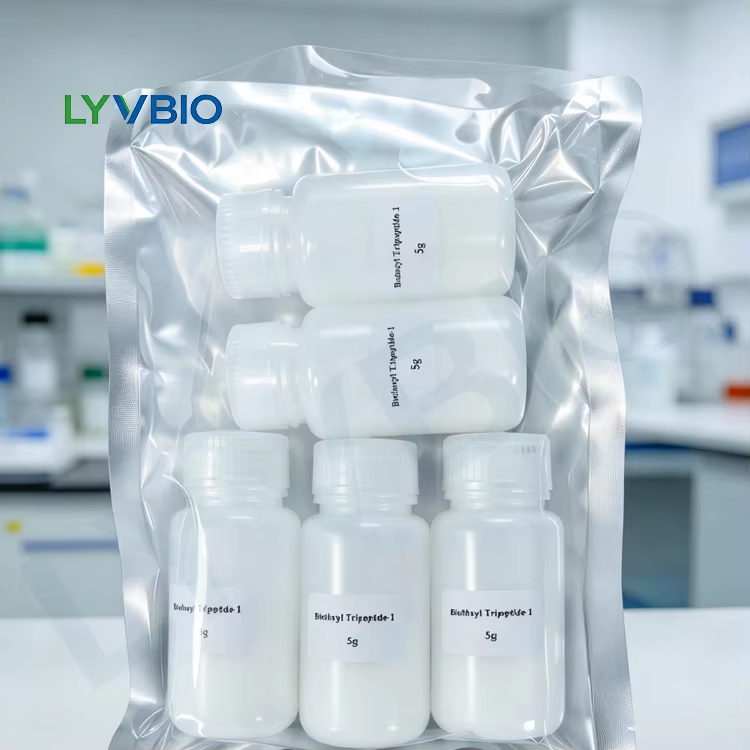
Acetyl Tetrapeptide-5
| Product Name | Acetyl Tetrapeptide-5 |
|---|---|
| CAS Number | 820959-17-9 |
| Other Names | Acetyl Tetrapeptide-5, Acetyl Glutamyl-Methionyl-Glutaminyl-Arginine, Acetyl-EEMQRR |
| Molecular Formula | C20H34N8O9S |
| Molecular Weight | 562.6 g/mol |
| Appearance | White to off-white lyophilized powder |
| Assay (HPLC) | ≥98.0% |
| Solubility | Soluble in water, PBS, and aqueous buffers |
| Storage | Store at -20°C, protect from light and moisture |
Need help? Contact our team
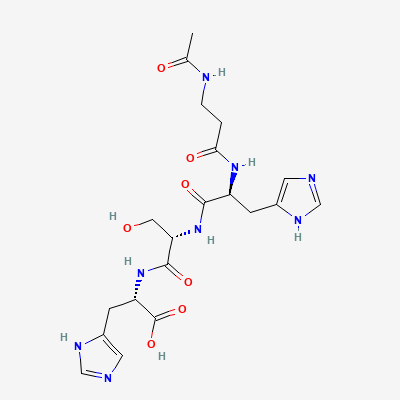
Synonyms: Acetyl Tetrapeptide-5, Acetyl Glutamyl-Methionyl-Glutaminyl-Arginine, Acetyl-EEMQRR, AHP-1, Acetyl Tetrapeptide-5 (Cosmetic Peptide)
Acetyl Tetrapeptide-5 is a synthetic tetrapeptide consisting of four amino acids—glutamic acid, methionine, glutamine, and arginine—with an acetyl group capping the N-terminus. This modification enhances stability and skin penetration, distinguishing it from unmodified peptides. Initially developed for cosmetic applications, it has gained traction in pharmaceutical research for its role in modulating cellular stress and inflammatory pathways.
Structurally, Acetyl Tetrapeptide-5 mimics a fragment of the human protein decorin, which regulates collagen fibrillogenesis and cell signaling. Its sequence, Ac-Glu-Met-Gln-Arg-NH2, is designed to interact with specific receptors involved in fibroblast activity and extracellular matrix remodeling. This peptide is often compared to other acetylated peptides like Acetyl Hexapeptide-8, but its unique sequence targets different biological processes, making it a versatile tool in both cosmetic and therapeutic formulations.
Our Acetyl Tetrapeptide-5 is manufactured via solid-phase peptide synthesis and purified using preparative HPLC to achieve a purity of ≥98%. It is available in research-grade and cGMP-compliant grades, suitable for a wide range of applications including anti-aging skincare, wound healing studies, and inflammation research. The product is supplied as a lyophilized powder to ensure long-term stability, with custom packaging options to meet diverse R&D and production needs.
| Parameter | Specification |
|---|---|
| Assay (HPLC) | ≥98.0% |
| Identification | Conforms to structure by MS |
| Loss on Drying | ≤5.0% |
| Residue on Ignition | ≤1.0% |
| Heavy Metals | ≤10 ppm |
| Microbial Limits | Total aerobic count ≤100 CFU/g; Yeast & Mold ≤10 CFU/g |
| Endotoxin | ≤5 EU/mg (for injectable grade) |
Room,5-0203, Unit 5, Beiyuanmen Street,Xi'an,Shaanxi,China
 English English
 Russian
 French
 Korean
 German
 Polish
 Japanese
 Spanish
 Italian
 Vietnamese