
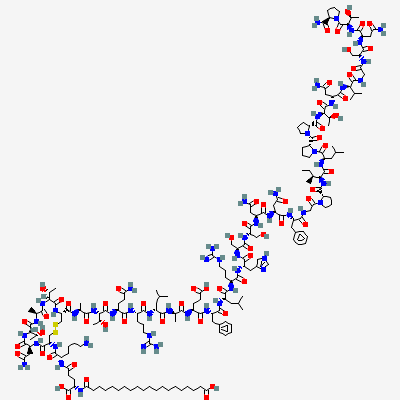
Cagrilintide
| Product Name | Cagrilintide |
|---|---|
| CAS Number | 1415456-99-3 |
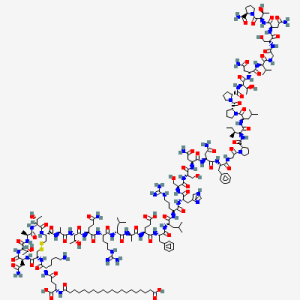
| Molecular Formula | C194H318N56O56 |
| Molecular Weight | 4387.0 g/mol |
| Appearance | White to off-white powder |
| Assay (HPLC) | ≥98.0% |
| Solubility | Soluble in water and aqueous buffers |
| Storage | Store at -20°C, protect from light |
| Package | 1 mg, 5 mg, 10 mg, 50 mg, 100 mg (vial) |
Need help? Contact our team
Synonyms: Cagrilintide, AM833, NNC 0172-2027, Long-acting amylin analog, CagriSema component
As the demand for more effective obesity treatments grows, the pharmaceutical industry is turning to multi-receptor agonists and combination therapies. Cagrilintide, a long-acting amylin analog, has emerged as a key building block in this new wave, particularly in combination with semaglutide (CagriSema). This peptide is drawing attention for its potential to enhance satiety and improve glycemic control, making it a focus for companies developing next-generation metabolic drugs.
Cagrilintide is a synthetic peptide engineered to mimic the action of human amylin, a hormone co-secreted with insulin by pancreatic beta cells. By modifying the native amylin structure, researchers have achieved a longer half-life and improved solubility, allowing for once-weekly dosing. The peptide is typically produced via solid-phase peptide synthesis and purified to high homogeneity.
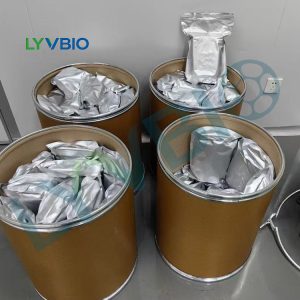
In the supply chain, Cagrilintide is available in research-grade and GMP-grade qualities. Standard specifications require ≥98% purity by HPLC, with strict control of counterions, residual solvents, and microbial limits. Our offering targets formulation scientists and API purchasers who need reliable material for preclinical and clinical development.
Cagrilintide is a 37-amino acid peptide with a molecular weight of approximately 4387 Da. Its sequence incorporates non-natural amino acids and a fatty acid side chain that promotes albumin binding, extending its duration of action. The molecule is supplied as a lyophilized powder, often as the acetate salt to enhance stability and solubility.
Because it is manufactured by chemical synthesis, impurity profiles are carefully monitored. Typical impurities include deletion peptides, truncated sequences, and oxidation products. High-purity material is essential for reproducible biological assays and for meeting regulatory requirements in clinical trials.
| Parameter | Specification |
|---|---|
| Assay (HPLC) | ≥98.0% |
| Appearance | White to off-white powder |
| Water Content (Karl Fischer) | ≤8.0% |
| Heavy Metals | ≤10 ppm |
| Microbial Limits | Total aerobic count ≤1000 CFU/g, yeast & mold ≤100 CFU/g |
| Endotoxin | ≤5 EU/mg |
Room,5-0203, Unit 5, Beiyuanmen Street,Xi'an,Shaanxi,China
 English English
 Russian
 French
 Korean
 German
 Polish
 Japanese
 Spanish
 Italian
 Vietnamese