
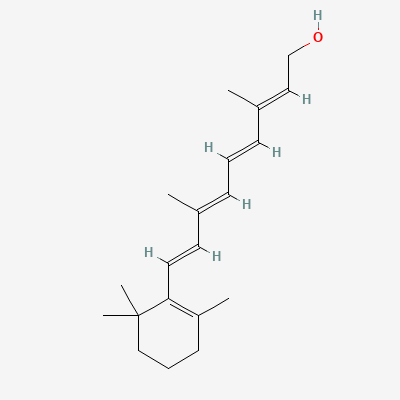
Witamina A
| Nazwa produktu | Witamina A |
|---|---|
| Numer CAS | 68-26-8 |
| Wzór cząsteczkowy | C20H30O |
| Masa cząsteczkowa | 286.45 g/mol |
| Wygląd | Pale yellow to yellow crystalline solid or viscous oil |
| Assay | ≥95% (HPLC) |
| Rozpuszczalność | Practically insoluble in water; soluble in ethanol, chloroform, ether |
| Strata przy suszeniu | ≤1,01 TP3T |
| Metale ciężkie | ≤10 ppm |
| Opakowanie | 1 kg aluminum foil bag, 25 kg fiber drum |
Potrzebujesz pomocy? Skontaktuj się z naszym zespołem
Synonyms: Retinol, Vitamin A alcohol, all-trans-Retinol, Axerophthol, Antixerophthalmic vitamin, Vitamin A1
Retinol, the prototypical vitamin A, is a fat-soluble diterpenoid with a β-ionone ring and a conjugated polyene side chain terminating in a primary hydroxyl group. This structural motif underpins its reactivity and its capacity to interconvert with retinal and retinoic acid, the bioactive metabolites that regulate gene expression, vision, and cellular differentiation.
Vitamin A is not a single compound but a family of retinoids. The term typically refers to retinol and its esters (retinyl acetate, retinyl palmitate), which are the commercial forms used in supplements and food fortification. Retinol occurs naturally in animal-derived foods such as liver, fish oils, and dairy, while provitamin A carotenoids (e.g., β-carotene) are found in plants. Commercial retinol is produced synthetically or semi-synthetically, with high purity grades available for pharmaceutical and research applications.
In the pharmaceutical and nutraceutical industries, Vitamin A is essential for vision, immune function, and epithelial integrity. It is formulated into oral supplements, topical creams, and injectables. Its derivatives, such as tretinoin and isotretinoin, are used in dermatology and oncology. The global demand for Vitamin A continues to grow, driven by its role in public health programs and the expanding beauty-from-within market.
Retinol consists of a cyclohexenyl ring (β-ionone) linked to a nine-carbon polyene chain ending in a hydroxyl group. The conjugated double bonds make it highly susceptible to oxidation and isomerization, particularly under light, heat, and acidic conditions. It is practically insoluble in water but soluble in organic solvents like ethanol, chloroform, and vegetable oils. Its instability necessitates stabilization strategies such as esterification (e.g., retinyl acetate) or encapsulation.
| Parametr | Specyfikacja |
|---|---|
| Wygląd | Pale yellow to yellow crystalline solid or viscous oil |
| Oznaczenie (HPLC) | ≥95.0% |
| Strata przy suszeniu | ≤1,01 TP3T |
| Metale ciężkie | ≤10 ppm |
| Popiół po spaleniu | ≤0,11 TP3T |
| Rozpuszczalność | Soluble in ethanol, chloroform, ether; insoluble in water |
Room,5-0203, Unit 5, Beiyuanmen Street,Xi'an,Shaanxi,China
 English English
 Russian
 French
 Korean
 German
 Polish
 Japanese
 Spanish
 Italian
 Vietnamese