

Sodium Deoxycholate

| Nazwa produktu | Sodium Deoxycholate |
|---|---|
| Numer CAS | 302-95-4 |
| Inne nazwy | Deoxycholic acid sodium salt; Sodium 3α,12α-dihydroxy-5β-cholan-24-oate; Sodium deoxycholate |
| Wzór cząsteczkowy | C24H39NaO4 |
| Masa cząsteczkowa | 414.55 g/mol |
| Wygląd | Biały lub prawie biały krystaliczny proszek |
| Oznaczenie (HPLC) | ≥ 98.0% (anhydrous basis) |
| Strata przy suszeniu | ≤ 5.0% |
| Popiół po spaleniu | ≤ 0,5% |
| Metale ciężkie | ≤ 10 ppm |
| Rozpuszczalność | Freely soluble in water and ethanol; insoluble in non-polar solvents |
| Wielkość cząstek | 95% do sita o rozmiarze 80 |
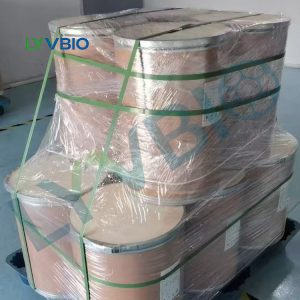
| Opakowanie | Beczka na włókna o pojemności 25 kg z podwójną wkładką z polietylenu |
Potrzebujesz pomocy? Skontaktuj się z naszym zespołem
Synonimy: Deoxycholic acid sodium salt, Sodium 3α,12α-dihydroxy-5β-cholan-24-oate, 7-Deoxycholic acid sodium salt, Sodium deoxycholate, Choleic acid sodium salt
Sodium deoxycholate is a bile salt that occurs naturally in the human body as a secondary bile acid, formed by bacterial 7α-dehydroxylation of cholic acid in the colon. Its molecular architecture features a rigid steroid nucleus with hydroxyl groups at the 3α and 12α positions, and a carboxylate group at the end of a short side chain. This amphipathic structure underpins its distinctive physicochemical behavior: the hydrophobic β-face of the steroid nucleus contrasts with the hydrophilic α-face and the charged side chain, giving the molecule strong surfactant properties. As a sodium salt, it is highly water-soluble and readily forms micelles above its critical micelle concentration (CMC) of approximately 2–6 mM, depending on temperature and ionic strength.
Industrially, sodium deoxycholate is produced by saponification of deoxycholic acid, which is typically obtained from animal bile (bovine or ovine) or through semi-synthetic routes from cholic acid. The resulting product is purified to meet pharmacopeial standards (e.g., USP/NF, EP) and is available in several grades, including reagent grade, cell culture tested, and injectable grade. Each grade differs in residual solvents, heavy metals, and endotoxin levels, making the selection critical for specific applications. For example, injectable grade must be sterile-filtered and pyrogen-free, while cell culture grade requires low endotoxin and no detectable cytotoxicity.
In the life sciences, sodium deoxycholate is indispensable as a mild detergent for membrane protein extraction and cell lysis, where it solubilizes proteins while preserving native conformation. It is also a key component in selective microbiological media, such as MacConkey agar, where it inhibits Gram-positive bacteria. In the pharmaceutical arena, it serves as a solubilizing agent for poorly water-soluble drugs and as an active ingredient in injectable formulations for localized fat reduction. Beyond these, it finds use in proteomics, lipid research, and as a reference standard in analytical chemistry. The growing demand for high-purity bile salts in biopharmaceutical manufacturing has positioned sodium deoxycholate as a critical raw material, with stringent quality requirements driving innovation in purification technologies.
The steroid nucleus of sodium deoxycholate is a cyclopentanoperhydrophenanthrene ring system with a cis A/B ring junction, characteristic of the 5β series. The two hydroxyl groups at C-3 and C-12 are both α-oriented, while the C-17 side chain terminates in a carboxylate anion. This arrangement creates a planar hydrophobic surface on the β-face and a polar surface on the α-face, leading to the formation of micelles in aqueous solution. The sodium salt is freely soluble in water (up to ~330 mg/mL at 20°C) and in ethanol, but practically insoluble in acetone, chloroform, and ether. Its aqueous solutions are mildly alkaline (pH ~7.5–9.0 for a 1% solution) and exhibit a bitter taste. The compound is stable under normal storage conditions but should be protected from moisture and light to prevent degradation. Its surface-active properties are influenced by temperature, pH, and the presence of electrolytes; the CMC decreases with increasing ionic strength.
| Parametr | Specyfikacja |
|---|---|
| Wygląd | Biały lub prawie biały krystaliczny proszek |
| Oznaczenie (HPLC) | ≥ 98,01 TP3T |
| Strata przy suszeniu | ≤ 5.0% |
| Popiół po spaleniu | ≤ 0,5% |
| Metale ciężkie | ≤ 10 ppm |
| Endotoxin (for cell culture grade) | ≤ 0.5 EU/mg |
| Rozpuszczalność | Freely soluble in water and ethanol |
Room,5-0203, Unit 5, Beiyuanmen Street,Xi'an,Shaanxi,China
 English English
 Russian
 French
 Korean
 German
 Polish
 Japanese
 Spanish
 Italian
 Vietnamese