
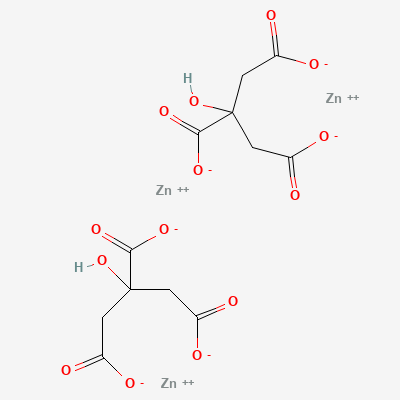
Zinc citrate
| Nome del prodotto | Zinc Citrate |
|---|---|
| Numero CAS | 546-46-3 |
| Synonyms | Zinc citrate; Zinc citrate tribasic; Tri-zinc dicitrate; Zinc citrate dihydrate; Citric acid zinc salt |
| Formula molecolare | C12H10O14Zn3 (anhydrous); C12H14O16Zn3 (dihydrate) |
| Peso molecolare | 574.36 g/mol (anhydrous); 610.39 g/mol (dihydrate) |
| Aspetto | Polvere cristallina di colore da bianco a bianco sporco |
| Zinc Content | 31.0% – 34.0% (on dried basis) |
| Analisi | ≥ 99.0% (as zinc citrate, dried basis) |
| Solubilità | Slightly soluble in water; soluble in dilute mineral acids; practically insoluble in ethanol |
| Perdita per essiccazione | ≤ 6.0% (dihydrate) |
| Metalli pesanti | ≤ 10 ppm |
| Arsenic | ≤ 2 ppm |
| Lead | ≤ 2 ppm |
| Cadmium | ≤ 1 ppm |
| Mercury | ≤ 1 ppm |
| Particle Size | ≥ 99% through 80 mesh (customizable) |
| Confezione | 25 kg net in fiber drum with double polyethylene liner |
Hai bisogno di aiuto? Contatta il nostro team
Synonyms: Zinc citrate, Zinc citrate tribasic, Tri-zinc dicitrate, Zinc citrate dihydrate, Citric acid zinc salt
In the crowded field of mineral supplements, zinc citrate has quietly become a preferred choice for formulators who need reliable bioavailability without the gastric irritation often associated with zinc sulfate. As consumers grow more educated about mineral forms, demand has shifted toward chelated and organic acid salts, and zinc citrate sits squarely in that sweet spot. It appears in multivitamin tablets, immune support gummies, oral care products, and even functional beverages, where its neutral taste and good tolerability give it a clear edge over older inorganic sources.
Zinc citrate is the zinc salt of citric acid, typically existing as a dihydrate with the formula C12H14O16Zn3. It is produced by reacting high-purity zinc oxide or zinc carbonate with citric acid in aqueous solution, followed by crystallization, filtration, and drying. The resulting white crystalline powder is odorless and has a mild, slightly acidic taste that is easy to mask in finished dosage forms. Unlike zinc sulfate, it does not promote the formation of free radicals in the stomach, which helps explain its gentler profile on the gastrointestinal tract.
The material is standardized to a zinc content of 31–34%, making it one of the more concentrated solid zinc sources available. Our zinc citrate is routinely assayed at ≥99.0% and is available in both dihydrate and anhydrous forms to suit different formulation needs. With tight control on heavy metals and particle size, it meets the stringent requirements of dietary supplement, pharmaceutical, and personal care applications across regulated markets.
Zinc citrate is a coordination compound in which zinc ions are bound to citrate ligands, creating a stable, water-soluble complex. The dihydrate form contains approximately 31–34% elemental zinc, while the anhydrous form is slightly more concentrated. This high zinc density means less powder is needed per dose, which can be a real advantage in tablet compression and capsule filling where excipient load matters.
From a compositional standpoint, the product is essentially pure zinc citrate with limited residual moisture. It is not a chelate in the strict amino acid sense, but the citrate ligand does improve absorption compared to inorganic salts. The compound is compatible with a wide range of excipients, including cellulose, stearates, and common binders, and it performs well in both wet granulation and direct compression processes.
| Parametro | Specifiche |
|---|---|
| Assay (as zinc citrate, dried basis) | ≥ 99,01 TP3T |
| Zinc Content | 31.0% – 34.0% |
| Perdita per essiccazione | ≤ 6.0% |
| Heavy Metals (as Pb) | ≤ 10 ppm |
| Arsenic | ≤ 2 ppm |
| Lead | ≤ 2 ppm |
| Limiti microbiologici | Conta aerobica totale ≤ 1000 UFC/g; lieviti e muffe ≤ 100 UFC/g; assenza di E. coli |
Room,5-0203, Unit 5, Beiyuanmen Street,Xi'an,Shaanxi,China
 English English
 Russian
 French
 Korean
 German
 Polish
 Japanese
 Spanish
 Italian
 Vietnamese