
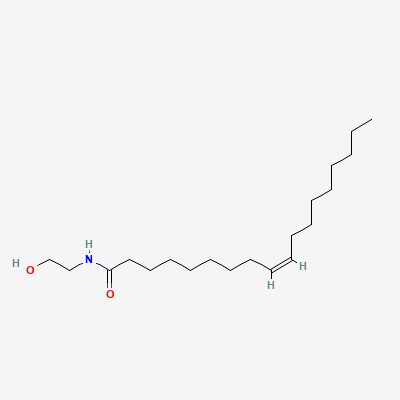
Oleoylethanolamide (OEA)
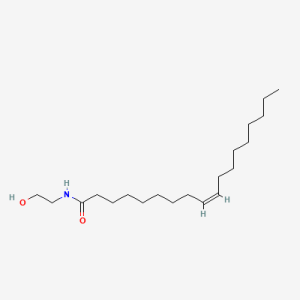
| Produktname | Oleoylethanolamide (OEA) |
|---|---|
| CAS-Nummer | 111-58-0 |
| Andere Bezeichnungen | N-Oleoylethanolamine; Oleic acid monoethanolamide; N-(2-Hydroxyethyl)oleamide; OEA |
| Molekülformel | C20H39NO2 |
| Molekulargewicht | 325.53 g/mol |
| Aussehen | White to off-white crystalline powder or waxy solid |
| Analyse (HPLC) | ≥98,01 TP3T |
| Löslichkeit | Soluble in ethanol, DMSO, dimethyl formamide; practically insoluble in water |
| Lagerung | Store at -20°C, protected from light and moisture |
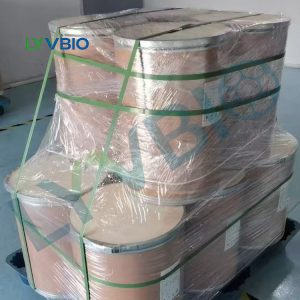
| Verpackung | 1 kg, 5 kg, 25 kg net weight in fiber drums with double polyethylene liners |
Brauchst du Hilfe? Kontaktieren Sie unser Team
Synonyme: Oleoylethanolamide, OEA, N-Oleoylethanolamine, Oleic acid monoethanolamide, N-(2-Hydroxyethyl)oleamide, (9Z)-N-(2-Hydroxyethyl)-9-octadecenamide, Oleamide MEA
Oleoylethanolamide (OEA) is a naturally occurring lipid mediator belonging to the class of N-acylethanolamines (NAEs), which also includes the better-known endocannabinoid anandamide and the satiety factor palmitoylethanolamide (PEA). It is biosynthesized in the small intestine and other tissues from oleic acid and phosphatidylethanolamine, and its levels are regulated by the enzyme N-acyl phosphatidylethanolamine phospholipase D (NAPE-PLD) and degraded primarily by fatty acid amide hydrolase (FAAH). While OEA was first identified in the 1960s, it gained significant attention in the 2000s when it was recognized as a key endogenous signal in the regulation of feeding behavior and lipid metabolism.
From a chemical standpoint, OEA is a monounsaturated fatty acid ethanolamide with a cis double bond at the 9-position of the C18 acyl chain. This structural feature distinguishes it from its saturated analog palmitoylethanolamide (PEA; C16:0) and from the polyunsaturated anandamide (AEA; C20:4). The presence of the oleoyl moiety confers unique physicochemical properties, including a lower melting point and distinct receptor binding profile. OEA exerts its biological effects primarily through activation of the nuclear receptor PPAR-alpha (peroxisome proliferator-activated receptor alpha), which mediates many of its metabolic actions, though additional targets such as GPR119 and TRPV1 have been implicated in specific contexts.
In the dietary supplement and pharmaceutical research sectors, OEA is valued for its role in satiety signaling, fat oxidation, and energy homeostasis. It is frequently formulated alongside other lipid mediators or used as a reference standard in analytical laboratories. The compound is also investigated for its neuroprotective and anti-inflammatory potential, although its primary commercial demand stems from weight management and metabolic health applications. As a bulk raw material, OEA is typically produced via synthetic routes or enzymatic synthesis to ensure high purity and consistent quality, meeting the rigorous demands of nutraceutical and clinical research customers.
| Parameter | Technische Daten |
|---|---|
| Analyse (HPLC) | ≥98,01 TP3T |
| Identification | IR and NMR spectra conform to structure |
| Aussehen | White to off-white powder or waxy solid |
| Trocknungsverlust | ≤0,5% |
| Verbrennungsrückstand | ≤0,1% |
| Schwermetalle | ≤ 10 ppm |
| Microbial Limits | Total aerobic count ≤1000 CFU/g; Yeast & Mold ≤100 CFU/g; E. coli absent |
Room,5-0203, Unit 5, Beiyuanmen Street,Xi'an,Shaanxi,China
 English English
 Russian
 French
 Korean
 German
 Polish
 Japanese
 Spanish
 Italian
 Vietnamese