
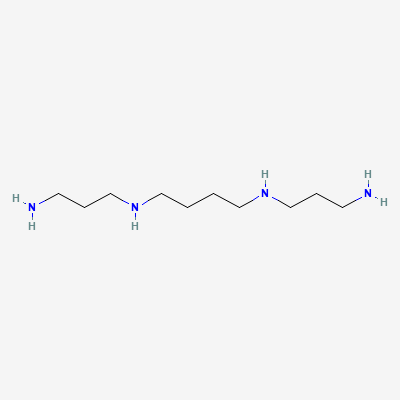
Spermine
| Produktname | Spermine |
|---|---|
| CAS-Nummer | 71-44-3 |
| Molekülformel | C10H26N4 |
| Molekulargewicht | 202.34 g/mol |
| Aussehen | Weißes bis cremefarbenes kristallines Pulver |
| Analyse (HPLC) | ≥99.0% |
| Trocknungsverlust | ≤0,5% |
| Verbrennungsrückstand | ≤0,1% |
| Schwermetalle | ≤ 10 ppm |
| Löslichkeit | Soluble in water, ethanol; slightly soluble in ether |
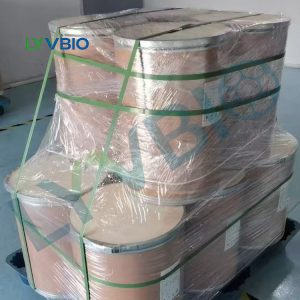
| Verpackung | 25 kg fiber drum with inner polyethylene bag |
Brauchst du Hilfe? Kontaktieren Sie unser Team
Synonyme: N,N’-Bis(3-aminopropyl)-1,4-butanediamine, 1,12-Diamino-4,9-diazadodecane, Gerontine, Musculamine, Neuridine, Spermin
Spermine has moved from a niche biochemical to a compound of intense interest across multiple industries. The global push for healthy aging and cellular health has put polyamines under the spotlight, and spermine sits at the center of that conversation. Formulators in nutraceuticals, cosmetics, and biotech are increasingly incorporating spermine and its derivatives into products targeting autophagy, skin renewal, and longevity. The ingredient’s ability to influence fundamental cellular processes makes it a valuable asset for brands looking to differentiate in crowded markets.
Spermine is a naturally occurring polyamine found in all eukaryotic cells, first isolated from semen in 1678 by Antonie van Leeuwenhoek. It is biosynthesized from putrescine via spermidine and plays critical roles in cell proliferation, differentiation, and DNA stabilization. In the body, spermine is involved in ion channel regulation, protein synthesis, and protection against oxidative damage. Its ubiquitous presence in living tissues underscores its biological importance and therapeutic potential.
Commercial spermine is typically produced through chemical synthesis or fermentation, yielding a high-purity white crystalline powder. Standard grades are ≥99% pure, meeting the rigorous demands of pharmaceutical and research applications. Its well-defined structure and consistent quality make it a reliable raw material for drug development, biochemical assays, and advanced skincare formulations. As interest in polyamines grows, spermine remains a key building block for innovation.
Spermine is a linear polyamine with four amine groups, giving it a strong positive charge at physiological pH. This charge allows it to interact with negatively charged molecules such as DNA, RNA, and phospholipids. The molecule is chemically stable under normal conditions but should be protected from moisture and excessive heat. Its high water solubility simplifies formulation into aqueous systems.
In biological systems, spermine is synthesized from ornithine through a series of enzymatic reactions. It is present in millimolar concentrations in many tissues and is essential for cell growth. The compound also acts as a precursor to higher polyamines and can be acetylated for excretion. These metabolic pathways are targets for therapeutic intervention in cancer and neurodegenerative diseases.
| Parameter | Technische Daten |
|---|---|
| Analyse (HPLC) | ≥99.0% |
| Trocknungsverlust | ≤0,5% |
| Verbrennungsrückstand | ≤0,1% |
| Schwermetalle | ≤ 10 ppm |
| Microbial Limits | Total aerobic count ≤1000 CFU/g; Yeast & Mold ≤100 CFU/g |
Room,5-0203, Unit 5, Beiyuanmen Street,Xi'an,Shaanxi,China
 English English
 Russian
 French
 Korean
 German
 Polish
 Japanese
 Spanish
 Italian
 Vietnamese