
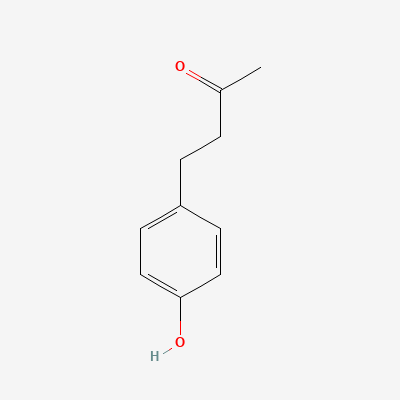
Raspberry ketone
| Parameter | Technische Daten |
|---|---|
| Produktname | Raspberry Ketone |
| CAS-Nummer | 5471-51-2 |
| Molekülformel | C10H12O2 |
| Molekulargewicht | 164.20 g/mol |
| Aussehen | Weißes bis cremefarbenes kristallines Pulver |
| Analyse (HPLC) | ≥98,01 TP3T |
| Löslichkeit | Soluble in ethanol, propylene glycol; slightly soluble in water |
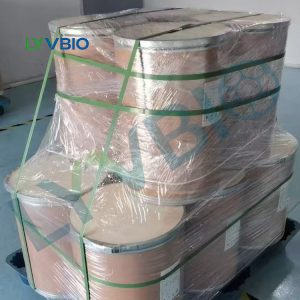
| Verpackung | 25 kg fiber drum with inner polyethylene bag |
Brauchst du Hilfe? Kontaktieren Sie unser Team
Synonyme: 4-(4-Hydroxyphenyl)-2-butanone, Frambinone, Rheosmin, Oxyphenylon, Raspberry Ketone
Raspberry ketone is a naturally occurring phenolic compound responsible for the characteristic sweet, fruity aroma of red raspberries. While its natural content in raspberries is extremely low (typically 1–4 mg per kg of fruit), commercial production relies on chemical synthesis to meet global demand. The compound was first isolated in the 1920s and has since become a key ingredient in flavors, fragrances, and dietary supplements.
Chemically, raspberry ketone belongs to the class of phenylbutanoids and is structurally related to other aromatic compounds such as capsaicin and gingerol. Its molecular structure features a 4-hydroxyphenyl group linked to a butanone chain, which contributes to its characteristic odor and biological activities. The synthetic route typically involves a Claisen-Schmidt condensation followed by catalytic hydrogenation, yielding high-purity material.
Raspberry ketone is standardized to ≥98% purity (HPLC) for use in food, pharmaceutical, and nutraceutical applications. It is widely employed as a flavoring agent in beverages, confectionery, and chewing gum, as well as in perfumery for its fruity note. In the supplement industry, it is marketed for weight management and metabolic support, although clinical evidence remains limited.
| Test Item | Technische Daten |
|---|---|
| Identification | IR spectrum conforms to reference |
| Trocknungsverlust | ≤0,5% |
| Verbrennungsrückstand | ≤0,1% |
| Schwermetalle | ≤ 10 ppm |
| Microbial Limits | Total aerobic count ≤1000 CFU/g; Yeast & Mold ≤100 CFU/g |
| Residual Solvents | Meets ICH Q3C limits |
Our standard MOQ is 1 kg. For larger quantities, please contact our sales team for pricing and availability.
For stock items, delivery takes 3-5 business days after order confirmation. We ship from our warehouse and provide tracking information promptly.
Yes, we can provide samples for evaluation. A COA is available upon request.
send us your specification for a quotation.
Room,5-0203, Unit 5, Beiyuanmen Street,Xi'an,Shaanxi,China
 English English
 Russian
 French
 Korean
 German
 Polish
 Japanese
 Spanish
 Italian
 Vietnamese