
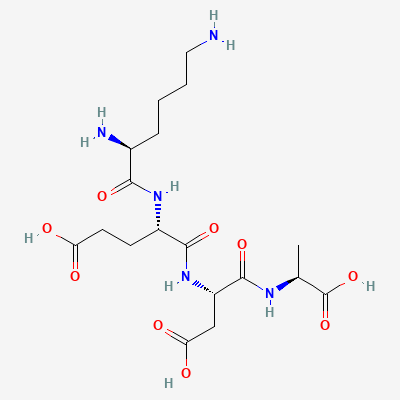
Livagen
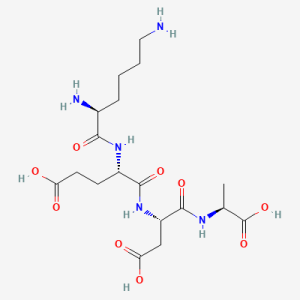
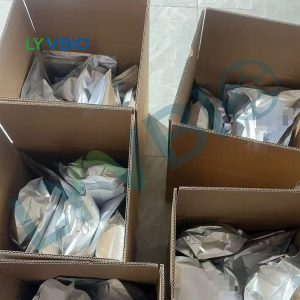
| Product Name | Livagen |
|---|---|
| CAS Number | 195875-61-1 |
| Appearance | White to off-white lyophilized powder |
| Specifications | ≥98% (HPLC) |
| Molecular Formula | C36H63N9O11 |
| Molecular Weight | ~797.9 g/mol |
| Solubility | Soluble in water and polar organic solvents |
| Package | 1 mg, 5 mg, 10 mg, 50 mg, 100 mg (vial) |
Need help? Contact our team
Synonyms: Livagen peptide, Lys-Glu-Asp-Ala, KEDA peptide, Livagen (synthetic tetrapeptide), CAS 195875-61-1
As the global nutraceutical and pharmaceutical industries shift toward precision-based interventions, peptide ingredients with well-defined mechanisms are drawing serious attention. Livagen has become a sought-after building block for formulators developing products aimed at liver support, epigenetic regulation, and healthy aging. Unlike broad-spectrum botanicals, this short synthetic peptide offers a clear molecular target and reproducible activity, making it a favorite among R&D teams in both supplement and clinical research settings.
Chemically, Livagen is a synthetic tetrapeptide with the sequence Lys-Glu-Asp-Ala (KEDA). It belongs to a class of short peptides developed through research into peptide bioregulators—compounds that interact with DNA and modulate gene expression. The sequence is not found intact in dietary proteins; it is produced via solid-phase peptide synthesis and supplied as a lyophilized powder. Its small size (approximately 798 Da) allows for efficient tissue penetration, a property that has sparked interest in its potential to influence liver cell function and systemic regulatory pathways.
Commercial Livagen is typically standardized to ≥98% purity by HPLC, with strict control over residual solvents, counterions, and microbial content. This level of purity is critical for both in vitro studies and finished products where consistency matters. Whether you are formulating a liver-support supplement, a research reagent, or a next-generation anti-aging capsule, Livagen delivers the reliability and traceability that B2B buyers expect.
Livagen is a linear tetrapeptide composed of L-lysine, L-glutamic acid, L-aspartic acid, and L-alanine. The presence of charged residues (Lys, Glu, Asp) makes the molecule highly polar and water-soluble, while the alanine residue contributes to structural stability. It is synthesized using Fmoc solid-phase chemistry, followed by cleavage and reverse-phase HPLC purification. The final product is usually supplied as the acetate salt to improve solubility and handling.
Each batch is characterized by mass spectrometry and amino acid analysis to confirm sequence integrity. The peptide is hygroscopic and should be stored desiccated at -20°C to maintain long-term stability. For formulation, it can be dissolved in sterile water or buffer, but care should be taken to avoid repeated freeze-thaw cycles.
| Parameter | Specification |
|---|---|
| Assay (HPLC) | ≥98.0% |
| Appearance | White to off-white powder |
| Water Content (Karl Fischer) | ≤8.0% |
| Heavy Metals | ≤10 ppm |
| Microbial Limits | Total aerobic count ≤1000 CFU/g; Yeast & Mold ≤100 CFU/g |
| Residual Solvents | Complies with ICH Q3C |
Room,5-0203, Unit 5, Beiyuanmen Street,Xi'an,Shaanxi,China
 English English
 Russian
 French
 Korean
 German
 Polish
 Japanese
 Spanish
 Italian
 Vietnamese