
Vitamin K1
| Product Name | Vitamin K1 |
|---|---|
| Other Names | Phylloquinone, Phytomenadione, Vitamin K1 |
| CAS Number | 84-80-0 |
| Molecular Formula | C31H46O2 |
| Molecular Weight | 450.70 g/mol |
| Appearance | Clear, yellow to amber viscous liquid |
| Assay (HPLC) | ≥ 98.0% (sum of trans-isomers) |
| Solubility | Soluble in fats and organic solvents; practically insoluble in water |
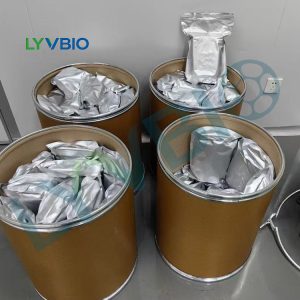
| Package | 1 kg, 5 kg amber glass bottles; 25 kg drums |
Need help? Contact our team
Synonyms: Phylloquinone, Phytomenadione, Vitamin K1, 2-Methyl-3-phytyl-1,4-naphthoquinone, α-Phylloquinone
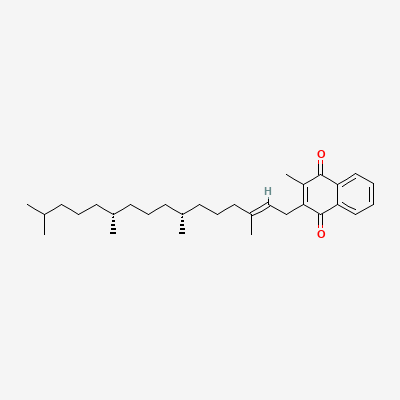
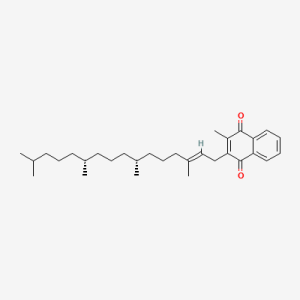
Vitamin K1, or phylloquinone, is a fat-soluble vitamin characterized by a 2-methyl-1,4-naphthoquinone core substituted with a phytyl side chain at the 3-position. This structural motif is essential for its biological activity, allowing it to serve as a cofactor for the γ-glutamyl carboxylase enzyme, which catalyzes the carboxylation of specific glutamate residues in vitamin K-dependent proteins. The resulting γ-carboxyglutamate (Gla) residues confer calcium-binding capacity, critical for the function of clotting factors II, VII, IX, and X, as well as proteins involved in bone metabolism and vascular health.
Phylloquinone is the primary dietary form of vitamin K, found abundantly in green leafy vegetables, vegetable oils, and certain fermented foods. For pharmaceutical and nutraceutical applications, it is produced synthetically or semi-synthetically to achieve high purity and consistent potency. Commercial Vitamin K1 is typically available as a clear, yellow to amber viscous liquid, standardized to ≥98% purity (sum of trans-isomers) as determined by HPLC. It is practically insoluble in water but freely soluble in fats and organic solvents, making it suitable for oil-based formulations and emulsified systems.
In clinical and research settings, Vitamin K1 is widely used to treat and prevent vitamin K deficiency bleeding (VKDB) in newborns, to reverse over-anticoagulation with warfarin, and as a nutritional supplement. Its role in bone health and cardiovascular function continues to be an active area of investigation, with studies exploring its potential in reducing arterial calcification and supporting osteocalcin function. The compound is also a key reference standard in analytical laboratories for method development and quality control.
Vitamin K1 consists of a 2-methyl-1,4-naphthoquinone ring system attached to a phytyl side chain (3,7,11,15-tetramethyl-2-hexadecenyl) at the 3-position. The quinone moiety is responsible for its redox activity, while the lipophilic side chain anchors the molecule in lipid bilayers and facilitates its interaction with enzymes. It appears as a viscous oil that is sensitive to light and should be stored under inert gas, protected from light and heat to prevent degradation. Its UV absorption maximum in ethanol occurs at approximately 248 nm and 270 nm, useful for identification and quantification.
| Parameter | Specification |
|---|---|
| Assay (HPLC) | ≥ 98.0% (sum of trans-isomers) |
| Appearance | Clear, yellow to amber viscous liquid |
| Identification | IR, UV conforms to standard |
| Specific Gravity | 0.963–0.973 (25°C) |
| Refractive Index | 1.525–1.530 (20°C) |
| Heavy Metals | ≤ 10 ppm |
| Residual Solvents | Meets USP/EP requirements |
Room,5-0203, Unit 5, Beiyuanmen Street,Xi'an,Shaanxi,China
 English English
 Russian
 French
 Korean
 German
 Polish
 Japanese
 Spanish
 Italian
 Vietnamese