
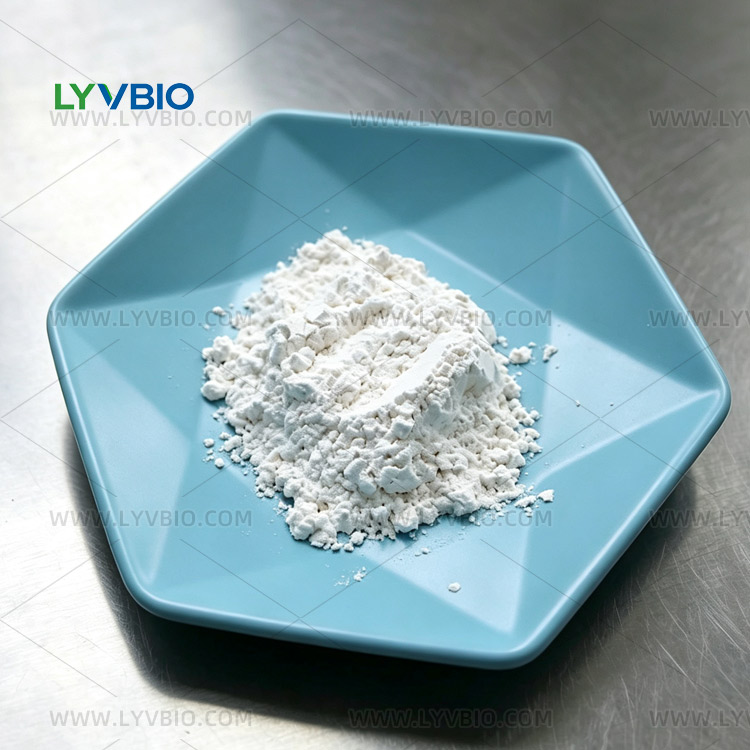


| Product Name | Andrographolide |
|---|---|
| CAS Number | 5508-58-7 |
| Molecular Formula | C₂₀H₃₀O₅ |
| Molecular Weight | 350.45 g/mol |
| Appearance | White to off-white crystalline powder |
| Assay (HPLC) | ≥ 98.0% |
| Loss on Drying | ≤ 0.5% |
| Residue on Ignition | ≤ 0.1% |
| Heavy Metals | ≤ 10 ppm |
| Melting Point | 228 – 232°C |
| Specific Rotation | -55.0° to -60.0° |
| Storage | Store in a cool, dry place, protected from light |
| Solubility | Soluble in DMSO, ethanol, methanol; slightly soluble in water |
Need help? Contact our team
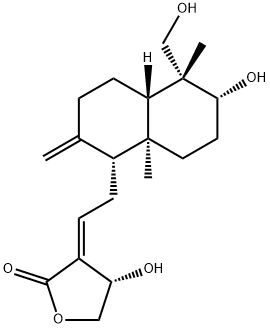
Synonyms: Andrographolide, Andrographis Extract, Andrographis paniculata Extract, Kalmegh Extract, Andrographolide 98%, (3E)-3-[2-[(1R,4aS,5R,6R,8aS)-6-hydroxy-5-(hydroxymethyl)-5,8a-dimethyl-2-methylidene-3,4,4a,6,7,8-hexahydro-1H-naphthalen-1-yl]ethylidene]-4-hydroxyoxolan-2-one, Chuanxinlian Extract
Andrographolide is the principal bioactive diterpenoid lactone isolated from Andrographis paniculata (Burm. f.) Nees, a medicinal plant commonly known as King of Bitters or Chuanxinlian (穿心莲) in Traditional Chinese Medicine. It is one of the most extensively studied natural compounds for its broad spectrum of biological activities, particularly its potent anti-inflammatory, immunomodulatory, hepatoprotective, and antioxidant properties.
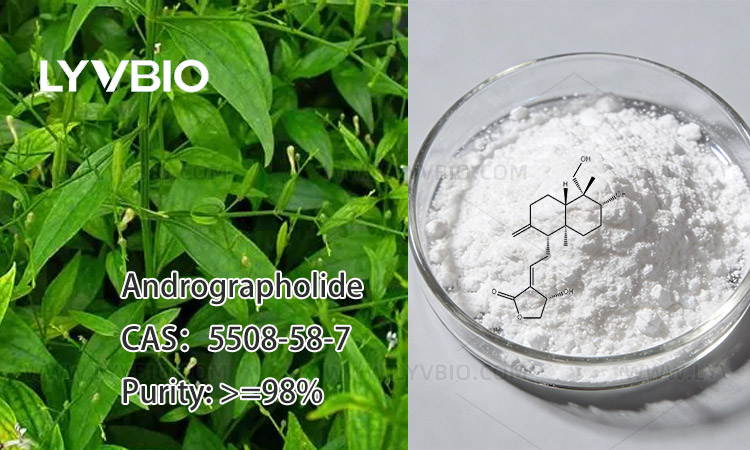
Andrographolide
The molecular structure of andrographolide features a unique diterpene skeleton with a γ-lactone ring, which is responsible for its biological activity.
Its mechanisms of action include inhibition of NF‑κB activation, reduction of pro-inflammatory cytokine production (TNF-α, IL-6, IL-1β), modulation of immune cell function, and activation of Nrf2-mediated antioxidant pathways.
Andrographolide has been the subject of numerous clinical studies for its potential in supporting respiratory health, immune defense, and liver function.
It is widely used in dietary supplements, herbal formulations, and research applications.
Source: Andrographis paniculata (aerial parts)
Standardization: ≥98.0% andrographolide (HPLC)
Forms: White to off-white crystalline powder
Applications: Dietary supplements, functional foods, pharmaceutical research, herbal formulations
Q: What is the recommended dosage for immune support?
A: Clinical studies typically use 100 – 300 mg of andrographolide per day, often divided into 2–3 doses.
Q: Is andrographolide safe for long-term use?
A: Andrographolide is generally safe for short-term use (up to 8–12 weeks). Long-term use should be monitored. Contraindications include pregnancy and autoimmune conditions.
Q: Can andrographolide be combined with other herbs?
A: Yes, it is often combined with other immune-supporting herbs such as echinacea, astragalus, and elderberry.
Q: What is the difference between andrographolide and Andrographis extract?
A: Andrographolide is a single, purified compound (≥98%). Andrographis extract is a whole‑plant concentrate containing a mixture of active compounds, typically standardized to a lower percentage of andrographolide (e.g., 10% – 30%).
Q: Is andrographolide suitable for vegan formulations?
A: Yes, it is plant‑derived and suitable for vegan, Halal, and Kosher applications.
© 2026 LyvBio Co., Ltd. | 280 Main Street, Xian, Shaanxi, China
| Email: info@lyvbio.com | Website: https://www.lyvbio.com
 English English
  Russian
 French
 Korean
 German
 Polish
 Japanese
 Spanish
 Italian
 Vietnamese