
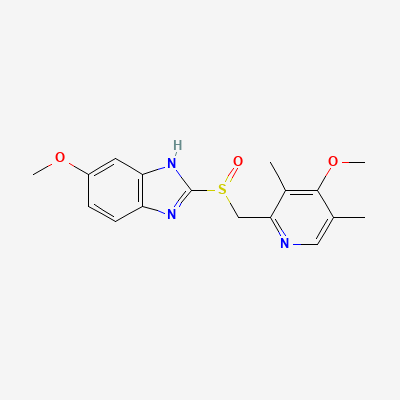
Omeprazole
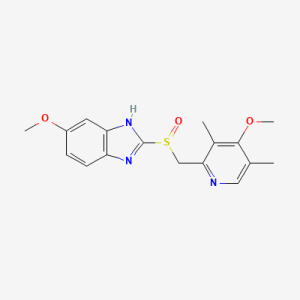
| Parameter | Specification |
|---|---|
| Product Name | Omeprazole |
| CAS Number | 73590-58-6 |
| Molecular Formula | C17H19N3O3S |
| Molecular Weight | 345.42 g/mol |
| Appearance | White to off-white crystalline powder |
| Assay (HPLC) | 98.0% – 102.0% (on dried basis) |
| Solubility | Sparingly soluble in water, freely soluble in methanol, slightly soluble in ethanol |
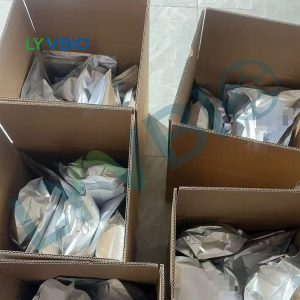
| Package | 25 kg fiber drum with double polyethylene liners |
Need help? Contact our team
Synonyms: Losec, Prilosec, Antra, Zegerid, H 168/68, 5-Methoxy-2-[(4-methoxy-3,5-dimethyl-2-pyridinyl)methyl]sulfinyl]-1H-benzimidazole
Omeprazole has been a cornerstone of acid-related disorder management for decades, and demand from generic drug manufacturers and nutraceutical formulators remains steady. As the first proton pump inhibitor approved for clinical use, it continues to be a high-volume API in both prescription and OTC markets, particularly for delayed-release capsules and tablets.
Chemically, omeprazole is a substituted benzimidazole that acts as a prodrug. It is a racemic mixture of two enantiomers, though the S-enantiomer (esomeprazole) is also marketed separately. The compound is synthesized through multi-step organic reactions, yielding a white to off-white crystalline powder that is practically insoluble in water but soluble in organic solvents.
The API is typically supplied in various polymorphic forms, with Form I being the most common for pharmaceutical use. Manufacturers must control particle size and polymorphic purity to ensure consistent bioavailability in finished dosage forms. Our omeprazole is produced under cGMP conditions, with full documentation supporting regulatory submissions.
Omeprazole is a weak base that accumulates in the acidic environment of gastric parietal cells, where it is activated to a sulfenamide intermediate. This active form covalently binds to the H+/K+-ATPase enzyme, inhibiting the final step of gastric acid secretion. The API is often formulated with enteric coatings to protect it from degradation in the stomach, ensuring delivery to the small intestine for absorption.
In terms of composition, omeprazole is a single active ingredient, but it may contain trace impurities from synthesis, such as omeprazole sulfone and omeprazole N-oxide. These are controlled through stringent quality standards. The product is available in different grades, including micronized and non-micronized forms, to suit various formulation needs.
| Test Item | Specification |
|---|---|
| Identification | IR absorption spectrum conforms to reference standard |
| Loss on Drying | ≤ 0.5% |
| Heavy Metals | ≤ 20 ppm |
| Organic Impurities | Omeprazole sulfone ≤ 0.2%, any unspecified impurity ≤ 0.1%, total impurities ≤ 0.5% |
| Microbial Limits | Total aerobic count ≤ 1000 CFU/g, yeast and mold ≤ 100 CFU/g, absence of E. coli and Salmonella |
| Residue on Ignition | ≤ 0.1% |
Our MOQ is 1 kg for trial orders and 25 kg for standard orders. For larger quantities, please contact us for a quotation.
For stock items, the lead time is 3-5 business days after order confirmation.
Yes, we provide a COA for each batch. Samples are available upon request; please contact our sales team for details.
send us your specification for a quotation.
Room,5-0203, Unit 5, Beiyuanmen Street,Xi'an,Shaanxi,China
 English English
 Russian
 French
 Korean
 German
 Polish
 Japanese
 Spanish
 Italian
 Vietnamese