
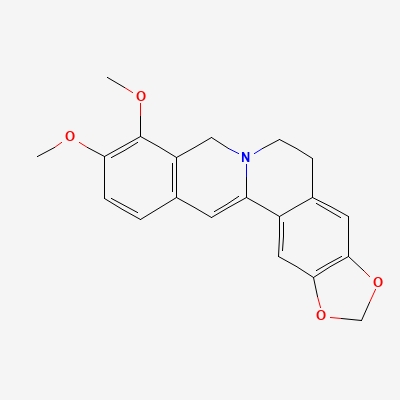
Dihydroberberine
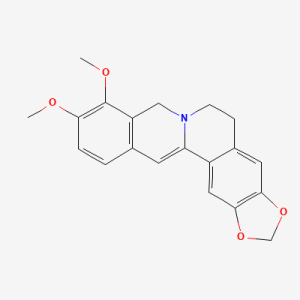
| Product Name | Dihydroberberine |
|---|---|
| CAS Number | 483-15-8 |
| Other Names | Dihydroberberine chloride, 7,8-Dihydro-9,10-dimethoxy-2,3-(methylenedioxy)berberine, Dihydroberberine hydrochloride |
| Molecular Formula | C20H19NO4 (free base) |
| Molecular Weight | 337.37 g/mol (free base) |
| Appearance | Light yellow to yellow crystalline powder |
| Assay (HPLC) | ≥98.0% |
| Loss on Drying | ≤1.0% |
| Heavy Metals | ≤10 ppm |
| Solubility | Soluble in methanol, ethanol, DMSO; slightly soluble in water |
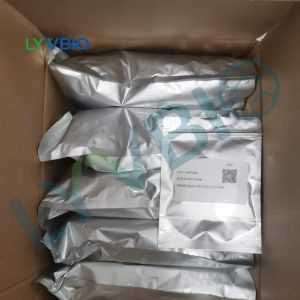
| Package | 25 kg fiber drum with double polyethylene bags inside |
Need help? Contact our team
Synonyms: Dihydroberberine, DHB, 7,8-Dihydroberberine, Dihydroberberine chloride, 483-15-8
Dihydroberberine has been drawing steady attention from formulators and procurement teams alike, largely because it addresses a persistent challenge with conventional berberine: poor oral bioavailability. As demand for metabolic-support ingredients continues to climb, DHB has found its way into premium capsules, powders, and functional beverages, particularly in markets where consumers are already familiar with berberine but want something more efficient. The ingredient fits naturally into product lines targeting glucose metabolism, lipid management, and overall metabolic wellness, and it carries the kind of clinical narrative that resonates with both practitioners and end users.
Chemically, dihydroberberine is the reduced form of berberine, a quaternary ammonium alkaloid found in plants such as Berberis aristata, Coptis chinensis, and Phellodendron amurense. In this reduced state, the molecule is more lipophilic and crosses intestinal membranes more readily; once inside the body, it readily oxidizes back to berberine, which is the form that interacts with AMPK and other metabolic targets. This prodrug-like behavior is the basis for its improved pharmacokinetic profile, and it is why DHB is often positioned as a next-generation berberine ingredient.
LyvBio supplies dihydroberberine as a high-purity crystalline powder, typically standardized to ≥98.0% by HPLC. We produce it through a controlled reduction process starting from berberine hydrochloride, followed by purification steps that ensure consistent quality and low residual solvents. The material is manufactured under strict quality control, with full documentation available for regulatory and formulation support. Whether you are developing a stand-alone supplement or a combination product, our DHB offers reliable performance and batch-to-batch consistency.
Dihydroberberine is a hydrogenated derivative of berberine, belonging to the protoberberine alkaloid family. Its structure features a tetracyclic framework with a methylenedioxy group and two methoxy substituents, which contribute to its distinct solubility and membrane permeability characteristics. In the solid state, it is stable when protected from light and moisture, and it retains its potency under normal storage conditions.
Our dihydroberberine is available as the free base or as the chloride salt, depending on customer requirements. The free base form is preferred for certain oil-based or lipid delivery systems, while the chloride salt offers enhanced water dispersibility for beverage and capsule applications. Each batch is tested for assay, identity, residual solvents, and heavy metals to meet pharmaceutical and nutraceutical standards.
| Parameter | Specification |
|---|---|
| Assay (HPLC) | ≥98.0% |
| Loss on Drying | ≤1.0% |
| Residue on Ignition | ≤0.1% |
| Heavy Metals | ≤10 ppm |
| Total Aerobic Count | ≤1000 CFU/g |
| Yeast & Mold | ≤100 CFU/g |
| E. coli | Absent |
Room,5-0203, Unit 5, Beiyuanmen Street,Xi'an,Shaanxi,China
 English English
 Russian
 French
 Korean
 German
 Polish
 Japanese
 Spanish
 Italian
 Vietnamese