
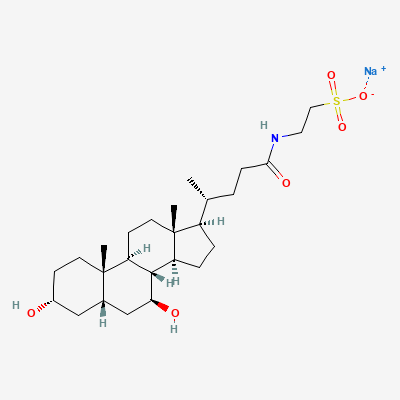
Sodium Tauroursodeoxycholate
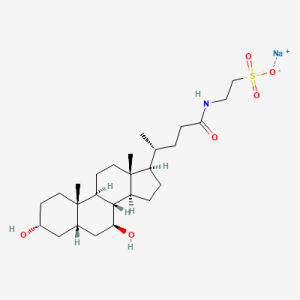
| Product Name | Sodium Tauroursodeoxycholate |
|---|---|
| CAS Number | 35807-85-3 |
| Molecular Formula | C26H44NNaO6S |
| Molecular Weight | 521.68 g/mol |
| Appearance | White to off-white crystalline powder |
| Assay (HPLC) | ≥98.0% |
| Loss on Drying | ≤5.0% |
| Residue on Ignition | ≤0.5% |
| Heavy Metals | ≤10 ppm |
| Solubility | Soluble in water, ethanol; practically insoluble in acetone |
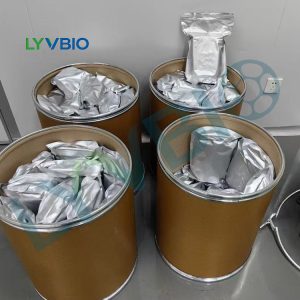
| Package | 25 kg fiber drum with double polyethylene liner |
Need help? Contact our team
Synonyms: TUDCA sodium salt, Sodium tauroursodeoxycholate, Tauroursodeoxycholic acid sodium salt, Ursodeoxycholyltaurine sodium salt, 3α,7β-Dihydroxy-5β-cholanoyltaurine sodium salt, Sodium tauro-ursodeoxycholate
Sodium tauroursodeoxycholate (TUDCA sodium) is the sodium salt of tauroursodeoxycholic acid, a taurine-conjugated bile acid that occurs naturally in the bile of certain mammals, most notably the Asiatic black bear. In traditional Chinese medicine, bear bile has been used for centuries to treat hepatobiliary disorders, and TUDCA is now recognized as one of its principal bioactive constituents. The compound is amphipathic, combining a hydrophilic taurine moiety with a lipophilic steroid nucleus, which underpins its membrane-stabilizing and cytoprotective properties.
From a chemical standpoint, TUDCA sodium is a sulfonated bile salt with a molecular formula of C26H44NNaO6S and a molecular weight of 521.68 g/mol. It is the taurine conjugate of ursodeoxycholic acid (UDCA), differing from UDCA by the presence of a taurine side chain that significantly enhances its water solubility and reduces its critical micellar concentration. This structural feature also distinguishes it from other taurine-conjugated bile acids such as taurochenodeoxycholic acid (TCDCA) and taurodeoxycholic acid (TDCA), where the number and orientation of hydroxyl groups on the steroid ring influence receptor binding and physiological activity.
In the pharmaceutical and nutraceutical industries, sodium tauroursodeoxycholate is typically standardized to ≥98% purity by HPLC, with tight control over residual solvents, heavy metals, and microbial limits. It is used in oral formulations, injectables, and cell culture applications, where its ability to modulate bile acid receptors (e.g., TGR5, FXR) and inhibit apoptosis has generated considerable research interest. The compound is also a key intermediate in the synthesis of other bile acid derivatives and is employed as a reference standard in analytical laboratories.
Beyond its established role in liver support, TUDCA sodium has been investigated for its potential in metabolic disorders, neurodegenerative diseases, and ocular conditions. Its favorable safety profile and well-characterized pharmacokinetics make it a preferred choice for formulators seeking a bioavailable, water-soluble bile acid salt. As global demand for bile acid therapies grows, sodium tauroursodeoxycholate remains a cornerstone ingredient for companies developing next-generation hepatoprotective and cytoprotective products.
| Parameter | Specification |
|---|---|
| Assay (HPLC) | ≥98.0% |
| Identification | IR, HPLC retention time conforms to reference standard |
| Loss on Drying | ≤5.0% |
| Residue on Ignition | ≤0.5% |
| Heavy Metals | ≤10 ppm |
| Microbial Limits | Total aerobic count ≤1000 CFU/g; Yeast & Mold ≤100 CFU/g; E. coli absent |
Room,5-0203, Unit 5, Beiyuanmen Street,Xi'an,Shaanxi,China
 English English
 Russian
 French
 Korean
 German
 Polish
 Japanese
 Spanish
 Italian
 Vietnamese