

Taurodeoxycholic Acid

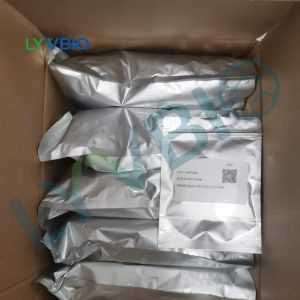
| Product Name | Taurodeoxycholic Acid |
|---|---|
| CAS Number | 516-50-7 |
| Molecular Formula | C26H45NO6S |
| Molecular Weight | 499.70 g/mol |
| Appearance | White to off-white crystalline powder |
| Assay (HPLC) | ≥98.0% |
| Loss on Drying | ≤3.0% |
| Residue on Ignition | ≤0.5% |
| Heavy Metals | ≤10 ppm |
| Solubility | Soluble in water, ethanol; slightly soluble in acetone |
| Storage | Store at 2-8°C, protected from light and moisture |
Need help? Contact our team
Synonyms: Taurodeoxycholic acid, TDCA, 2-[(3α,5β,12α)-3,12-Dihydroxy-24-oxocholan-24-yl]aminoethanesulfonic acid, Deoxycholyltaurine, Taurodeoxycholate
Taurodeoxycholic acid (TDCA) is a bile acid conjugated with taurine, one of the primary bile salts in many mammals, including humans. It is synthesized in the liver from deoxycholic acid and taurine, and is also found in the bile of certain species such as cattle and pigs. In the gut, it acts as a detergent, aiding in the emulsification and absorption of dietary fats and fat-soluble vitamins. Beyond its physiological role, TDCA has attracted considerable attention in pharmaceutical and biomedical research for its involvement in cholesterol metabolism, its potential as a drug delivery agent, and its use as a biomarker for liver function and gut microbiota activity.
Structurally, TDCA belongs to the family of taurine-conjugated bile acids, which are characterized by a steroid nucleus with a carboxyl group at C-24 linked via an amide bond to the amino group of taurine. This conjugation significantly increases the molecule’s water solubility and lowers its pKa, making it more ionized at physiological pH compared to unconjugated bile acids. TDCA is a secondary bile acid, derived from deoxycholic acid, which itself is a product of bacterial 7α-dehydroxylation of cholic acid in the colon. The presence of a 12α-hydroxyl group and a 3α-hydroxyl group on the steroid nucleus, along with the taurine moiety, gives TDCA distinct physicochemical properties, including a critical micellar concentration (CMC) of approximately 2-6 mM in water, depending on temperature and ionic strength.
In the pharmaceutical industry, TDCA is used as a key intermediate in the synthesis of ursodeoxycholic acid (UDCA) and other bile acid derivatives, and as a solubilizing agent for poorly water-soluble drugs. It is also employed in research settings to study bile acid transport, metabolism, and signaling pathways. TDCA is available in high purity grades, typically ≥98% as determined by HPLC, and is supplied as a white to off-white crystalline powder. Its applications span from drug formulation to diagnostic kits and cell culture media supplements.
Given its role in lipid digestion and its ability to form mixed micelles, TDCA is frequently utilized in oral drug delivery systems to enhance the bioavailability of lipophilic compounds. Moreover, its interactions with nuclear receptors such as FXR and TGR5 have made it a valuable tool in metabolic research. As a commercial product, TDCA is offered in various quantities to meet the needs of pharmaceutical development and manufacturing.
| Parameter | Specification |
|---|---|
| Assay (HPLC) | ≥98.0% |
| Identification | IR, NMR conform to structure |
| Loss on Drying | ≤3.0% |
| Residue on Ignition | ≤0.5% |
| Heavy Metals | ≤10 ppm |
| Microbial Limits | Total aerobic count ≤1000 CFU/g; Yeast & Mold ≤100 CFU/g; E. coli absent |
Room,5-0203, Unit 5, Beiyuanmen Street,Xi'an,Shaanxi,China
 English English
 Russian
 French
 Korean
 German
 Polish
 Japanese
 Spanish
 Italian
 Vietnamese