

Glycochenodeoxycholic Acid
| Product Name | Glycochenodeoxycholic Acid |
|---|---|
| CAS Number | 640-79-9 |
| Molecular Formula | C26H43NO5 |
| Molecular Weight | 449.62 g/mol |
| Appearance | White to off-white crystalline powder |
| Assay (HPLC) | ≥98.0% |
| Solubility | Soluble in methanol, ethanol; sparingly soluble in water |
| Storage | Store at 2-8°C, protected from light and moisture |
| Package | 1 kg, 5 kg, 25 kg fiber drums with double PE liners |
Need help? Contact our team
Synonyms: Glycochenodeoxycholic acid, GCDCA, Chenodeoxycholylglycine, 3α,7α-Dihydroxy-5β-cholan-24-oylglycine, N-[(3α,5β,7α)-3,7-Dihydroxy-24-oxocholan-24-yl]glycine, Glycine chenodeoxycholate
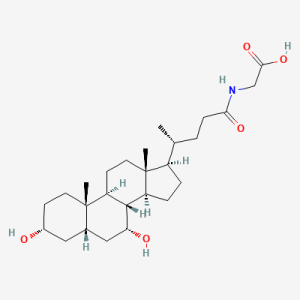
Glycochenodeoxycholic acid belongs to the family of glycine-conjugated bile acids, characterized by a 5β-cholane skeleton with hydroxyl groups at C-3 and C-7 and a glycine moiety linked via an amide bond at C-24. This amphipathic structure underpins its role as a physiological detergent, facilitating the emulsification and absorption of dietary lipids and fat-soluble vitamins in the small intestine. As a major constituent of human bile, GCDCA is also a key signaling molecule that activates the farnesoid X receptor (FXR) and G protein-coupled bile acid receptor 1 (TGR5), influencing glucose and lipid metabolism, energy homeostasis, and inflammatory responses.
Industrially, GCDCA is produced through chemical conjugation of chenodeoxycholic acid with glycine or by enzymatic synthesis using bile acid-CoA:amino acid N-acyltransferase. It is available in high-purity grades, typically ≥98% as determined by HPLC, and finds extensive use as a reference standard in clinical diagnostics, a critical component in cell culture media for hepatocyte and intestinal models, and a precursor in pharmaceutical research targeting cholestatic liver diseases and metabolic disorders.
Beyond its physiological functions, GCDCA serves as a valuable tool in drug discovery and development. Its ability to modulate bile acid receptors and transporters makes it a subject of interest in studies on non-alcoholic steatohepatitis (NASH), type 2 diabetes, and bile acid diarrhea. The compound is also employed in the formulation of liposomal drug delivery systems to enhance the oral bioavailability of poorly soluble drugs. With a well-defined impurity profile and consistent batch-to-batch quality, GCDCA from LyvBio meets the rigorous demands of pharmaceutical and biotech customers worldwide.
Glycochenodeoxycholic acid features a steroid nucleus with a cis A/B ring junction, two α-oriented hydroxyl groups at positions 3 and 7, and a side chain terminated by a glycine conjugate. The molecule is amphiphilic, with a hydrophobic convex face and a hydrophilic concave face, which drives its self-assembly into micelles above the critical micellar concentration (CMC) of approximately 2-5 mM in aqueous buffer. Its sodium salt forms are more water-soluble and are often used in physiological studies. The compound is stable under normal storage conditions but should be protected from prolonged exposure to light and moisture to prevent degradation.
| Parameter | Specification |
|---|---|
| Appearance | White to off-white crystalline powder |
| Assay (HPLC) | ≥98.0% |
| Loss on Drying | ≤2.0% |
| Residue on Ignition | ≤0.5% |
| Heavy Metals | ≤10 ppm |
| Specific Rotation | +25° to +30° (c=1, ethanol) |
Room,5-0203, Unit 5, Beiyuanmen Street,Xi'an,Shaanxi,China
 English English
 Russian
 French
 Korean
 German
 Polish
 Japanese
 Spanish
 Italian
 Vietnamese